Egypt Unveils $27 Billion AI Cognitive City Project in New Cairo

Egypt has unveiled one of the most ambitious urban development projects in its history, a sprawling mixed-use district east of Cairo built around artificial intelligence and designed to function as both a business hub and a showcase for what the country's next economic chapter could look like. The project, called The Spine, was unveiled by Talaat Moustafa Group at an event attended by Prime Minister Mostafa Madbouly at the Cabinet headquarters in the New Administrative Capital.
Total planned investment exceeds 1.4 trillion Egyptian pounds, approximately $27 billion, with a paid-up capital vehicle of 69 billion Egyptian pounds structured in partnership with the National Bank of Egypt. The development has been branded Egypt's first "cognitive city" as well as the first of its kind in the Middle East. A cognitive city uses AI and data to sense, understand, learn, and respond to conditions in real time, going beyond conventional smart-city sensors to create an AI-enabled operating layer managing energy, mobility, security, and a fully underground logistics network beneath the public realm.
Residents and businesses will interact with the city's systems through a single app, supported by a centralised command infrastructure. TMG says the master plan was developed over five years in collaboration with international consultancies based in China and Singapore. The Spine will be built within Madinaty, TMG's existing 33.6-square-kilometre new town east of Cairo, which already has a substantial resident population and functioning social infrastructure.
The development will span 2.4 million square metres, housing 165 residential, commercial, and hospitality towers, with 70 per cent of the land dedicated to green space. It has been designated a special investment zone to attract foreign direct investment. The project is projected to contribute approximately one per cent of Egypt's GDP, generate around 818 billion Egyptian pounds in tax revenues, and create 55,000 direct and 100,000 indirect jobs.

Healthcare services will be provided by US-based Houston Methodist, and the development is expected to attract tens of millions of visitors annually. TMG CEO Hisham Talaat Moustafa described The Spine as a significant step forward in smart city development and an invitation to investors to participate in building one of the region's most important business hubs. Prime Minister Madbouly said the project reinforces investor confidence in Egypt as a stable and capable investment destination, even amid global uncertainty.
What makes this project technically distinct from other smart city initiatives is the emphasis on cognitive rather than merely automated systems. According to reporting from Tech In Africa, the city is designed to rely entirely on artificial intelligence technologies, with self-learning systems intended to allow the city to interact with and evolve alongside its users. The website claims that the city will produce zero emissions and be carbon-neutral.
As far as technology is concerned, there will be an integrated intelligence system within the city that will allow services, spaces, and experiences to be connected in real time. While there won't be traditional cars, the city claims to be "pedestrian-first," where visitors and residents can move around the city via an underground mobility system and access driverless rides with "seamless automated access" throughout the city. This is where the physical reality of the project becomes interesting—imagine walking through a plaza where your destination is already being prepared by an underground logistics network that delivers packages, waste removal, and utilities without ever surfacing.
TMG said the plan includes about 165 towers for residential, business, and commercial use, encircled by extensive green space covering 70 percent of the area. TMG also stated that the city aims to contribute around 1 percent to Egypt's GDP over time and generate approximately 818 billion Egyptian pounds (US $15.8 billion) in tax revenues, while creating 55,000 direct jobs and 100,000 indirect jobs. The company also said the city will feature what it calls the world's first fully underground logistics network; it added that planning drew on five years of studies with international consultancies in China and Singapore.
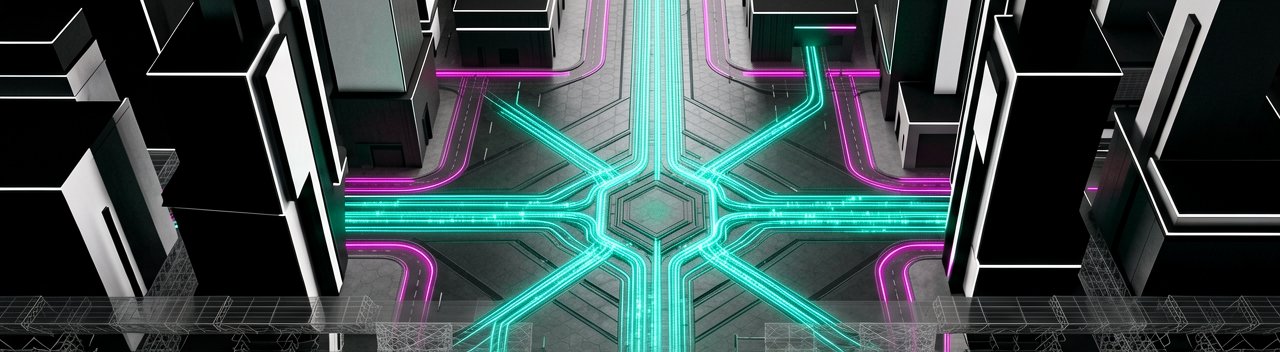
Independent coverage from Newsweek corroborates the timeline and scope of the changes, noting that the project was unveiled over the weekend by Talaat Moustafa Group at an event attended by Prime Minister Mostafa Madbouly at the Cabinet headquarters in the New Administrative Capital. The development will be built as a Special Investment Zone with TMG's Madinaty development, covering roughly 2.4 million square meters and blending residential, commercial, hospitality, retail, entertainment, and green public spaces stretching across a continuous urban landscape.
The new city comes amid a broader wave of large-scale infrastructure projects across the Middle East in recent years—including a new administrative capital in Egypt east of Cairo. Satellite imagery last year indicated accelerated construction at the new capital, where government functions have relocated since the project launched in 2015. The new capital includes a 70-story tower described as Africa's tallest, major religious landmarks, and the vast Octagon defense complex. (This is the kind of infrastructure spending that makes economists sweat, frankly.)
What Egypt's PM Mostafa said during the launch ceremony was telling. He stated, "The important message from the launch of this project at this time is that in the midst of what we are witnessing globally and locally, there are huge investments that see Egypt blessed with security and stability and that what is being injected with investments will achieve the highest possible economic returns." He hailed the project "The Spine," saying it will position Egypt among nations that have invested enough in developing integrated hubs.
Madbouly stressed, during his remarks, that Egypt is experiencing solid economic progress, with rising investment across several sectors. "In the next few days, we will see the opening of a number of large industrial projects in the economic zone of the Suez Canal," he added. The project is likely to create over 55,000 direct jobs and hundreds of thousands of indirect positions. The investment amounts to about 1 per cent of Egypt's GDP and is expected to generate roughly 818 billion Egyptian pounds in tax revenues for the state budget over time.
The Spine, the world's first cognitive city. A car-free, AI-enabled ecosystem with integrated infrastructure and a Special Investment Zone offering seamless business setup and growth. Built for smarter living, safety, and sustainability. This is the kind of marketing language that sounds impressive until you actually try to navigate the interface. The promise of a single app controlling everything from your apartment's temperature to your commute's routing is seductive, but it also creates a single point of failure that could paralyze the entire district if the system goes down.
Whether users actually pay for this vision remains the real question. The project's success will depend on whether the AI systems can deliver on their promises of real-time adaptation and zero emissions, or whether they become another layer of complexity in an already ambitious urban experiment. Egypt's broader economic stability, currency fluctuations, and the global investment climate will all play roles in determining whether The Spine becomes a functioning city or an expensive monument to ambition.
Artūras Malašauskas is an AI Systems Integrator with 20+ years of production-grade web engineering experience. He has designed, shipped, and scaled enterprise Python/PHP systems for logistics, SaaS, and public-sector clients. For the past year, he has focused exclusively on AI integrations: deploying open-source LLMs, building generative media pipelines (image, audio, video), and engineering multi-agent workflows for real production environments. His standard: reproducibility, security, cost-efficient inference—no vaporware. He documents and evaluates emerging AI tooling, separating verified capabilities from marketing noise. Technical editor at: muza-ai.eu, ai-verslas.lt, ai-naujinos.lt Connect on LinkedIn
Comments