Bubble Robotics Raises $5M Pre-Seed for Autonomous Ocean Systems
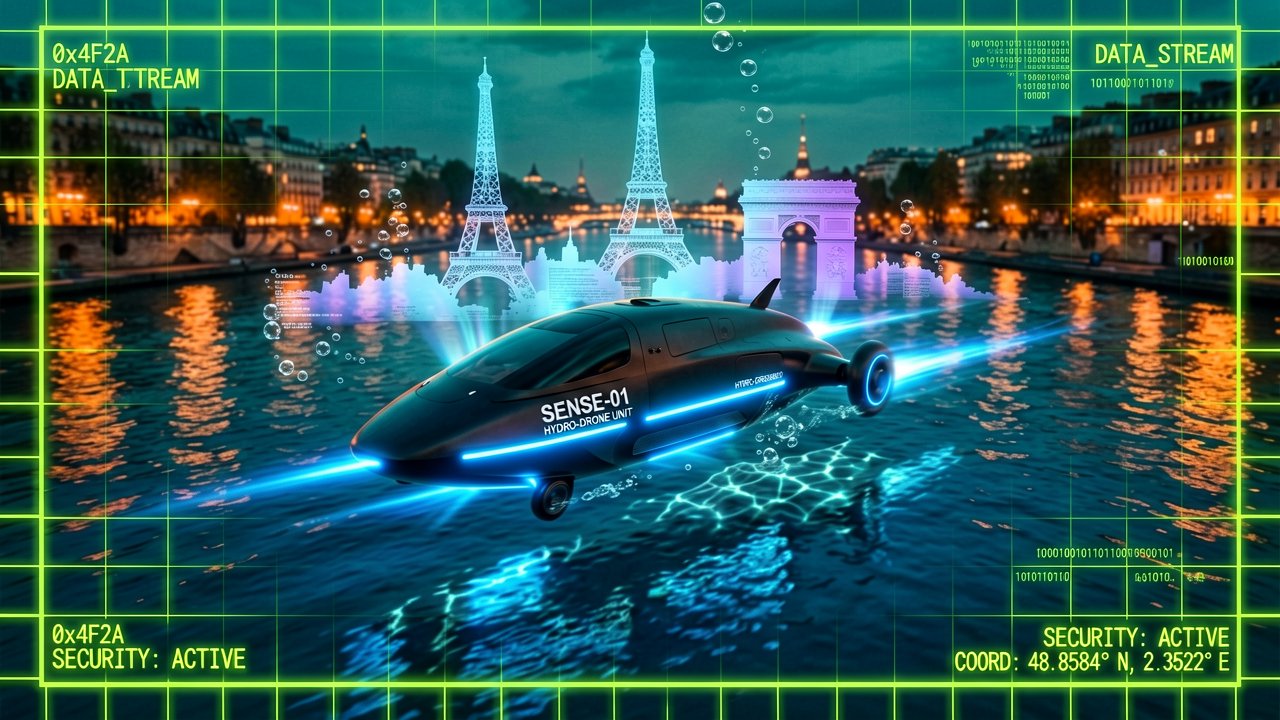
Bubble Robotics has emerged from stealth mode with a $5 million pre-seed round, positioning itself to replace episodic vessel-based offshore operations with persistent autonomous infrastructure. The Paris, San Francisco, and Zürich-based company announced the funding on April 21, 2026, following its graduation from the Entrepreneurs First accelerator program.
The round was co-led by Episode 1 Ventures, Asterion Ventures, and Norrsken Evolve, with participation from Angel Invest and experienced operators in offshore energy and maritime sectors. According to the company's official announcement, the capital will fund accelerated development, engineering team expansion, and deployment of the first resident systems in real-world conditions.
Founded in 2025 by Jean Crosetti and Patricia Apostol, both former robotics engineers from NASA and ETH Zürich, Bubble is tackling what it describes as the ocean's accessibility problem. Current offshore operations rely on vessels, crews, and heavy equipment costing up to $100,000 per day. Vessels and crews alone account for 80 to 90% of offshore inspection costs, creating a model that is expensive, dangerous, and fundamentally unscalable.
The industry also faces a structural workforce shortage, with 600,000 additional professionals needed by 2030 in the energy sector alone. Bubble's thesis is straightforward: offshore operations should not require humans at sea. Instead of episodic, vessel-based missions, the company deploys resident autonomous systems that stay at sea 24/7/365, continuously inspecting, monitoring, and collecting data.
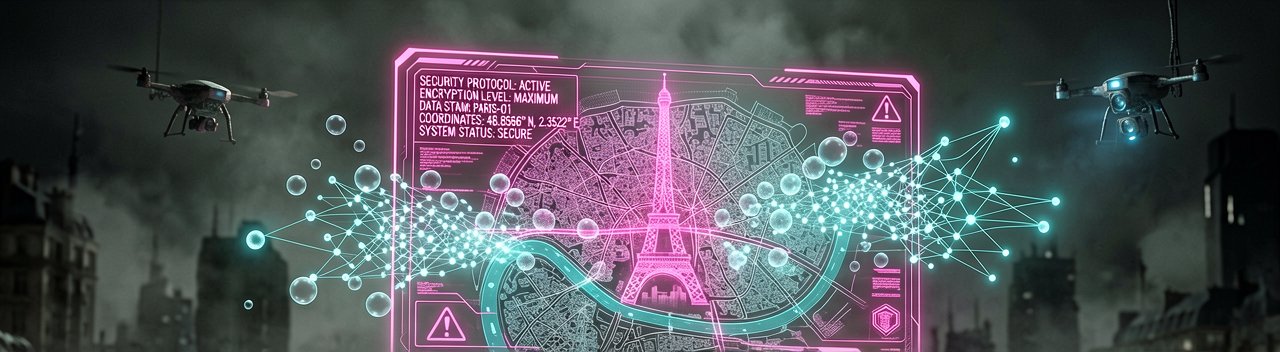
The platform consists of two main components: BubbleDock, a docking station launched from shore or a vessel that can remain in place for up to six months, and BubbleBots, underwater robots that carry out ongoing inspection missions. The system combines autonomous docking, long-duration persistence, and low-cost underwater navigation to deliver continuous, high-resolution digital twins of subsea assets and environments.
"Today, 80 to 90% of offshore inspection costs come from vessels and crews," said Jean Crosetti, CEO and Co-Founder of Bubble Robotics. "By removing that dependency, we unlock a step change in cost, safety, and operational frequency. What used to be episodic becomes continuous." The quote appears in the company's official blog post detailing the funding round.
Advances in robotics, edge AI, and satellite connectivity have reached an inflection point where persistent, autonomous systems at sea can perceive, decide, and act with minimal human oversight. This is not theoretical—Bubble is already seeing strong market pull, with over $4 million in signed letters of intent and upcoming deployments across offshore wind, maritime security, and subsea infrastructure.
The company operates under a robotics-as-a-service model, providing full operational capability without upfront CAPEX or offshore mobilization. This allows industrial operators to simultaneously reduce costs, address workforce shortages, and increase inspection frequency and data coverage. The solutions target three main verticals: energy and resources (monitoring foundations, cables, pipes, and turbines), climate and biodiversity (benthic mapping, photogrammetry, ecosystem monitoring), and maritime security and defense (acoustic anomaly detection, mine countermeasures, continuous surveillance).
Alice Bentinck, Co-Founder of Entrepreneurs First, noted the team's complementary skillset: "Patricia with world-class technical credibility in robotics, Jean with unusual commercial instinct and intensity. Their pace of iteration throughout the program and strong customer obsession make Bubble Robotics a company to watch closely." The accelerator's endorsement carries weight given its track record with deep tech founders.
Independent reporting from Bubble Robotics' official blog confirms the funding details and deployment timeline. Secondary coverage from Ocean News & Technology corroborates the $4 million in signed letters of intent and the company's multi-location headquarters structure.
Inspired by satellite constellations providing continuous Earth observation, Bubble Robotics is deploying a widespread infrastructure of robots designed to collect and elaborate complex high-frequency underwater data. The physical reality of this technology means operators can finally see what happens between episodic vessel missions—when the ocean is dynamic and important changes occur that currently go undetected.
The company argues that the ocean is one of the most critical and least automated frontiers of the 21st century, underpinning offshore energy, critical infrastructure, carbon storage, and maritime security. Yet underwater operations remain episodic, expensive, and dependent on vessels and crews that cannot scale to meet growing demand. Bubble's approach treats the ocean less like a destination and more like a persistent operational environment (which is a fundamental shift from how the industry has operated for decades).
Whether the technology can deliver on its cost reduction promises—up to 70% according to the company's claims—remains to be proven in real-world deployments. The signed letters of intent suggest market interest, but actual performance under harsh ocean conditions will determine if this model scales. For now, the funding validates the thesis that persistent autonomous infrastructure is technically feasible. Whether it's economically viable at scale is the next question.
Artūras Malašauskas is an AI Systems Integrator with 20+ years of production-grade web engineering experience. He has designed, shipped, and scaled enterprise Python/PHP systems for logistics, SaaS, and public-sector clients. For the past year, he has focused exclusively on AI integrations: deploying open-source LLMs, building generative media pipelines (image, audio, video), and engineering multi-agent workflows for real production environments. His standard: reproducibility, security, cost-efficient inference—no vaporware. He documents and evaluates emerging AI tooling, separating verified capabilities from marketing noise. Technical editor at: muza-ai.eu, ai-verslas.lt, ai-naujinos.lt Connect on LinkedIn
Comments