Beatbot Unveils iSkim Solar Robotic Pool Skimmer
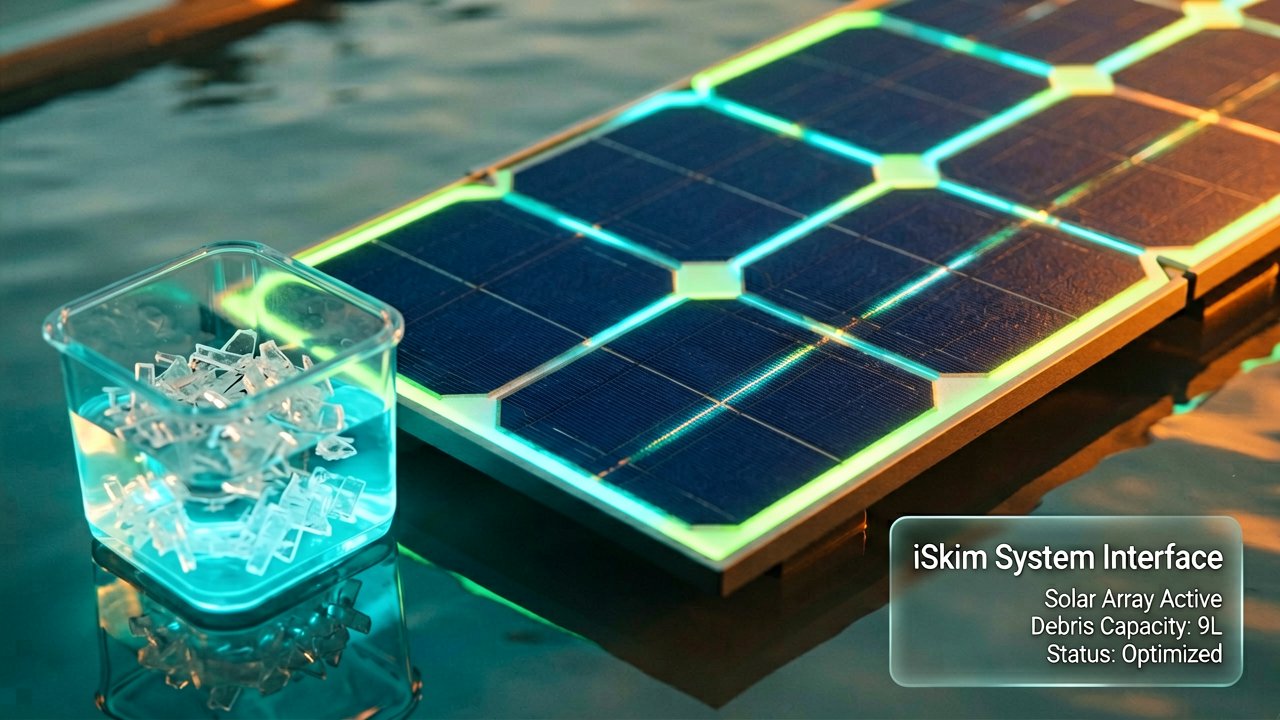
The pool robotics market just got a new contender focused on one specific problem: keeping debris off the water's surface without constant human intervention. Beatbot announced the U.S. launch of the iSkim, a solar-powered robotic pool skimmer designed for continuous operation. The device targets the persistent maintenance gap where traditional skimming requires repeated manual effort and frequent interruptions.
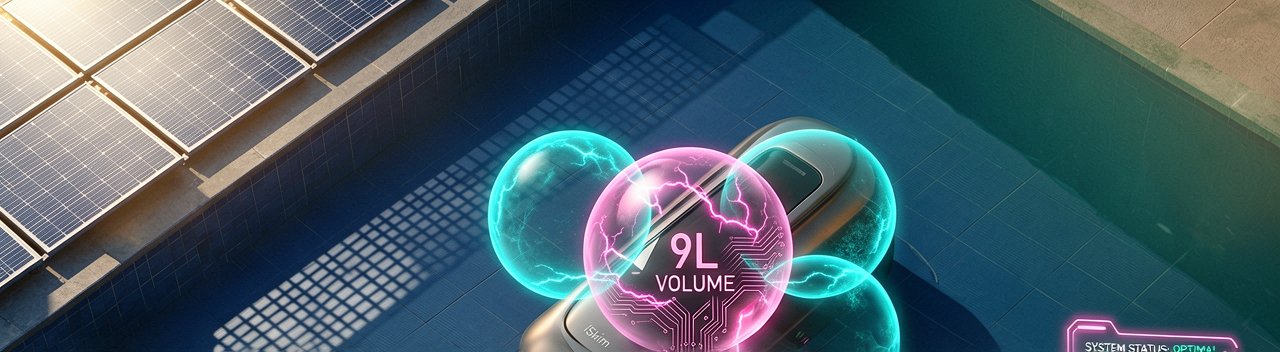
At the core of the announcement is a straightforward engineering approach. The official press release details a 9-liter debris basket capable of holding up to 800 leaves while also capturing fine particles like dust, pollen, and pet hair. That capacity alone addresses a common pain point: emptying the basket every few hours during peak debris seasons. The widened 29 × 270 mm skimming inlet increases the active capture area, theoretically allowing more debris collection per pass.
The power system is where iSkim differentiates itself from standard cordless pool robots. A 10,000mAh battery delivers up to 28 hours of runtime without sunlight. An integrated 24W solar panel enables near-continuous operation under suitable lighting conditions. The system supports dual charging, combining solar input with fast adapter charging at 64.5W, reaching full charge in approximately 5 hours. SolarTrack™ light-tracking technology allows the unit to move toward brighter areas of the pool, optimizing solar exposure. This is less of an evolution and more of a coat of paint on a rusted gate—solar charging for pool robots isn't new, but combining it with this capacity and runtime is the actual innovation.
Physical durability matters in pool environments. The device carries an IP68 waterproof rating, UV-resistant construction, and materials designed to withstand prolonged exposure to chlorine and saltwater. Beatbot specifies the unit works in saltwater pools with concentrations not exceeding 5,000 ppm and chlorine content not higher than 4 ppm. An anti-spill basket design uses an internal baffle structure to retain collected debris during movement and retrieval, minimizing spillback when the unit is lifted from the water. That's a small detail that matters when you're standing poolside trying to dump leaves without creating a mess.
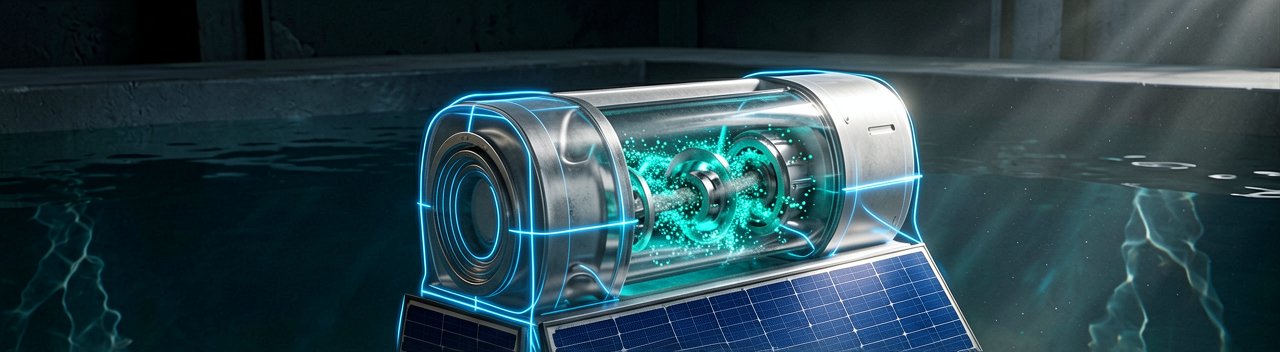
Navigation and control fall to a dual-motor propulsion system with SonicSense™ obstacle avoidance. The Beatbot App enables real-time monitoring, usage records, and remote operation control. Scheduling functions allow for flexible daily use. Smart Auto Parking guides the unit to the pool edge at the end of operation, while one-tap recall enables return without additional tools or direct water contact. The device supports rectangular, round, kidney, and freeform pool layouts. For infinity pools, the robot uses DeepSense mode instead of S-shaped cleaning patterns due to edge detection limitations.
Pricing sits at $499 through Beatbot.com and Amazon.com, according to the press release. The company's product page shows an iSkim Ultra variant at $649 (discounted from $999), suggesting tiered product positioning. Beatbot backs the device with an extended 3-year warranty, up to three times longer than typical coverage in this category. The company holds around 500 patents (granted and pending) and reports that 60% of its team are R&D experts.
Context matters here. Traditional suction-powered pool cleaners cost between $100 and $400 but can carry debris into the pool's filter. Pressure-side cleaners range from $200 to $800 and may require an additional booster pump. Full robotic cleaners typically run $500 to $2,000. The iSkim positions itself as a surface-only specialist rather than a full-floor-and-wall cleaner. That's a deliberate trade-off: focused capability versus comprehensive coverage.
Independent reporting from Yahoo Finance corroborates the core specifications and launch timeline. The coverage emphasizes the continuous 7×24 surface cleaning capability as the primary value proposition. Whether users actually pay for surface-only automation versus full-coverage robots remains the real question. Pool owners with heavy leaf fall might find the 9L capacity compelling. Those needing floor and wall cleaning will still need a separate device.
The WiFi limitation is worth noting. The device's networking currently supports only 2.4GHz WiFi. Dual-band routers supporting both 5GHz and 2.4GHz are compatible, but users with 5GHz-only networks must contact their router service provider to enable 2.4GHz. That's a friction point in an era where most home networks default to 5GHz for performance.
Beatbot's approach reflects a broader industry trend: specialized automation over general-purpose solutions. The iSkim doesn't try to clean everything. It focuses on surface debris, the most visible maintenance burden for pool owners. Whether this narrow focus translates to market adoption depends on whether consumers prefer one device that does one thing well or one device that does everything adequately. Time will tell if the solar charging actually delivers the promised continuous operation in real-world conditions, or if it's another feature that works better in controlled testing than under actual backyard shade.
Artūras Malašauskas is an AI Systems Integrator with 20+ years of production-grade web engineering experience. He has designed, shipped, and scaled enterprise Python/PHP systems for logistics, SaaS, and public-sector clients. For the past year, he has focused exclusively on AI integrations: deploying open-source LLMs, building generative media pipelines (image, audio, video), and engineering multi-agent workflows for real production environments. His standard: reproducibility, security, cost-efficient inference—no vaporware. He documents and evaluates emerging AI tooling, separating verified capabilities from marketing noise. Technical editor at: muza-ai.eu, ai-verslas.lt, ai-naujinos.lt Connect on LinkedIn
Comments