Google's Gemini Robotics-ER 1.6 Enables Robots to Read Gauges and Identify Items
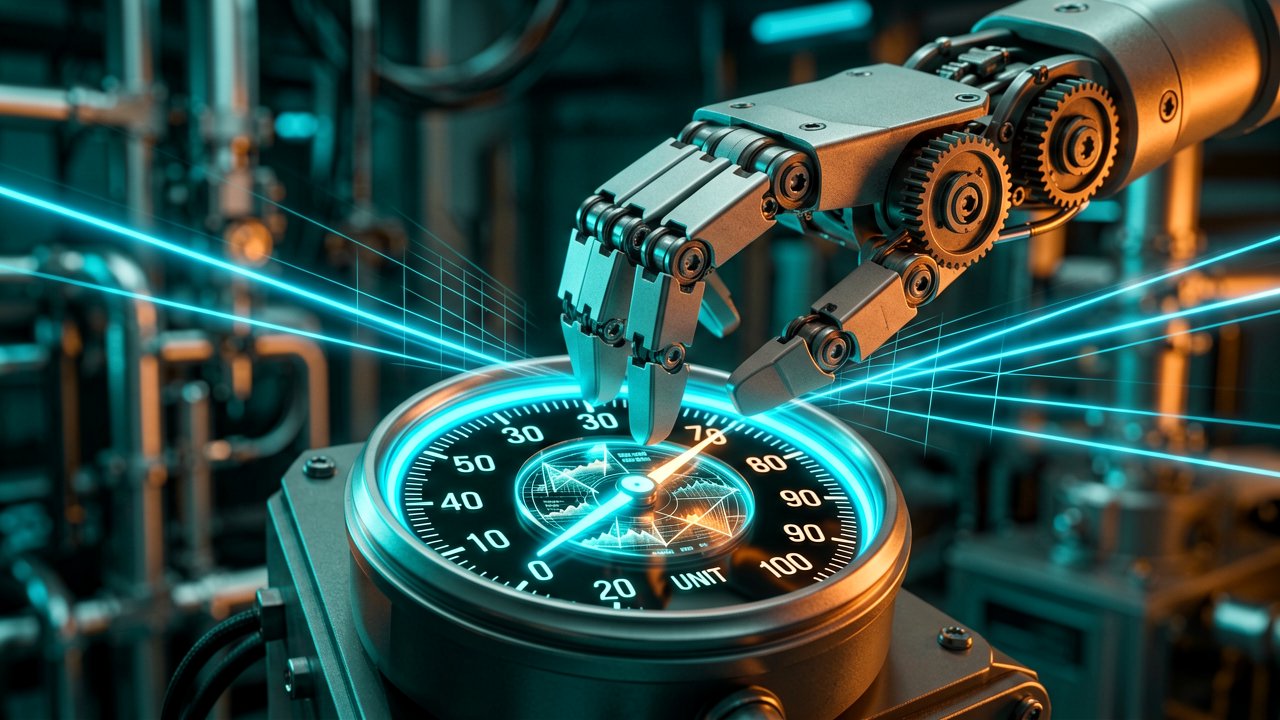
Robots have long struggled with the mundane reality of reading a pressure gauge or identifying the right tool in a cluttered workshop. Google DeepMind addressed this gap with the April 14, 2026 release of Gemini Robotics-ER 1.6, an embodied reasoning model designed to bridge the divide between digital intelligence and physical action.
The update represents a shift from instruction-following to genuine environmental reasoning. According to the official DeepMind blog post, the model enables robots to understand their surroundings with unprecedented precision through enhanced spatial reasoning and multi-view understanding.
Instrument reading is the headline capability. Industrial facilities contain analog instruments—thermometers, pressure gauges, chemical sight glasses—that require constant monitoring. Reading these demands more than simple image recognition. The model must detect needle positions, identify tick marks, read unit labels, account for perspective distortion, and combine multiple data points into a single numeric output. Some gauges even have multiple needles for different decimal places.
The performance gains are stark. ER 1.5 achieved a 23% success rate on instrument reading. Gemini 3.0 Flash reached 67%. ER 1.6 alone hit 86%. With agentic vision enabled, the model reached 93%. This matters because industrial facilities lose billions annually to missed readings and human error on routine monitoring tasks.

Pointing serves as the foundation of spatial reasoning in the new model. When a robot needs to pick the smallest object on a shelf or identify every item that fits inside a container, it uses spatial pointing as an intermediate reasoning step. In benchmark tests, ER 1.6 correctly identified two hammers, six pliers, one scissors, and one paintbrush in a cluttered workshop scene. It also correctly did nothing when asked to point to a wheelbarrow and a Ryobi drill, neither of which were in the image.
Its predecessor, ER 1.5, failed on several of those counts and hallucinated a wheelbarrow that wasn't there. Hallucination in a physical environment is not an abstract problem. A robot acting on a false object detection can cause real damage (and potentially injure someone standing nearby).
Success detection prevents robots from looping forever or moving on too early. ER 1.6 merges live streams from different cameras into a coherent scene understanding. Most robotics setups include an overhead camera and a wrist-mounted camera. The model must fuse both feeds, accounting for angle, occlusion, and motion, to make a reliable call. Lighting shifts, objects partially block the view, and instructions can be ambiguous.
Boston Dynamics integrated Gemini Robotics-ER 1.6 into its Orbit AIVI-Learning product, enabling the Spot robot to autonomously patrol industrial facilities and read data from instruments. This integration went live for all AIVI-Learning customers on April 8, 2026. Marco da Silva, VP and GM of Spot at Boston Dynamics, stated that instrument reading and more reliable task reasoning will enable Spot to see, understand, and react to real-world challenges completely autonomously.
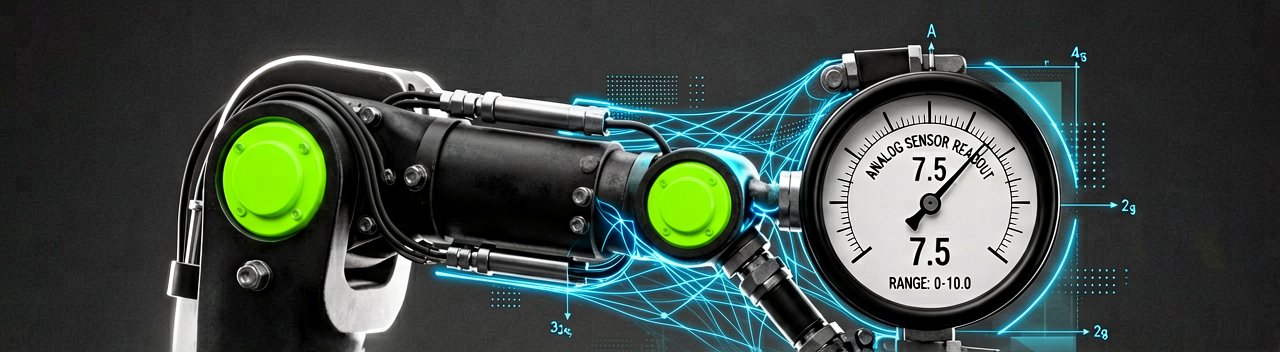
Reporting from India Today corroborates the timeline and scope of the changes, noting the model's ability to help robots move around in complex facilities and read various gauges.
Safety is integrated into every level of the embodied reasoning models. ER 1.6 makes better decisions around physical constraints, correctly identifying which objects should not be picked up based on gripper or material limitations. On tasks modeled after real-life injury reports, the Gemini Robotics-ER models improved over baseline Gemini 3.0 Flash performance by 6% in text-based scenarios and 10% in video-based ones.
The model acts as the high-level reasoning layer for a robot, capable of executing tasks by natively calling tools like Google Search, vision-language-action models (VLAs), or any other third-party user-defined functions. It is not a robot controller. It is the decision layer, not the motor layer.
Starting April 14, 2026, Gemini Robotics-ER 1.6 is available to developers via the Gemini API and Google AI Studio. The company shared a developer Colab containing examples of how to configure the model and prompt it for embodied reasoning tasks.
Whether industrial operators actually pay for this level of autonomy remains the real question. The technology works in controlled environments, but real facilities have unpredictable lighting, moving equipment, and decades-old instruments that were never designed to be machine-readable. The 93% accuracy rate sounds impressive until you consider what happens during that 7% failure rate in a live industrial setting.
Artūras Malašauskas is an AI Systems Integrator with 20+ years of production-grade web engineering experience. He has designed, shipped, and scaled enterprise Python/PHP systems for logistics, SaaS, and public-sector clients. For the past year, he has focused exclusively on AI integrations: deploying open-source LLMs, building generative media pipelines (image, audio, video), and engineering multi-agent workflows for real production environments. His standard: reproducibility, security, cost-efficient inference—no vaporware. He documents and evaluates emerging AI tooling, separating verified capabilities from marketing noise. Technical editor at: muza-ai.eu, ai-verslas.lt, ai-naujinos.lt Connect on LinkedIn
Comments