ICON Launches ICON Prime Defense Unit for Military and Space Construction
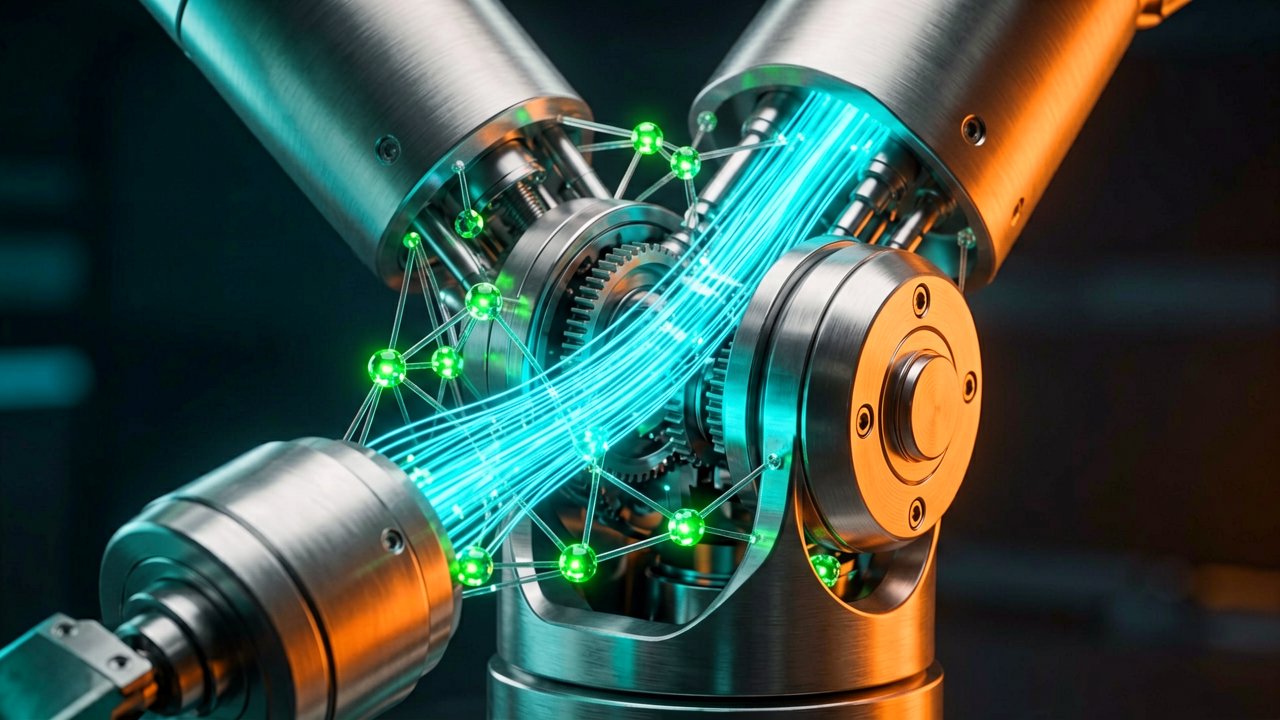
ICON, the Austin-based developer of large-scale 3D printing construction systems, has officially launched ICON Prime, a dedicated business unit focused on defense and space infrastructure. The new division consolidates the company's robotics, software, and materials capabilities into a platform designed for national security applications and extraterrestrial construction projects.
Alongside the announcement, ICON appointed Will Hurd as President of ICON Prime. Hurd, a former CIA clandestine officer and three-term U.S. Congressman from Texas, will lead strategy and government partnerships as the company scales its technology across military and aerospace sectors. The appointment signals a deliberate pivot toward institutional adoption rather than continued prototype validation.
According to the company's official press release, ICON Prime launches with more than $360 million in awarded government contracts. Projects have been delivered in partnership with the U.S. Army, U.S. Air Force, U.S. Marine Corps, U.S. Space Force, Defense Innovation Unit, DARPA, and NASA. The company reports completing over 240 construction projects globally, including military barracks, robotics laboratories, simulated space habitats, and disaster response infrastructure.
Two major contracts illustrate the shift from pilot-stage validation to production-scale deployment. In December 2025, ICON secured a $62.8 million contract with the U.S. Army to construct ten 3D-printed barracks at Fort Bliss, Texas. Construction began in January 2026, with the project targeting delivery of fully compliant units within six months. This represents one of the largest deployments of robotic construction technology for U.S. defense infrastructure to date.
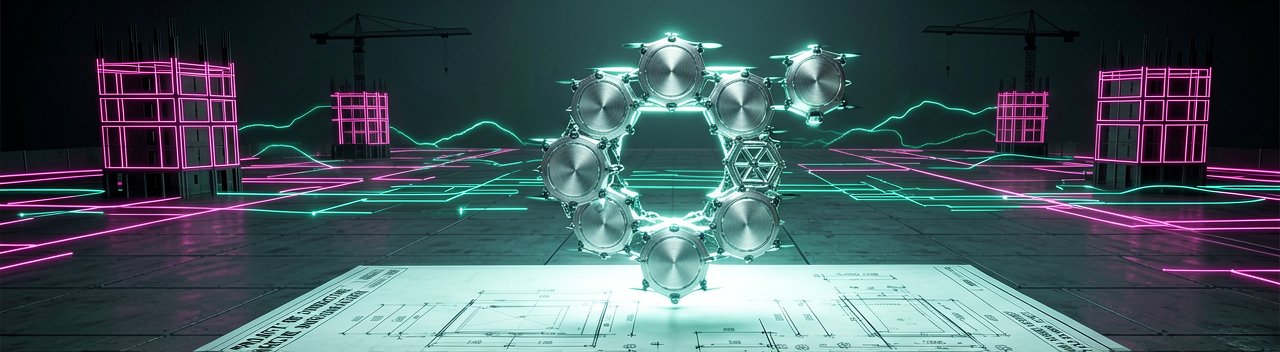
A second contract, awarded in March 2026, will see ICON construct a Rotational Unit Billeting Area (RUBA) and associated infrastructure at Fort Polk, Louisiana. Valued at $67.9 million with a total potential value of $201 million, the project supports reception, staging, and operational readiness activities. Phase one is scheduled for completion in 2027. The award was issued by the Theater Support Center, HQ Mission and Installation Contracting Command at Joint Base San Antonio-Sam Houston.
ICON states that its additive construction systems enable onsite, automated building processes with reduced supply chain dependencies and lower personnel requirements. The company highlights continuous 24/7 operation and simplified logistics as key factors in reducing build times compared to conventional construction methods. For military applications, this matters because traditional construction timelines often stretch into years, while robotic systems can compress that to months (a distinction that becomes critical when infrastructure needs to be deployed rapidly).
Beyond terrestrial defense applications, ICON Prime will support the company's work in space-based construction. ICON has been awarded nearly $60 million from NASA to develop systems capable of building structures on the Moon and Mars using locally sourced materials. The company previously delivered the Mars Dune Alpha habitat at Johnson Space Center, a 1,700 square foot simulated Martian environment used for NASA's Crew Health and Performance Analog (CHAPEA) missions.
Development work continues in collaboration with NASA's Marshall Space Flight Center and other research partners to advance construction technologies for long-duration space habitation. This work aligns with broader Artemis program goals to establish sustainable lunar infrastructure, though the timeline for actual lunar deployment remains uncertain.
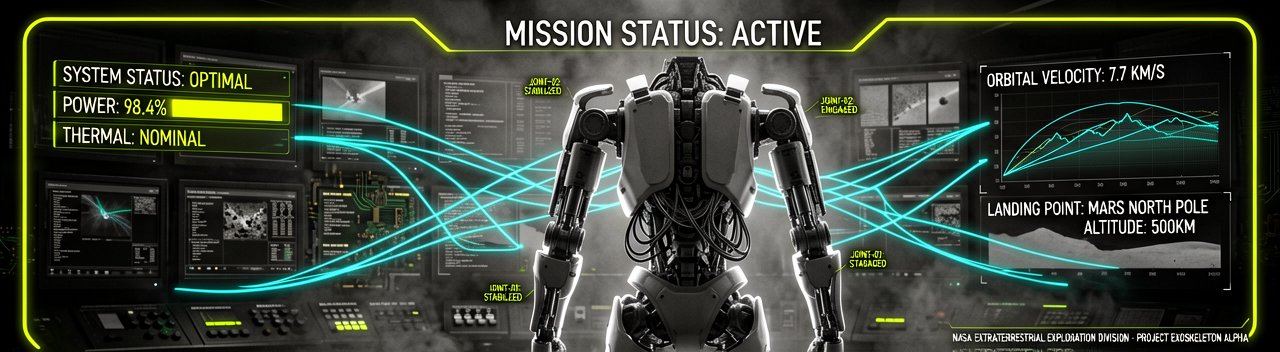
ICON states that its additive construction approach has been validated through more than 65 full-scale wall tests and over 100 component tests meeting Department of Defense Unified Facility Criteria. Additional seismic testing is planned for 2026. These validation efforts are necessary because military infrastructure must meet rigorous safety and durability standards that exceed civilian construction requirements.
Earlier pilot deployments of ICON's construction technology were tested in military settings, including the development of 3D-printed barracks at Fort Bliss for U.S. troop housing. That project demonstrated feasibility but remained closer to pilot-stage implementation. The current Fort Bliss contract, targeting multiple fully compliant barracks units within a defined delivery timeline, builds on this approach for repeatable, production-scale deployment within military construction programs.
According to 3D Printing Industry, this transition follows broader efforts by ICON to commercialize its large-scale additive construction technology through initiatives such as the TITAN program. These developments indicate a progression from technology validation and field trials toward institutional adoption, where additive construction is positioned as a scalable solution for addressing constraints in military construction timelines, supply chain complexity, and the need for rapidly deployable infrastructure.
Senior defense officials have described domestic military installations, many relying on structures decades beyond their intended lifespan, as a readiness crisis. ICON Prime addresses this gap directly by enabling warfighters to stand up infrastructure in months instead of years. The technology fundamentally changes how military planners approach facility development and force projection capabilities.
Whether the military actually adopts this technology at scale beyond these initial contracts remains the real question. Government procurement cycles are notoriously slow, and construction unions have historically resisted automation that reduces labor requirements. ICON Prime's success will depend less on technical capability and more on navigating institutional inertia and political headwinds.
Artūras Malašauskas is an AI Systems Integrator with 20+ years of production-grade web engineering experience. He has designed, shipped, and scaled enterprise Python/PHP systems for logistics, SaaS, and public-sector clients. For the past year, he has focused exclusively on AI integrations: deploying open-source LLMs, building generative media pipelines (image, audio, video), and engineering multi-agent workflows for real production environments. His standard: reproducibility, security, cost-efficient inference—no vaporware. He documents and evaluates emerging AI tooling, separating verified capabilities from marketing noise. Technical editor at: muza-ai.eu, ai-verslas.lt, ai-naujinos.lt Connect on LinkedIn
Comments