X Square Robot Unveils Wall-B AI Model, Promises Home Robots in 35 Days
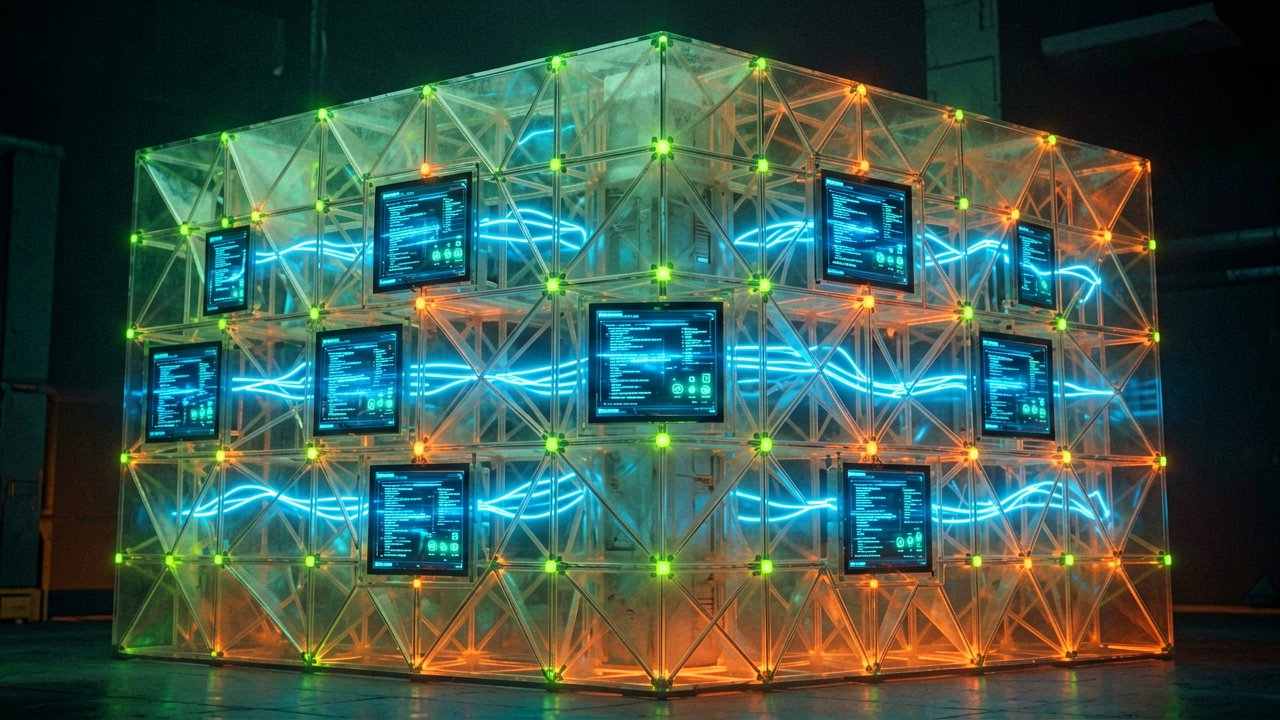
Beijing-based robotics startup X Square Robot has unveiled Wall-B, a new embodied AI foundation model designed for deployment in real-world homes. The company announced at a launch event that its first deployments in everyday households will begin within 35 days. This timeline is aggressive for a sector where commercialization has repeatedly lagged technical progress.
The announcement came through an official press release distributed via PRNewswire on April 23, 2026. Independent reporting from ANTARA News corroborates the core claims and timeline.
Wall-B represents the company's first full implementation of its World Unified Model (WUM) architecture. Unlike modular systems that train perception, language and control separately, X Square Robot said World Unified Model optimizes those capabilities jointly from the very beginning. The company said that allows physical prediction — including force, friction and collision dynamics — to emerge as part of the model itself, rather than being layered on afterward.
Qian Wang, founder and CEO of X Square Robot, drew a sharp distinction between industrial and domestic robotics. "Robots in factories and robots in homes are fundamentally different," Wang said. "In factories, they repeat the same action 10,000 times. In a home, they may need to perform 10,000 different actions, each in a different context. The real challenge is not repetition, but whether a robot can execute new, untrained actions in an unstructured environment."

The technical approach mirrors how human infants learn. Wang Hao, chief technology officer of X Square, explained that human infants do not learn to see, move and communicate in isolated stages. They learn by integrating perception and action at the same time, with constant feedback from the physical world. That is the principle behind their architecture. (It's a nice analogy, though infants don't have to worry about warranty claims.)
Wall-B was built on two core foundations. The first is a data strategy centered on real, non-staged home environments. This aims to expose the system to the long tail of household scenarios — misplaced objects, temporary occlusion, unexpected obstacles and spontaneous human activity. The second is a physics-aware predictive mechanism that enables the robot to anticipate physical outcomes before taking action, rather than merely reacting after contact occurs.
At the event, X Square demonstrated a series of live tasks. In one experience zone, a robot arranged flowers while adjusting its grip and motion in real time as stems shifted position under visual occlusion. The task was completed without pre-set trajectories, according to the company. Attendees watched the robot's arms flex and reposition, the motors humming as it recalculated grip pressure when a stem slipped.
Even so, X Square acknowledged that the technology remains early. Wang said current systems can make mistakes that require remote intervention — such as placing slippers in the kitchen or pausing mid-task to process the next action. But he said the robots' ability to operate continuously and generate new real-world data around the clock gives the system a path to rapid improvement.
That learning loop is central to the company's next milestone: within 35 days, X Square plans to place its robots into everyday homes. The foundation model is designed to integrate closely with the company's hardware, including the QUANTA X1 Pro dual-arm wheeled robot and the more humanoid QUANTA X2, both equipped with highly dexterous hands.
X Square Robot was founded in 2023 in Shenzhen. The company has quickly emerged as one of China's leading embodied AI startups, using an end-to-end approach to robotics. It is backed by billions of yuan from investors including Alibaba, Meituan, Xiaomi and ByteDance.
The 35-day timeline raises questions about scale and logistics. How many homes will receive robots? What support infrastructure exists for troubleshooting? The press release does not specify deployment numbers or geographic scope. This is the kind of detail that matters when you're actually waiting for a robot to show up at your door.
Traditional robotics systems typically rely on modular architectures, where vision, language and motion modules are developed separately and later stitched together. That approach has worked well in structured environments like factories, but tends to break down in variable environments like homes. Wall-B works differently by jointly training for perception, language, action and physical prediction from the outset.
The system also incorporates a physics-aware prediction mechanism that allows it to simulate the results of actions before executing them. X Square likens the process to how humans catch a ball: rather than waiting for the ball to arrive, the brain predicts its trajectory the moment it is thrown. Its model applies similar predictive reasoning, allowing robots to account for gravity, friction, and collision risk in real time.
These features aim to address a persistent challenge in robotics: the gap between simulated training environments and real-world deployment. This is an essential capability for safe deployment of robots in unpredictable home environments. The company said its work on physical robotic platforms has helped it accumulate practical experience in bridging simulation and reality across diverse operating conditions.
Wang called the 35-day plan a countdown, not a concept. The model is already operating in real-world settings and improving continuously, with human intervention expected to decline over time. Whether users actually pay for it remains the real question.
Artūras Malašauskas is an AI Systems Integrator with 20+ years of production-grade web engineering experience. He has designed, shipped, and scaled enterprise Python/PHP systems for logistics, SaaS, and public-sector clients. For the past year, he has focused exclusively on AI integrations: deploying open-source LLMs, building generative media pipelines (image, audio, video), and engineering multi-agent workflows for real production environments. His standard: reproducibility, security, cost-efficient inference—no vaporware. He documents and evaluates emerging AI tooling, separating verified capabilities from marketing noise. Technical editor at: muza-ai.eu, ai-verslas.lt, ai-naujinos.lt Connect on LinkedIn
Comments