Tencent Releases HY-Embodied-0.5-X for Real-World Robot Control
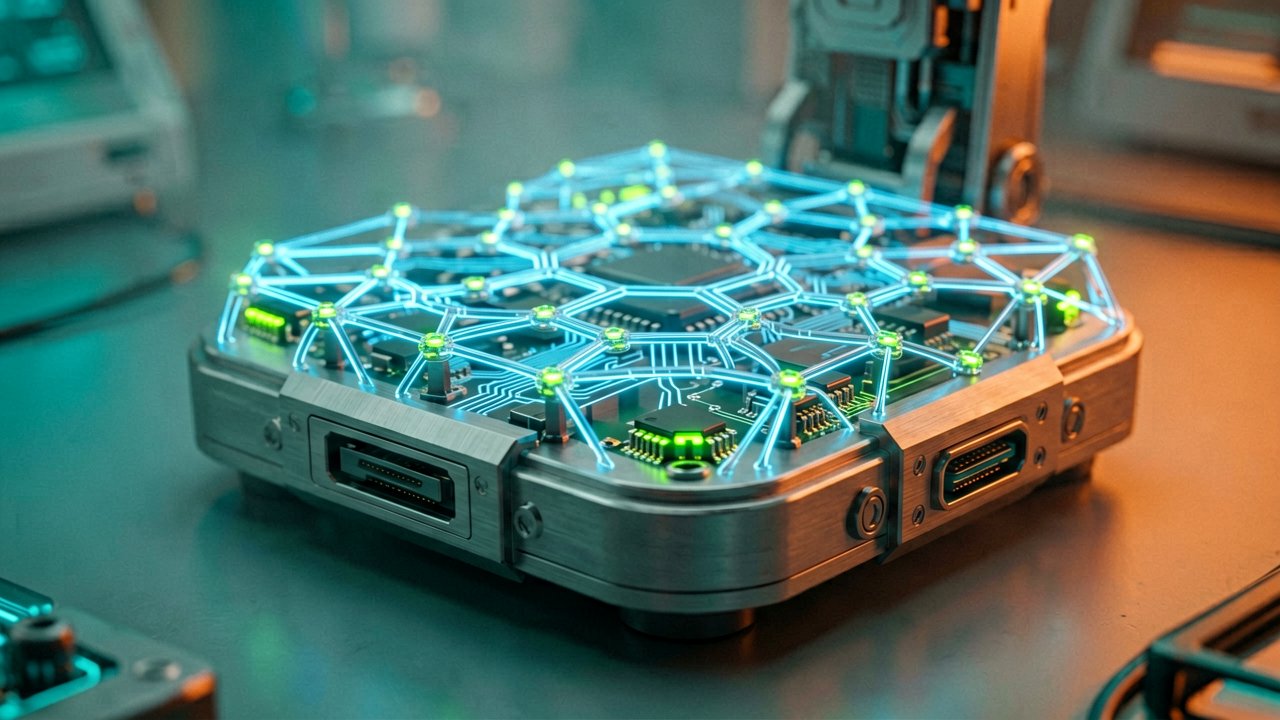
Tencent has officially released HY-Embodied-0.5-X, an open-source multimodal foundation model designed specifically for real-world robotic interaction. The announcement came from the company's Robotics X Lab in collaboration with the Hunyuan team, marking a shift from theoretical embodied AI toward practical deployment on physical hardware.
The model builds on the HY-Embodied-0.5 MoT-2B architecture, which contains 4 billion total parameters but activates only 2 billion during inference. This design choice matters for anyone who has ever watched a robot freeze mid-task because its processor choked on a simple command. The reduced activation footprint enables real-time response on edge devices, which is non-negotiable for household service robots that need to react to spills, obstacles, or unexpected movements.
According to the official GitHub repository, the model achieves state-of-the-art performance on 10 mainstream embodied task-planning benchmarks, ranking first among edge-side domain models on 7 of them. The technical documentation details improvements in fine-grained manipulation understanding, spatial reasoning, action prediction, and risk assessment—capabilities that distinguish it from general-purpose vision-language models.
The architecture employs a Mixture-of-Transformers (MoT) design with latent tokens for modality-specific computing. This isn't just a marketing term; it means the vision pathway gets dedicated computational resources separate from language processing. The result is faster inference without sacrificing the perceptual detail needed to distinguish a tomato from a potato when the instruction is "put the tomato in the fridge."
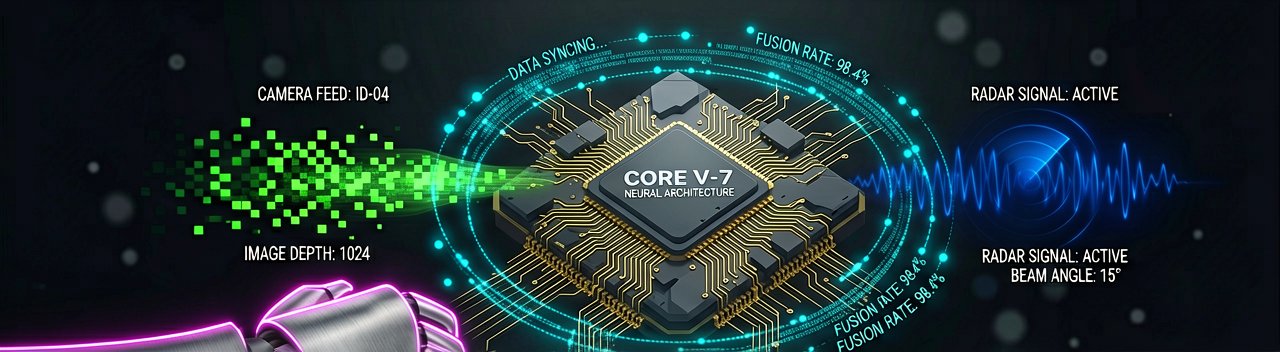
Training data represents another significant investment. The team combined self-collected first-person robotic operation data, robotic-arm manipulation trajectories, and open-source embodied datasets into a corpus exceeding 200 billion tokens. More than 100 million of these data points are specifically embodied and spatial-focused. Each core sample includes chain-of-thought annotations and passes through a "generate → verify → correct → eval-regression" quality loop (which sounds tedious but apparently works).
Two variants comprise the HY-Embodied-0.5 family. The MoT-2B targets edge deployment with real-time response capability. The MoE-32B variant has a larger parameter scale for complex reasoning tasks. The 32B version reportedly achieves performance comparable to Gemini 3.0 Pro on frontier benchmarks, though the 2B model is the one developers will actually deploy on robots with limited compute.
Physical testing matters here. The team built an internal embodied-planning benchmark on AI2Thor with 1,011 tasks across four household scenes: kitchen, bedroom, living room, and bathroom. The model evaluates planning and execution on navigation, grasping, placement, appliance operation, and food cutting. HY-Embodied-0.5-X shows measurable gains on long-horizon manipulation, self-awareness, and spatial understanding compared to baseline models.
Integration with the PlaygroundX simulation framework (built on Tairos) demonstrates the complete ReAct loop: reason → execute → detect failure → replan. When an initial plan fails, the model adjusts execution based on environmental feedback. This isn't theoretical—developers can test commands like "throw the potato into the trash" or "close the fridge door" and watch the model handle on-the-fly replanning.

Installation requires Linux, Python 3.12, CUDA 12.6, PyTorch 2.10.0, and an NVIDIA GPU with at least 16 GB VRAM. The setup script compiles flash_attn from source, which takes 10–20 minutes. That's a reasonable barrier for research labs but potentially prohibitive for hobbyists trying to run this on a Raspberry Pi cluster. The weights are distributed as .safetensors files and expected under a checkpoints directory.
From a developer perspective, the model integrates with the Transformers library through a specific commit that includes native HY-Embodied support. The inference pipeline accepts both image and text inputs, with an optional thinking mode that can be disabled for faster generation. Batch inference is supported for production workloads.
The accompanying arXiv paper, submitted April 8, 2026, documents extensive evaluations across 22 benchmarks spanning visual perception, spatial reasoning, and embodied understanding. The MoT-2B model outperforms similarly sized state-of-the-art models on 16 of these benchmarks. Downstream robot control experiments leverage the VLM foundation to train an effective Vision-Language-Action (VLA) model.
This release positions Tencent's embodied intelligence stack against competitors like Google and Meta, who have been investing heavily in robot-brain architectures. The open-source approach invites community validation and iteration, though the hardware requirements mean widespread adoption will depend on edge compute becoming cheaper and more accessible.
Whether this actually translates to robots that don't knock over your coffee table remains to be seen. The benchmarks are impressive, but real-world deployment introduces variables no simulation can fully capture. Developers will need to test the model's risk assessment and failure reflection capabilities in unstructured environments before trusting it with anything more valuable than a demo potato.
Artūras Malašauskas is an AI Systems Integrator with 20+ years of production-grade web engineering experience. He has designed, shipped, and scaled enterprise Python/PHP systems for logistics, SaaS, and public-sector clients. For the past year, he has focused exclusively on AI integrations: deploying open-source LLMs, building generative media pipelines (image, audio, video), and engineering multi-agent workflows for real production environments. His standard: reproducibility, security, cost-efficient inference—no vaporware. He documents and evaluates emerging AI tooling, separating verified capabilities from marketing noise. Technical editor at: muza-ai.eu, ai-verslas.lt, ai-naujinos.lt Connect on LinkedIn
Comments