FREELANDER 8 Show Model Debuts as Chery-JLR Revives British SUV Brand
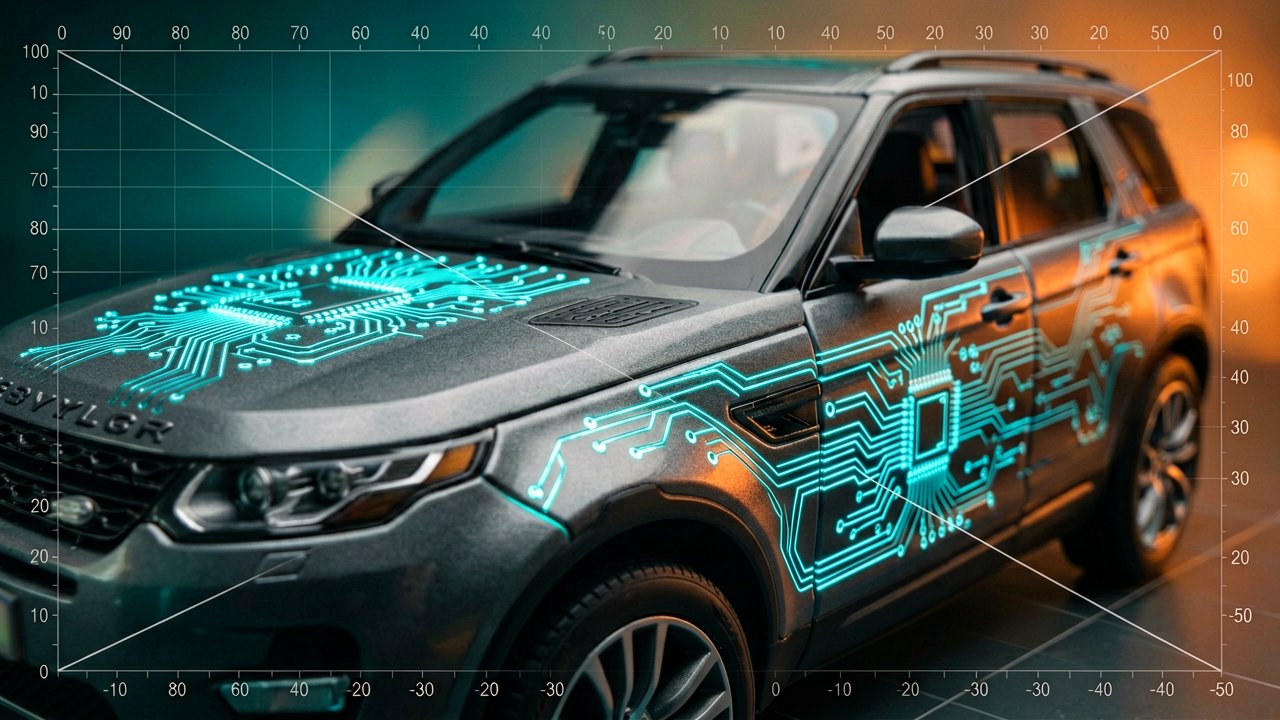
The automotive industry witnessed a notable resurrection on April 25, 2026, when FREELANDER International unveiled its first production-intent show model at a Brand Night event in Wuhu, China. The vehicle, named FREELANDER 8, represents the tangible culmination of a partnership between Chery Automobile and Jaguar Land Rover that has spanned 14 years of joint cooperation.
Nearly 500 dealer partners and media guests attended the event, which was hosted alongside the Chery International Business Summit. Mr. Zhang Guibing, Executive Vice President of Chery Automobile and President of Chery International, was present to witness the milestone. Ms. Lucia Mao, CEO of FREELANDER International, delivered the keynote speech outlining the brand's positioning and global strategy.
The FREELANDER nameplate carries genuine historical weight. The original FREELANDER launched in 1997 and held the title of Europe's best-selling SUV for five consecutive years through 2002. That pioneering spirit—freedom, innovation, exploring boundaries—forms the foundation of the reborn brand's DNA. Now, through the Chery-JLR collaboration, the nameplate has evolved into an independent, global premium new energy brand.
Design leadership falls to Phil Simmons, Director of FREELANDER Design Hub. Simmons was deeply involved in creating the original FREELANDER and the third-generation Range Rover. He also led design work on the Range Rover Velar and New Defender, with multiple World Car Design of the Year honors. His return to the FREELANDER project infuses the brand's premium heritage with intelligent technology for the new era.

The FREELANDER 8 integrates eight curated design philosophy elements. The Castle Body design principle creates a strong, grounded lower body paired with a tapering, light upper cabin. The signature triangle window—originating from the original FREELANDER—remains a defining brand element and directly inspired the brand symbol unveiled at the Brand Night. Interlocking headlights feature distinctive square light modules and sharp horizontal light blades, creating a bold, technical face. Floating taillights echo the front headlamps, carrying the signature family triangle detail into a clean, geometric pattern.
Inside the cabin, the segment's largest Mini LED integrated screen dominates the dashboard. This surround view gallery pulls in real-time vehicle status, road conditions, weather, and navigation data. Second-row passengers get zero-gravity seats engineered to reduce fatigue on long journeys. The classic elevated commander position returns for drivers, offering a commanding view of the road.
Technical specifications reveal serious investment in modern capability. The cockpit runs on the Qualcomm Snapdragon 8295 chip (5nm process), enabling an active interactive smart cockpit with support for up to 8 multi-screen connections. L2+ ADAS comes standard, with Advanced Valet Parking Driver (VPD) available in selected markets. The i-ATS—marketed as the world's first Intelligent All-Terrain System—supports 9 terrain modes and responds to real-time surface changes in milliseconds, automatically engaging the optimal driving mode.
This capability combines with a virtual central lock, rear electronic limited-slip differential (e-LSD), and dual-chamber air suspension. The FREELANDER 8 is built to meet global five-star safety standards, including ENCAP, CNCAP, Latin NCAP, ANCAP, and ASEAN NCAP. Over 1,000 test units will deploy worldwide—from Southeast Asia to the Middle East, Australia, Mohe, and Northern Europe—covering over 99% of real driving conditions.
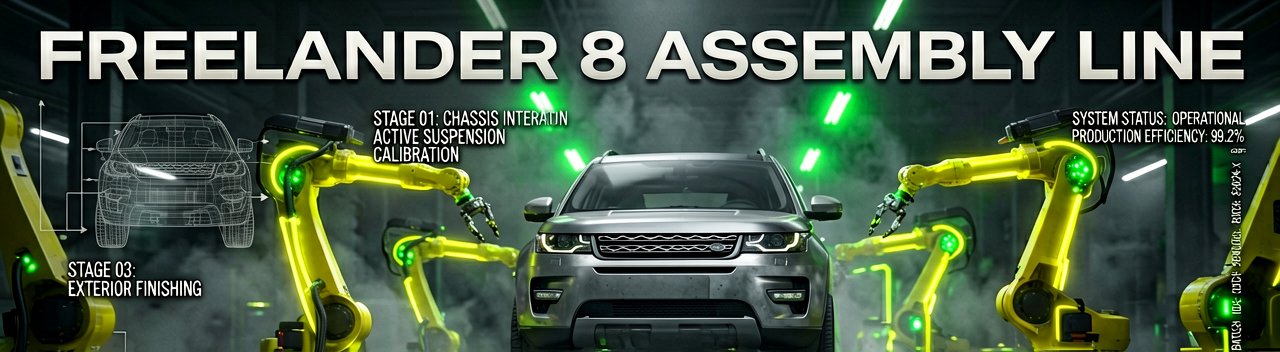
The global roadmap positions the Middle East as the first destination. Within five years, FREELANDER aims to expand into over 90 countries and establish more than 1,100 touchpoints worldwide. This creates a broad-coverage, operationally efficient global retail network. The brand operates as a fully independent global entity with more than 5,000 employees, delivering end-to-end capabilities from design, development, and manufacturing to global commercial operations.
Backed by Chery International's 17 subsidiaries in key markets and 11 global research institutes, FREELANDER combines global R&D, manufacturing, and marketing resources. Chery brings advanced Chinese technology to the partnership, while JLR contributes expertise in world-class design. The brand positioning emphasizes British Premium Intelligent All-Terrain, combining authentic British premium, leading intelligent technology, and professional all-terrain capability.
Four core brand principles guide the strategy: British Unconventionality, Contemporary Premium, Creative Intelligence, and Expressive. The brand aims to deliver an all-scenario, high-quality mobility experience for contemporary explorers worldwide. This is not merely nostalgia marketing—it's a calculated repositioning of a dormant asset into the premium EV segment.
Production will occur at JLR and Chery manufacturing plants in Changsu, China. The FREELANDER 8 will replace the Land Rover Discovery Sport and Range Rover Evoque in the product lineup. The vehicle will be built on Chery's 800V platform, enabling purely electric (EV), plug-in hybrid (PHEV), and extended-range electric vehicle (EREV) powertrain options.
International variants are in intensive development. According to reporting from Electrek, the brand confirmed that international variants will make their distinguished entry into the world's foremost markets after the China launch. The vehicles undergo extensive testing in Europe and are designed to comply with EURO NCAP's updated vehicle protocols.
The official press release from Macau Business details the complete specifications and global deployment timeline. Every kilometer of testing proves the commitment to global quality standards, though whether that commitment translates to market acceptance remains to be seen.
Can FREELANDER compete with top-selling electric off-roaders like the GWM Tank 700 or BYD's Yangwang U8 in China? The brand plans to launch a new vehicle every six months for the next five years. That's an aggressive cadence (ambitious, to say the least, given how many EV startups have burned through capital trying similar schedules).
The physical reality of interacting with this vehicle matters more than marketing claims. How does the zero-gravity seat actually feel after three hours? Does the 8295 chip deliver the promised responsiveness, or is there lag when switching between screens? Will the i-ATS genuinely adapt to terrain changes, or does it require manual intervention? These questions won't be answered until customers actually sit behind the wheel.
Whether dealers in the Middle East and beyond will commit to a brand that disappeared from European roads in 2015 is the real question. The infrastructure is there—5,000 employees, 17 subsidiaries, 11 research institutes—but brand trust takes time to rebuild. The production-intent show model is no longer a vision; it's a reality coming to life. Whether that reality includes paying customers remains the critical variable.
Artūras Malašauskas is an AI Systems Integrator with 20+ years of production-grade web engineering experience. He has designed, shipped, and scaled enterprise Python/PHP systems for logistics, SaaS, and public-sector clients. For the past year, he has focused exclusively on AI integrations: deploying open-source LLMs, building generative media pipelines (image, audio, video), and engineering multi-agent workflows for real production environments. His standard: reproducibility, security, cost-efficient inference—no vaporware. He documents and evaluates emerging AI tooling, separating verified capabilities from marketing noise. Technical editor at: muza-ai.eu, ai-verslas.lt, ai-naujinos.lt Connect on LinkedIn
Comments