SpaceX Falcon Heavy Returns After 18-Month Hiatus for ViaSat-3 F3 Launch
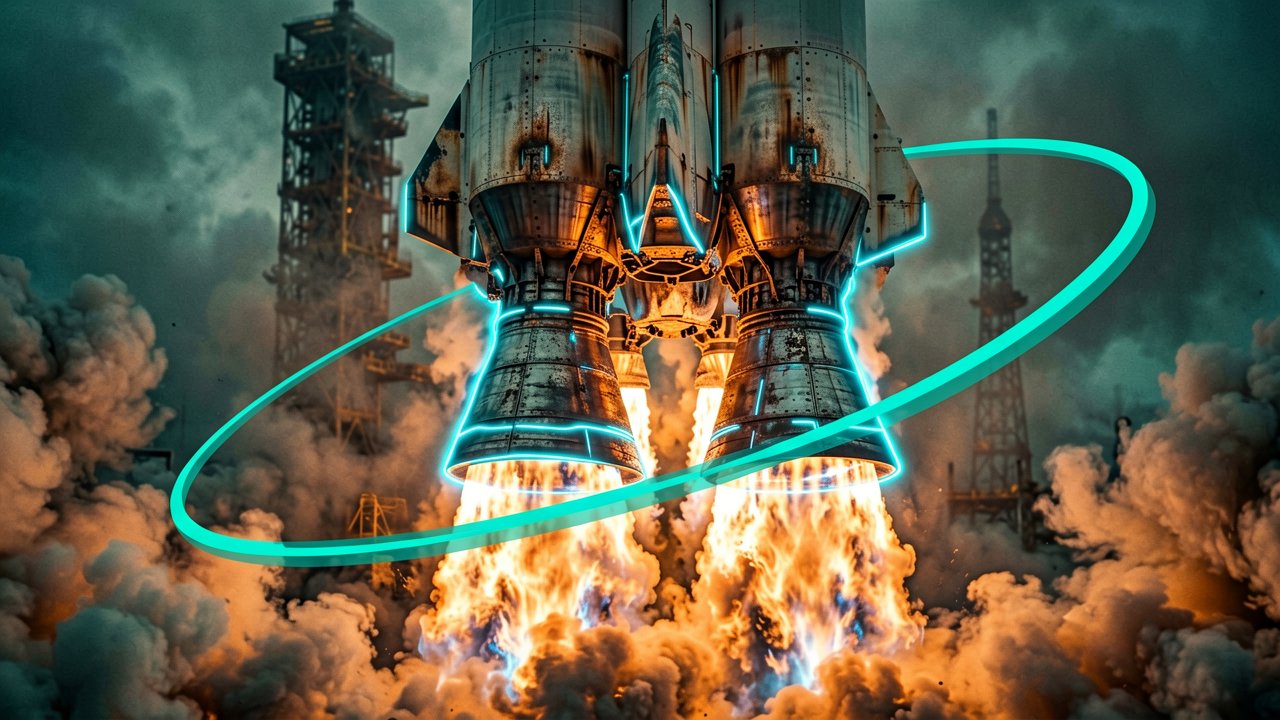
The SpaceX Falcon Heavy rocket is scheduled to launch for the first time in 18 months on Monday, April 27, from Launch Complex 39A at NASA's Kennedy Space Center in Florida. The 85-minute launch window opens at 10:21 a.m. EDT (1421 GMT), with live coverage beginning approximately 15 minutes before liftoff.
According to the official SpaceX mission page, this flight marks the 12th mission for the triple-booster rocket, which debuted in February 2018 with Elon Musk's Tesla Roadster test flight. The vehicle has maintained a perfect success record across all 12 missions.
The payload is the ViaSat-3 F3 communications satellite, weighing 6.6 metric tons. This is the third and final satellite in the ViaSat-3 constellation, completing a mini-constellation that began with ViaSat-3 F1 in April 2023 (also on Falcon Heavy) and ViaSat-3 F2 in November 2025 (on a United Launch Alliance Atlas V).
Unlike the Europa Clipper mission that last flew on Falcon Heavy in October 2024, ViaSat-3 F3 isn't heading to the outer solar system. The satellite will deploy to geosynchronous transfer orbit roughly five hours after launch, eventually settling into geostationary orbit 22,236 miles above Earth. At that altitude, the satellite can "hover" over the same geographic region continuously.
Specifically, ViaSat-3 F3 will cover the Asia-Pacific region, adding more than one Terabit per second of capacity to the overall ViaSat network. Dave Abrahamian, ViaSat's vice president of space systems, noted this launch represents "a pivotal moment in our journey to bring fast, secure and reliable high capacity, highly flexible broadband to our commercial, defense and consumer customers."
The Falcon Heavy generates approximately 5.1 million pounds of thrust at liftoff, making it the second-most-powerful operational launcher after NASA's Space Launch System (8.8 million pounds). SpaceX's Starship creates 16.7 million pounds, but remains in development (a distinction that matters when you're trying to move heavy payloads).
For this mission, the two side boosters—tail numbers 1072 and 1075—will attempt recovery landings at Landing Zones 2 and 40 at Cape Canaveral Space Force Station. Booster 1075 has flown 21 times previously, while 1072 is on its second flight. The center core, B1098, will be expended into the Atlantic Ocean.
Spaceflight Now's coverage notes the weather forecast shows a 70 percent chance for favorable conditions, with meteorologists monitoring cumulus cloud and surface electric field rules. A Carolina Low is expected to push a weak cold front through central Florida early Monday morning, which could affect cloud development over the spaceport.
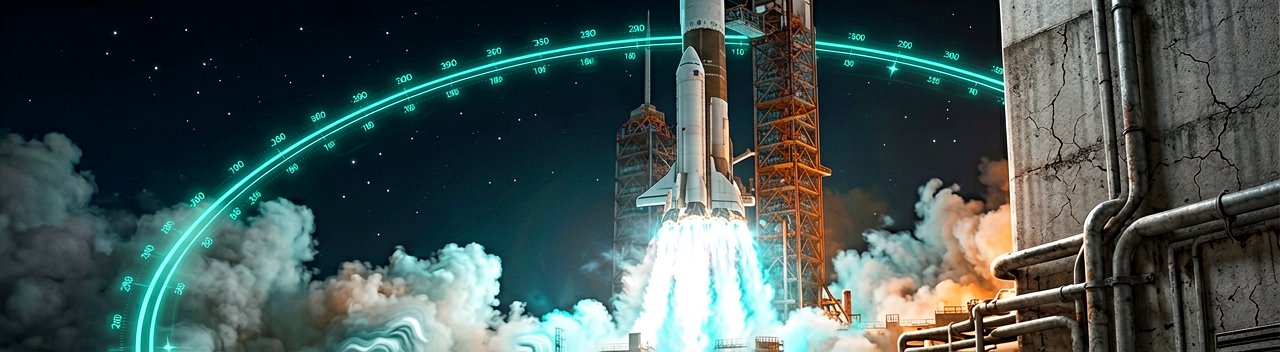
The mission timeline includes Max Q at approximately 1 minute 9 seconds after liftoff, side booster separation at 2 minutes 25 seconds, and payload deployment at roughly 4 hours 57 minutes. The satellite will then require about two months for orbit raising and on-orbit checkout before Boeing hands it over to ViaSat for operational use.
Abrahamian highlighted that Falcon Heavy's power advantage over Atlas V means ViaSat-3 F3 will reach a more favorable transfer orbit for electric propulsion—just below geostationary apogee, about 23,000 kilometers perigee-wise, with only three degrees of inclination. This reduces the satellite's own fuel requirements for reaching final orbit.
The phased array technology on ViaSat-3 satellites allows flexible beam formation wherever needed, unlike traditional satellites with fixed beam locations and spectrum allocations. This means capacity can follow demand within the spacecraft's field of view rather than being trapped in overloaded beams while others sit empty.
Whether the Asia-Pacific market actually needs this much additional capacity remains the real question. The satellite industry has been betting on demand growth for years, but actual adoption rates will determine if this constellation pays for itself.
Artūras Malašauskas is an AI Systems Integrator with 20+ years of production-grade web engineering experience. He has designed, shipped, and scaled enterprise Python/PHP systems for logistics, SaaS, and public-sector clients. For the past year, he has focused exclusively on AI integrations: deploying open-source LLMs, building generative media pipelines (image, audio, video), and engineering multi-agent workflows for real production environments. His standard: reproducibility, security, cost-efficient inference—no vaporware. He documents and evaluates emerging AI tooling, separating verified capabilities from marketing noise. Technical editor at: muza-ai.eu, ai-verslas.lt, ai-naujinos.lt Connect on LinkedIn
Comments