3D Systems Unveils SLA 825 Dual and AddiTrak at RAPID + TCT 2026
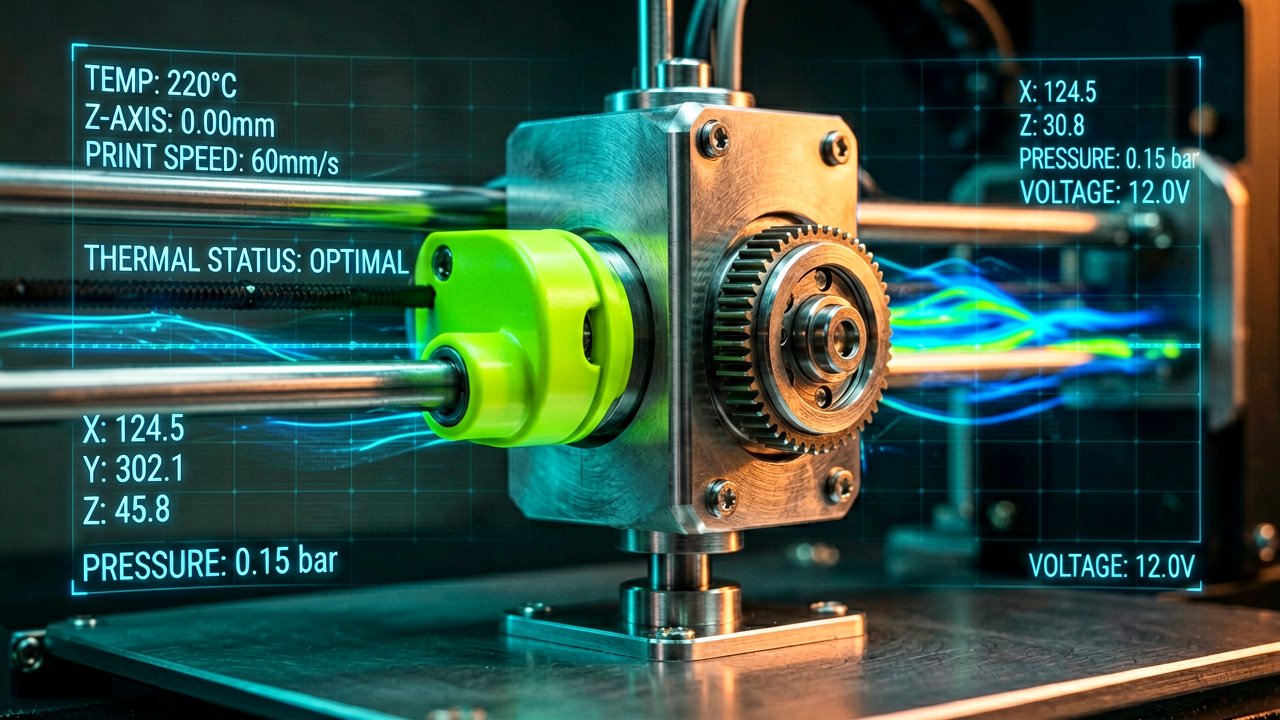
The additive manufacturing sector received a significant hardware and software update on April 13, 2026. 3D Systems announced the SLA 825 Dual stereolithography platform and AddiTrak factory monitoring software during the RAPID + TCT conference in Boston. The company positioned these releases as production-ready solutions rather than prototyping tools.
According to the official press release, the SLA 825 Dual features a 22% larger build volume and delivers up to 25% faster build speeds compared to its predecessor. The investor relations document specifies these metrics apply to high-utilization environments requiring dimensional accuracy and repeatability. Some secondary reports claimed 30% speed improvements, but the company's own documentation settles on 25%.
Dual-laser technology drives the throughput gains. Industrial users can now execute multiple build-ups within a single shift. The larger platform consolidates more parts per run, which reduces the physical handling time between jobs (a tedious bottleneck that has frustrated production managers for years).
On the software side, AddiTrak provides on-premises fleet monitoring and process control. The platform integrates Industry 4.0 standards including OPC UA and MTConnect protocols. This matters because factory floors need visibility across connected printer fleets without sending sensitive design data to cloud servers. Security-conscious manufacturers will appreciate the fully on-premises architecture.
Dr. Jeff Graves, President and CEO of 3D Systems, framed the announcements as the culmination of several years of disciplined portfolio investments. His keynote remarks emphasized production-focused solutions over experimental applications. The company is clearly trying to distance itself from the "3D printing is just for prototypes" narrative that has lingered in the industry.
Physical interaction with the technology will differ from typical desktop 3D printing experiences. The SLA 825 Dual requires trained operators to manage resin handling, post-processing stations, and build platform loading. The machine's footprint remains unchanged despite the larger build volume, which means existing factory floor layouts can accommodate the upgrade without major renovations.
Target sectors include aerospace, automotive, healthcare, and industrial manufacturing. The company highlighted customer examples like Eureka Pumps AS, which uses Direct Metal Printing technology to manufacture large-format metal spare parts on demand. This addresses part obsolescence and inventory constraints in mission-critical environments.
At Booth #1801 during the April 13–16 event, attendees could experience the SLA 825 Dual firsthand in the United States for the first time. The company blog post notes that experts were available to discuss building larger parts without sacrificing quality. They also demonstrated an augmented reality tool called Worklink that places full-scale 3D printer models into actual environments using tablets or mobile devices.
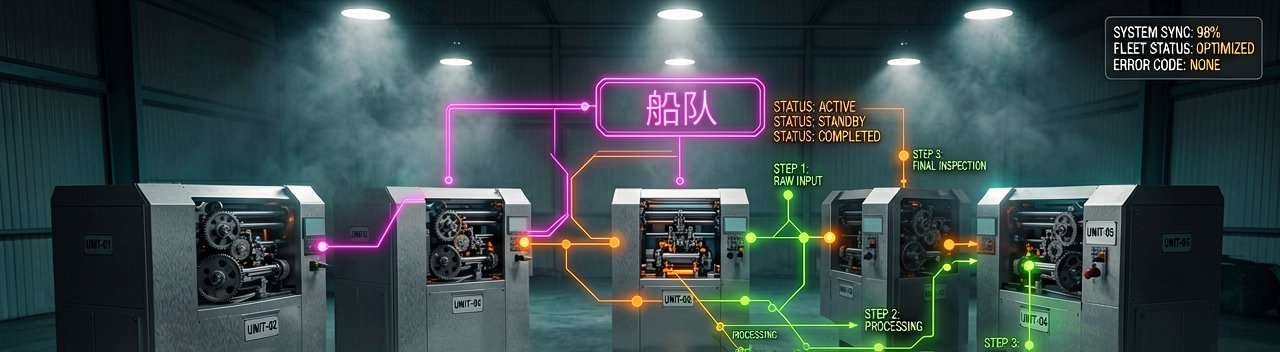
Joe Wisnewski, VP of Software Engineering, led sessions on AddiTrak functionality. The software provides centralized monitoring, analytics, and optimization through a unified dashboard. It integrates with 3D Sprint for end-to-end workflow management from job preparation through build execution.
Healthcare applications received attention too. Dr. Graves participated in a panel titled "Life-Saver: How AM is Transforming Point-of-Care" alongside executives from Materialise, HP, and Carbon. The discussion covered patient-specific instruments and dental solutions from NextDent by 3D Systems.
The company also showcased Direct Metal Printing capabilities for semiconductor wafer tables with optimized thermal management. Racing teams like Alpine Formula One and HAAS Factory Racing use 3D Systems technology for wind tunnel models with complex aerodynamics.
Whether these production-scale solutions actually move the needle on adoption rates remains uncertain. The additive manufacturing industry has promised "production-ready" hardware before, only to find that material costs, post-processing requirements, and operator training create hidden barriers. The SLA 825 Dual and AddiTrak represent genuine technical improvements, but the real test comes when customers calculate total cost of ownership versus traditional manufacturing methods.
3D Systems continues to offer selective laser sintering and direct metal printing alongside the new stereolithography platform. The existing software ecosystem includes 3D Sprint, 3DXpert, haptic devices, and simulation scanners. This integrated approach aims to reduce friction between design validation and production readiness.
For manufacturers considering the transition, the question isn't whether the technology works. It's whether the throughput gains justify the capital investment when compared to injection molding or CNC machining for their specific use cases. Time and customer adoption data will provide the answer.
Artūras Malašauskas is an AI Systems Integrator with 20+ years of production-grade web engineering experience. He has designed, shipped, and scaled enterprise Python/PHP systems for logistics, SaaS, and public-sector clients. For the past year, he has focused exclusively on AI integrations: deploying open-source LLMs, building generative media pipelines (image, audio, video), and engineering multi-agent workflows for real production environments. His standard: reproducibility, security, cost-efficient inference—no vaporware. He documents and evaluates emerging AI tooling, separating verified capabilities from marketing noise. Technical editor at: muza-ai.eu, ai-verslas.lt, ai-naujinos.lt Connect on LinkedIn
Comments