B.C. Pilots AI-Driven Drug Tracking System to Combat Toxic Supply
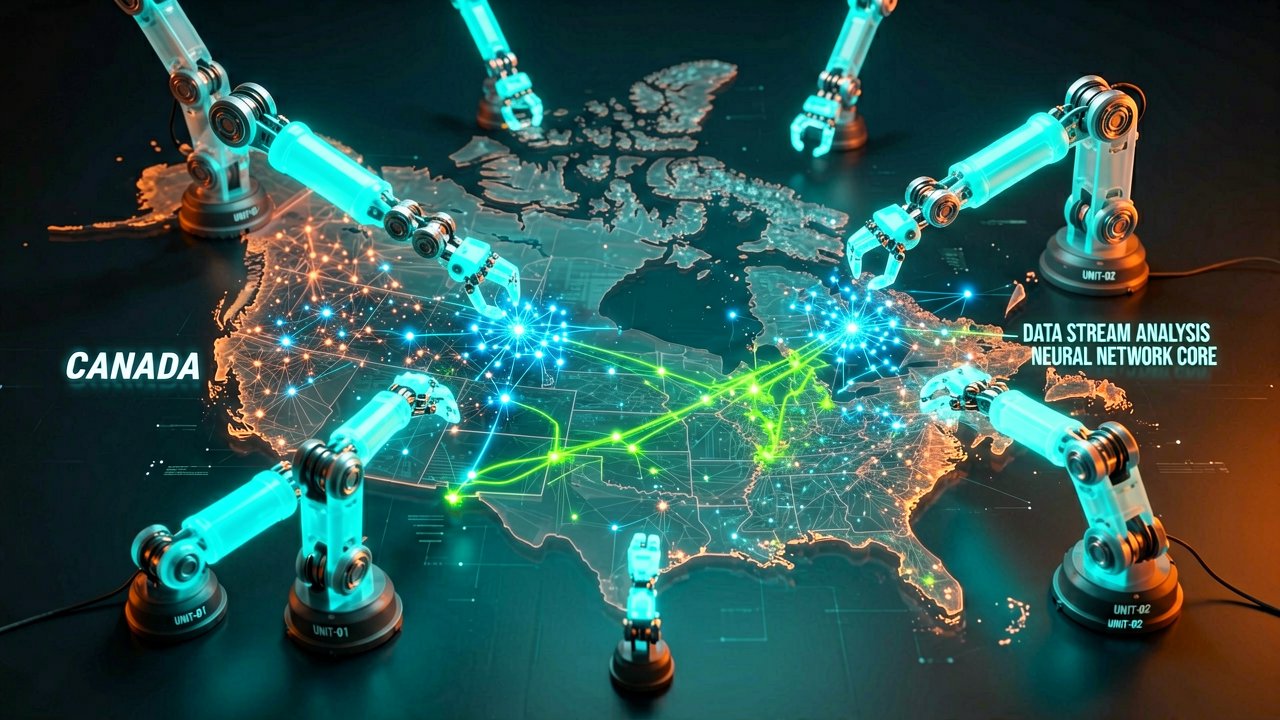
The provincial government of British Columbia has activated a pilot program that combines artificial intelligence with forensic robotics to track the flow of toxic drugs across communities. Officials say the Track and Trace system will provide earlier warnings about dangerous batches before overdoses occur.
According to the official provincial news release, the initiative represents the first jurisdiction in Canada to deploy this technology. The program automates chemical analysis of seized substances and feeds data into an AI-assisted dashboard for law enforcement to map distribution patterns.
Here's how it works in practice: police seize drugs during operations, lab robotics analyze the chemical makeup using mass spectrometry, and the resulting molecular fingerprints upload to a secure database. The AI then connects these signatures across time and geography to identify whether drugs in different regions share the same source. It's essentially giving each batch a digital license plate (which sounds more sci-fi than it should be).
The provincial government is investing $300,000 annually for two years—$600,000 total—from its gun and gang violence action fund. Sixteen law enforcement departments have already begun using the system, including Abbotsford PD and Delta PD in the Fraser Valley region.
Aidos Innovations, a non-profit translational science institute, developed the technology in collaboration with researchers at the University of British Columbia. The team includes Dr. Matthew Roberts, managing director of Aidos Innovations, and chemistry professors Dr. Glenn Sammis and Dr. Dan Bizzotto, who began exploring this application in 2016.
Public Safety Minister Nina Krieger stated the illicit drug supply is changing faster than current warning systems can track. The Track and Trace dashboard aims to close that gap by providing real-time visibility into what substances are circulating and where they're moving.
Chief Constable Fiona Wilson of the Victoria Police Department compared the technology to the advent of DNA analysis. She noted that officers can currently seize drugs but cannot reliably connect samples across communities or link overdose trends to supply changes quickly enough.
The system focuses on samples not being used for criminal prosecutions, according to officials. Krieger emphasized the program will not track individuals or criminalize people who use drugs—it's focused on understanding and disrupting the supply of the most dangerous substances.
However, questions remain about whether police seizures alone provide an accurate picture of what's actually circulating on the street. Evan Light, associate professor of policy studies at the University of Toronto, noted that drug-checking sites across B.C. already collect information directly from users, which may be more representative of actual street supply.
Light also raised concerns about the program's evolution. While officials say the pilot won't criminalize users, Wilson acknowledged that data could eventually support criminal prosecutions. "Eventually, we will be able to use the information gleaned from the analysis and the dashboard for criminal prosecution," she said. "We are not there yet but we do hope to get there one day."
That possibility could discourage people from engaging with harm-reduction services, Light warned. Garth Mullins, a drug policy advocate and author, echoed similar concerns, noting that enforcement-focused approaches have historically failed to reduce harm. "We've tried this for over 100 years … trying to arrest our way out of this. It doesn't work," Mullins said.
Mullins also pointed out that even with better tracking data, access to safer pharmaceutical alternatives remains limited following the province's move to roll back decriminalization and limit safe supply programs.
Early reports from 2026 show a surge in new toxic additives appearing in the drug supply. Some contaminants do not respond to naloxone, which increases both lethality and the risk of permanent injury according to provincial health officials.
The robotic labs used for analysis were originally designed for pharmaceutical manufacturers. Dr. Jason Hein, UBC professor of chemistry, explained the technology provides moment-to-moment data that enables better decisions about where dangerous substances are flowing.
Dr. Matthew Roberts described the goal as moving from reacting after harm has happened to acting before it does. The research team is currently wrapping up proof-of-concept work on molecular-level "license plates" that could eventually allow for cheaper, mobile drug analysis around the province.
Whether the data translates into actual harm reduction depends on what happens after the patterns are identified. Tracking the supply is one thing; providing safer alternatives is another entirely different challenge.
The two-year pilot will determine if the technology delivers on its promise. Whether communities see fewer overdoses as a result remains the real question.
Artūras Malašauskas is an AI Systems Integrator with 20+ years of production-grade web engineering experience. He has designed, shipped, and scaled enterprise Python/PHP systems for logistics, SaaS, and public-sector clients. For the past year, he has focused exclusively on AI integrations: deploying open-source LLMs, building generative media pipelines (image, audio, video), and engineering multi-agent workflows for real production environments. His standard: reproducibility, security, cost-efficient inference—no vaporware. He documents and evaluates emerging AI tooling, separating verified capabilities from marketing noise. Technical editor at: muza-ai.eu, ai-verslas.lt, ai-naujinos.lt Connect on LinkedIn
Comments