RoboSense Unveils EOCENE Architecture and Phoenix/Peacock Chips for 2026 Production
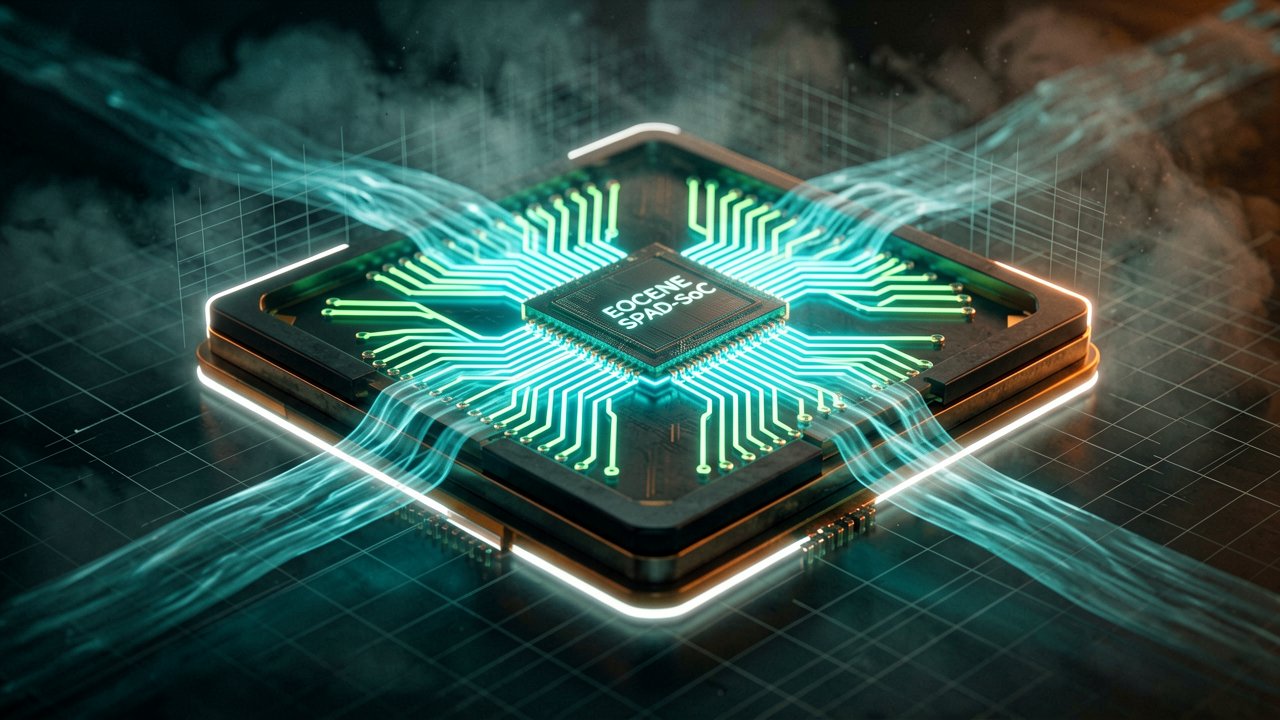
On April 21, RoboSense hosted its 2026 Tech Day in Shenzhen, revealing a new chip strategy that could reshape the LiDAR landscape. The company unveiled the EOCENE digital architecture alongside two flagship SPAD-SoCs: the Phoenix and Peacock series. Both chips are slated to enter mass production by 2026, according to Qiu Chunchao, CEO of RoboSense.
The announcement marks a deliberate pivot from analog to digital architectures in the LiDAR sector. Qiu drew a parallel to the historic transition from CCD to CMOS in imaging, positioning SPAD technology as the industry's next inflection point. This isn't just incremental improvement. It's a structural shift in how 3D perception hardware gets built.
EOCENE is a four-layer SPAD-SoC platform designed for rapid iteration across automotive, robotics, industrial, and consumer electronics sectors. The base process layer uses a 28nm automotive-grade node, shrinking core area by 40% and cutting power consumption by 30%. The third-generation ultra-sensitive SPAD layer pushes photon detection efficiency to 45% — a global high, per the company's documentation.
The core computing layer features a 4,320-core heterogeneous computing array capable of processing 495 billion point cloud samples per second. A high-bandwidth on-chip data highway provides the computational foundation for perception at the 10-million-pixel level. The algorithm acceleration layer integrates an anti-interference engine, boosting resistance to sunlight noise and crosstalk to 99.9%. The safety and reliability layer incorporates an ASIL B functional safety architecture, ensuring stable operation from -40°C to 125°C.
These specifications matter when you're actually trying to integrate LiDAR into a vehicle. Engineers no longer need to jury-rig multiple discrete components. The architecture consolidates what used to be a scattered hardware stack into a single, coherent platform (which drastically reduces latency, a problem that has plagued users for years, frankly).
The Phoenix chip features a single-chip, single-optical-path design with native 2,160 lines. It delivers point cloud resolution of 2,160 × 1,900 — finer than a 4-megapixel camera — and can detect objects up to 600 meters away. At 150 meters, it can clearly identify a 13 × 17 cm cardboard box. That's the kind of granularity that changes what autonomous systems can actually perceive in real-world conditions.
According to Qiu, the Phoenix series will offer five models supporting LiDAR designs ranging from 2,160 to 240 lines. A 4-megapixel LiDAR solution based on the Phoenix chip has already secured a designation from a leading automaker and is set for mass production in 2026. The official press release confirms the timeline and technical specifications.
The Peacock chip takes a different approach. It integrates a 640 × 480 high-density SPAD array to achieve VGA-level resolution, outputting dense, detailed 3D depth images. It features a built-in high-precision TDC and ranging processing engine, delivering millimeter-level detection accuracy — a sixfold improvement over the previous generation.
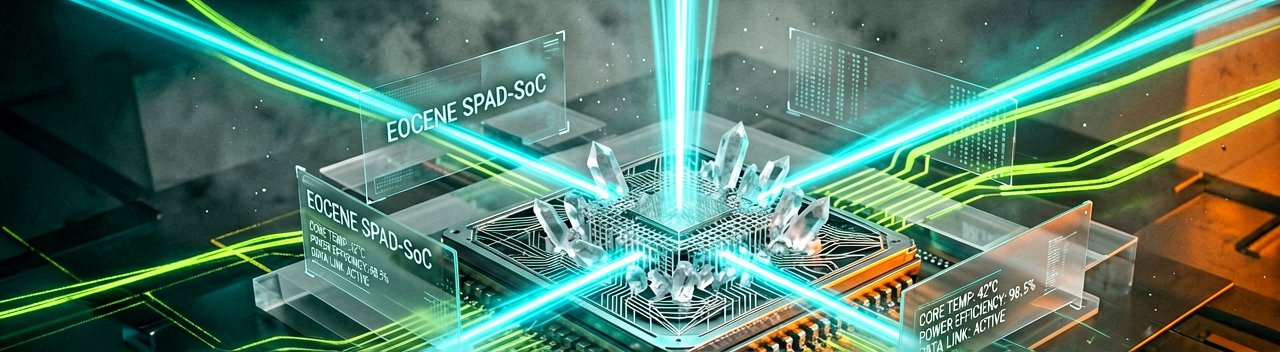
Peacock boasts an ultra-wide field of view, reaching a maximum of 180° × 135°, with a minimum detection distance of less than 5 centimeters. Its frame rate of 10–30 Hz aligns with camera frame rates for the first time. This synchronization matters when you're fusing LiDAR data with visual inputs in real-time perception stacks.
Leveraging rich 3D visual data, the Peacock chip will target three key scenarios: solid-state blind-spot detection in vehicles, standardized vision modules for robotics, and new forms of fused sensors. At the event, Qiu announced that the Peacock chip is "launching straight to production," with volume shipments scheduled for the third quarter of 2026. Products based on the chip have already been delivered to customers in small batches.
Independent reporting from CNEVPost corroborates the timeline and notes the competitive context. The launch closely follows a Tech Day event by rival Hesai Technology, which recently released a full-color LiDAR platform supporting up to 4,320 lines. The industry is clearly entering a chip-level arms race.
RoboSense also previewed an in-house developed RGBD (Red, Green, Blue + Depth) fusion sensor, slated for release by the end of 2027. This product will combine the high-density spatial data of the Peacock chip with color filter array technology. Whether automakers actually adopt RGBD sensors at scale remains uncertain — the cost-benefit analysis is still being written.
Qiu demonstrated a 2K near-infrared image captured via direct sensing and real-time scanning by the Phoenix chip during the event. The grayscale and 3D distance information are output synchronously from the same source, achieving a resolution of 2,160 × 1,900. Seeing the output on screen, the depth information doesn't feel like an abstraction. It's tangible data that engineers can actually work with.
The vertical integration strategy centers on proprietary chipset R&D and advanced module engineering. Securing a dominant position in the coming stage of large-scale commercialization requires a full-stack approach. Proprietary chipset capabilities establish technological generational leads and structural cost advantages, while module engineering ensures system-level excellence in point-cloud fidelity, ranging precision, and interference rejection.
A research note released by a Deutsche Bank analyst team led by Bin Wang characterized these breakthroughs as a paradigm shift in 3D perception technology. That's analyst speak for "this could be big." Whether it actually translates to market dominance depends on execution, pricing, and whether automakers stick with their current supplier relationships.
As costs decrease, LiDAR is accelerating its penetration into the mass consumer market. Leading players are attempting to consolidate their dominant positions through generational technological advantages at the chip level. The question isn't whether the technology works. It's whether the economics work for everyone in the supply chain.
RoboSense's HKEX ticker is 2498. The company has been building toward this moment for nine years, codifying full-stack experience into a standardized R&D paradigm. EOCENE enables the rapid incubation of a high-performance SoC portfolio, establishing a systematic competitive barrier through efficient innovation. Whether that barrier holds against competitors remains to be seen.
Whether users actually pay for it remains the real question.
Artūras Malašauskas is an AI Systems Integrator with 20+ years of production-grade web engineering experience. He has designed, shipped, and scaled enterprise Python/PHP systems for logistics, SaaS, and public-sector clients. For the past year, he has focused exclusively on AI integrations: deploying open-source LLMs, building generative media pipelines (image, audio, video), and engineering multi-agent workflows for real production environments. His standard: reproducibility, security, cost-efficient inference—no vaporware. He documents and evaluates emerging AI tooling, separating verified capabilities from marketing noise. Technical editor at: muza-ai.eu, ai-verslas.lt, ai-naujinos.lt Connect on LinkedIn
Comments