Quantum Computing Inc Launches NeuraWave Photonic Computing Platform
Quantum Computing Inc. announced on April 23, 2026, that its NeuraWave photonic computing platform is now ready for commercial deployment. The Hoboken-based firm, trading on NASDAQ under the ticker QUBT, has transitioned the technology from research prototype to manufactured product available for customer orders. This marks a significant milestone in the company's previously announced 2025 technology roadmap.
The announcement comes via an official press release from Quantum Computing Inc. The document details NeuraWave's specifications and intended market applications. Independent coverage from The Quantum Insider corroborates the deployment timeline and technical claims.
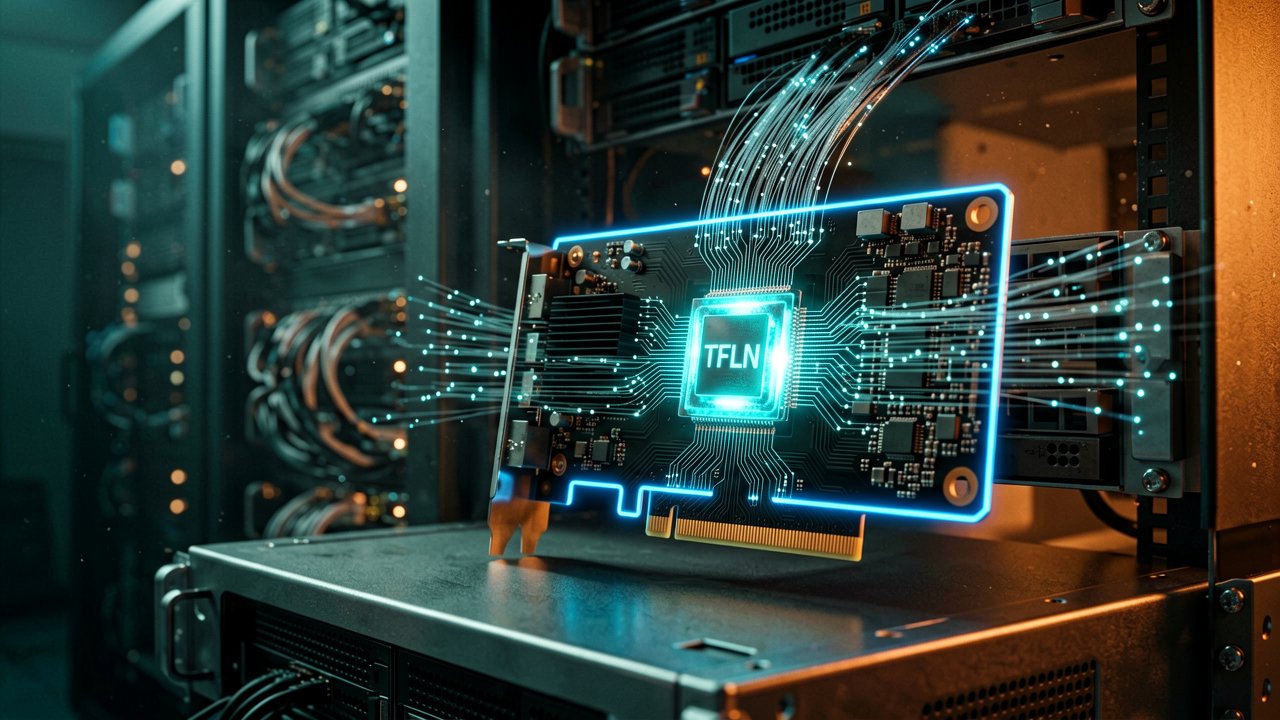
NeuraWave uses a hybrid photonic-digital architecture to process data with light instead of electrons. This fundamental difference from conventional GPU-based systems enables ultra-low latency and significantly reduced power consumption. The hardware takes the form of a standard server PCIe plug-in card, which means it can integrate into existing server infrastructure without requiring complete system overhauls. (That's actually the part that matters most for enterprises already running data centers.)
Dr. Yong Meng Sua, Chief Technology Officer of Quantum Computing Inc., emphasized the transition from laboratory to practical application. He stated the deployment moves photonic computing into real-world machine learning systems. Prajnesh Kumar, Quantum Technology Lead at the company, noted the form factor brings photonic computing to AI at the edge. Both executives highlighted the potential to unlock capabilities beyond traditional electronic chips.
The platform targets specific use cases where time-sensitive processing matters. Applications include time-series prediction, anomaly detection, and edge intelligence. Industries identified as primary markets include defense, telecommunications, autonomous vehicles, robotics, healthcare, and industrial monitoring. These sectors share a common requirement: high-performance inference in resource-constrained environments where power and latency cannot be compromised.
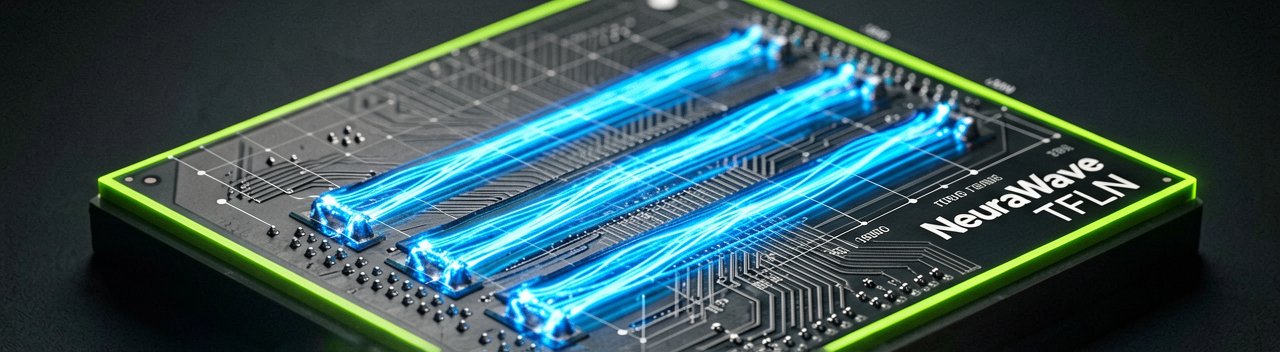
Quantum Computing Inc. specializes in thin-film lithium niobate (TFLN) photonic chips. The company operates from its New Jersey headquarters and provides quantum machines and foundry services for photonic chip production. Through acquisitions of Luminar Semiconductor Inc. and NuCrypt LLC, the firm expanded its technical depth and manufacturing capabilities. This background in photonics and optics components informs the NeuraWave architecture.
Conventional AI systems rely on power-hungry digital processors. NeuraWave provides a hardware-accelerated alternative optimized for edge and embedded deployment. The physical reality of this difference matters for system architects. A PCIe card slides into a server slot, connects to the motherboard, and begins processing optical signals. There's no liquid cooling infrastructure required, no exotic materials handling, no cryogenic temperatures. It operates at room temperature.
The platform first debuted at SC25, the Supercomputing 2025 conference. That initial demonstration validated the technology's feasibility before manufacturing began. Now units are being produced and available for customer orders. The shift from prototype to product represents years of development condensed into a commercially viable form factor.
Forward-looking statements in the press release include standard securities disclosures. The company notes risks and uncertainties regarding NeuraWave's ability to support applications, power consumption, performance advantages, and processing speed. Actual results may differ materially from contemplated outcomes. This is standard language for public companies, but it's worth noting the technology remains relatively unproven at scale.
Photonic computing has existed in research contexts for decades. The challenge has always been practical deployment. NeuraWave's PCIe form factor addresses the integration problem. Engineers can install it alongside existing GPUs, test workloads, and measure performance gains without replacing entire systems. That incremental adoption path is more realistic than demanding complete infrastructure replacement.
Power efficiency claims require verification through independent benchmarking. The company states significantly reduced power consumption compared to conventional processors. Specific wattage figures or comparative benchmarks against NVIDIA or AMD hardware are not provided in the announcement. Without third-party validation, these claims remain company assertions rather than verified facts.
Latency improvements follow from the physics of light-based signal processing. Photons travel faster than electrons through conductive materials. The hybrid architecture combines photonic speed with digital control logic. This combination theoretically enables real-time inference for applications where milliseconds matter. Autonomous vehicles, for instance, cannot afford processing delays when making split-second decisions.
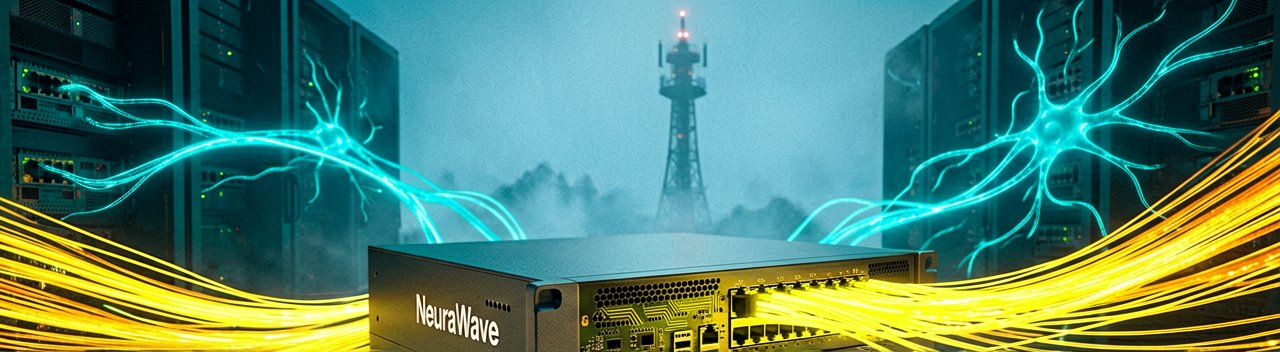
The telecommunications sector represents another logical market. Network operators constantly seek ways to reduce latency while managing power costs. Edge computing deployments in cell towers or data centers could benefit from NeuraWave's architecture. The technology's ability to handle time-series prediction makes it suitable for network traffic analysis and anomaly detection.
Healthcare applications include medical imaging analysis and patient monitoring systems. Defense use cases involve signal processing and real-time threat detection. Industrial monitoring covers predictive maintenance and quality control in manufacturing. Each sector has different requirements, but all share the need for reliable, low-latency processing.
Quantum Computing Inc. maintains that NeuraWave represents a key milestone in delivering practical quantum solutions. The company's broader strategy advances photonic computing platforms that bring quantum-inspired technologies into real-world applications. Whether this translates to market adoption remains to be seen. The technology works in theory; enterprise procurement cycles will determine if it works in practice.
Competitive positioning against established GPU manufacturers is unclear. NVIDIA and AMD dominate the AI inference market with mature ecosystems, software support, and developer communities. NeuraWave offers different physics but faces the uphill battle of convincing customers to adopt new hardware. Software compatibility, driver support, and integration with existing AI frameworks will be critical success factors.
The announcement includes contact information for demonstrations and discussions. Potential customers can schedule meetings with the company team to explore how NeuraWave enables next-generation AI at the edge. This suggests the company is actively pursuing enterprise sales rather than waiting for organic adoption.
Whether users actually pay for it remains the real question. Photonic computing has promised efficiency gains for years. NeuraWave's deployment-ready status moves the conversation from possibility to procurement. The technology may deliver on its claims, or it may prove too niche for mainstream adoption. Time and customer deployments will provide the answer.
Artūras Malašauskas is an AI Systems Integrator with 20+ years of production-grade web engineering experience. He has designed, shipped, and scaled enterprise Python/PHP systems for logistics, SaaS, and public-sector clients. For the past year, he has focused exclusively on AI integrations: deploying open-source LLMs, building generative media pipelines (image, audio, video), and engineering multi-agent workflows for real production environments. His standard: reproducibility, security, cost-efficient inference—no vaporware. He documents and evaluates emerging AI tooling, separating verified capabilities from marketing noise. Technical editor at: muza-ai.eu, ai-verslas.lt, ai-naujinos.lt Connect on LinkedIn
Comments