Microchip Launches MD-990-0011-B Timing Modules for Data Centers and 5G
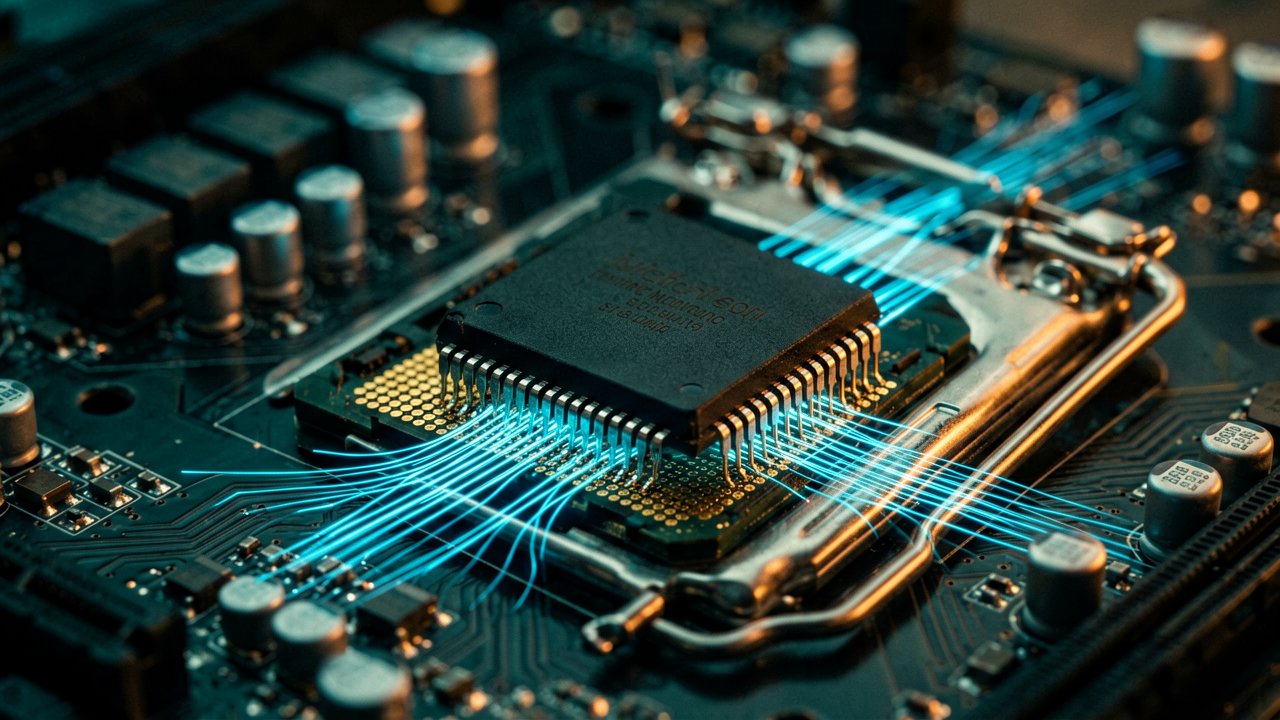
Microchip Technology has introduced its MD-990-0011-B family of plug-in timing modules, engineered to deliver precise synchronization for modern data centers and 5G network infrastructure. The launch addresses growing demand for high-performance timing solutions driven by artificial intelligence workloads, cloud computing, and next-generation connectivity.
According to the company's official press release dated April 23, 2026, the modules provide turnkey synchronization capabilities for data center servers and virtualized radio access networks (vRAN). Developed in collaboration with Intel, the modules are optimized for compatibility with Intel Xeon 6 system-on-chip platforms.
System manufacturers can now integrate advanced timing features into new and existing architectures without building custom circuits from scratch. This is a significant shift from the old approach where engineers spent weeks debugging timing circuits (a problem that has plagued users for years, frankly).
The MD-990-0011-B modules support automatic selection and synchronization across multiple timing sources, including Global Navigation Satellite Systems, Synchronous Ethernet, and Precision Time Protocol. This multi-source capability ensures consistent timing performance, even in dynamic network conditions where signal paths change unpredictably.
Two variants are available with different holdover performance levels. The MD-990-0011-BC01 delivers up to eight hours of holdover, while the MD-990-0011-BA01 provides up to four hours. Holdover performance matters when GNSS signals drop or network disruptions occur—the module keeps ticking accurately during those gaps.
Key technologies integrated within the modules include a Synchronous Ethernet synthesizer with dual digital phase-locked loop channels, oven-controlled crystal oscillators for enhanced stability, and additional components such as temperature sensors and memory systems for configuration and monitoring. These features collectively ensure high precision in time and frequency synchronization, along with low jitter performance.
Independent reporting from GPS World corroborates the technical specifications and availability timeline. The outlet confirms the modules are now available in production quantities through Microchip or authorized distributors.
From a physical perspective, the modular M.2 E-Key form factor means technicians can slide these cards into server slots without rewiring entire systems. The pre-validated hardware and firmware reduce integration friction—no more soldering custom timing circuits onto motherboards at 2 a.m. during a deployment deadline.
Randy Brudzinski, corporate vice president of Microchip's frequency and time systems business unit, stated that the plug-in solution eliminates the complexity of custom timing circuits. He emphasized that this provides integration and reliability while accelerating innovation and reducing time-to-market for data centers and 5G networks.
Mike Merluzzi, GM of radio access networks at Intel Corporation, noted that the timing module aligns with Intel's commitment to enable next-generation infrastructure. By simplifying timing integration and enhancing reliability on Intel Xeon 6 SoC-powered platforms, the collaboration helps customers accelerate deployment.
The modular design allows for easy installation, maintenance, and upgrades, reducing operational downtime in mission-critical environments. This flexibility is particularly valuable for data centers and telecom networks undergoing continuous expansion and modernization.
With more than 75 years of expertise in timing technologies, Microchip continues to deliver a broad portfolio ranging from compact timing modules to large-scale national timing systems. The company's solutions remain integral to global infrastructure, supporting accurate and resilient time synchronization across industries.
Whether system integrators actually adopt this solution at scale depends on pricing competitiveness and how smoothly it integrates with existing server architectures. The technology works on paper, but real-world deployment will reveal the true value proposition.
Artūras Malašauskas is an AI Systems Integrator with 20+ years of production-grade web engineering experience. He has designed, shipped, and scaled enterprise Python/PHP systems for logistics, SaaS, and public-sector clients. For the past year, he has focused exclusively on AI integrations: deploying open-source LLMs, building generative media pipelines (image, audio, video), and engineering multi-agent workflows for real production environments. His standard: reproducibility, security, cost-efficient inference—no vaporware. He documents and evaluates emerging AI tooling, separating verified capabilities from marketing noise. Technical editor at: muza-ai.eu, ai-verslas.lt, ai-naujinos.lt Connect on LinkedIn
Comments