IDF Deploys AI-Powered Robotic Systems in Lebanon Conflict
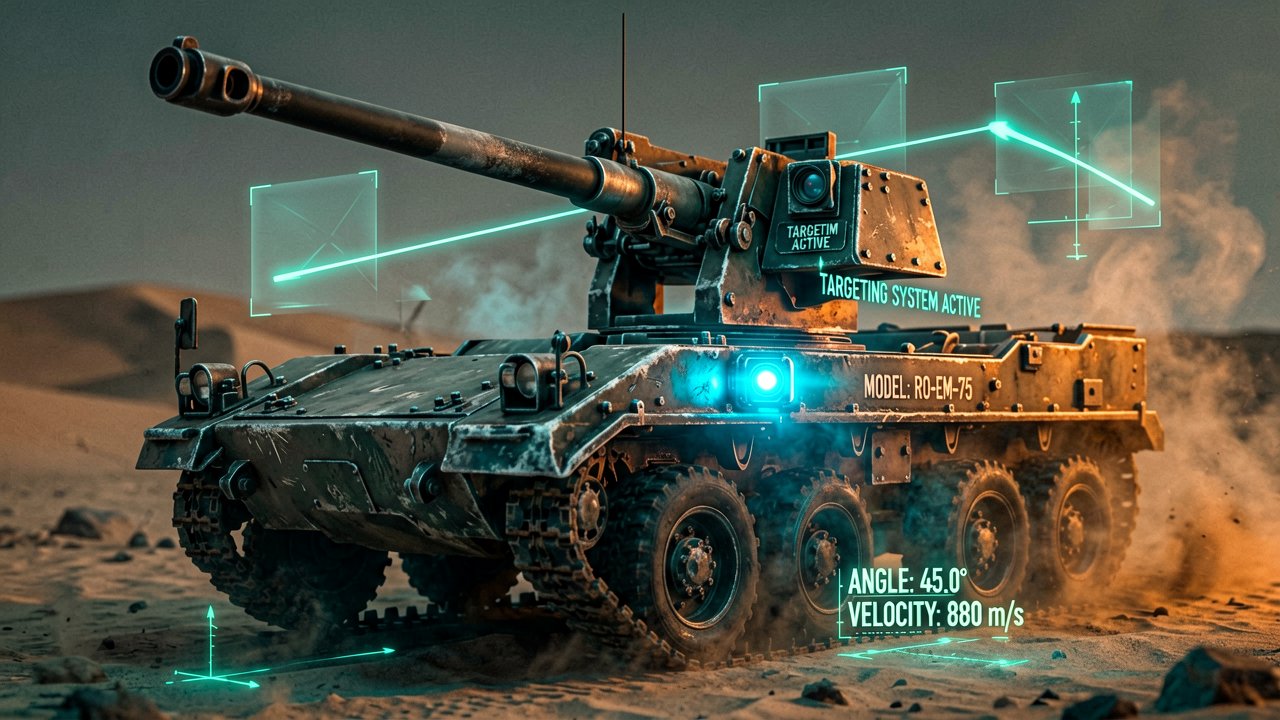
The Israel Defense Forces has introduced autonomous battlefield systems in southern Lebanon, deploying fleets of explosive robots and AI-enabled artillery to dismantle Hezbollah infrastructure while minimizing troop exposure to danger.
According to reporting from Algemeiner, the IDF plans to deploy robots on high-risk missions to detonate strategic infrastructure in areas previously beyond the reach of ground forces. This marks a significant expansion in the use of autonomous battlefield systems, though some of this technology has already been operational and will only escalate.
The newly introduced technology is designed to scan vast areas using intelligence data, locate Hezbollah infrastructure both above and below ground, and systematically dismantle networks built over decades within Shiite villages, forests, and dense terrain. The rugged, mountainous landscape of southern Lebanon severely limits the movement of heavy engineering equipment, forcing troops to rely on complex field improvisations amid dense vegetation that conceals militant infrastructure.
Israeli officials expect this sustained military engineering effort to drain Hezbollah's extensive financial investments and push threats farther from Israel's northern border with Lebanon. The operational reality is stark: robots can navigate terrain that would trap or endanger human soldiers, which drastically reduces latency in mission execution (a problem that has plagued conventional ground operations for years, frankly).

The IDF has further expanded its arsenal with the introduction of the "Ro'em" self-propelled howitzer battery developed by Elbit Systems, a platform that leverages advanced technology and artificial intelligence to deliver quicker and more accurate firepower. Fully automatic, the self-propelled howitzer can fire between six and eight rounds per minute at ranges of up to 40 kilometers.
This deployment follows precedent set during the war in Gaza, where robotic systems provided ground forces with a strategic edge while reducing exposure to danger. The systems were deployed to explore Hamas tunnels and enhance the detection and tracking of armed operatives. Col. (ret.) Yaron Sarig, head of the AI and Autonomy Program Executive Office of MAFAT within the Defense Ministry, called the 2023-2025 Israel-Hamas War "the first-ever robotics war."
Independent reporting from The Jerusalem Post corroborates the timeline and scope of the changes. Sarig stated that tens of thousands of autonomous systems were deployed across the battlefield in Gaza, from drone swarms to agile ground robotics distributed across vast areas. Thousands of kilometers of the invasion were carried out by robotic systems, he said at the International Defense Tech Summit sponsored by the Defense Ministry's Directorate of Defense Research and Development and Tel Aviv University's Yuval Ne'eman Science, Technology and Security Workshop.
Robots used during the Israel-Hamas War to locate tunnels have become much more diverse and standardized. They are being deployed in much higher volumes to assist with exploring Hamas tunnels instead of risking soldiers' lives from doing so. Remote vehicles were also used to enter new areas above ground to crash into Hamas positions or to intercept and spring ambushes, enabling soldiers to know where concealed Hamas fighters were located.
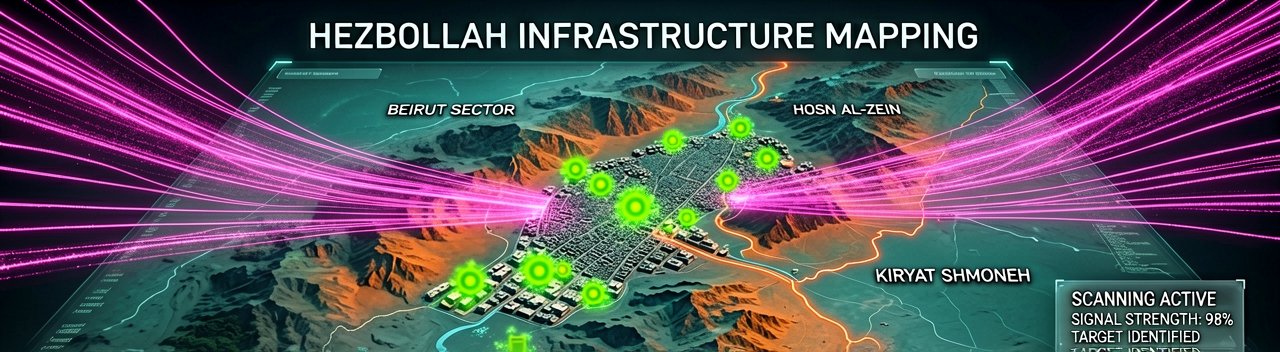
The physical reality of this technology is not abstract. Operators sit behind screens watching feeds from cameras mounted on wheeled platforms that navigate rubble, tunnel networks, and dense vegetation. The latency between command and execution is measured in milliseconds, not the seconds it takes for a human to react to a threat. This is less of an evolution and more of a fundamental shift in how kinetic force is applied.
Hostilities between Hezbollah and Israel reignited on March 2, when the terrorist group opened fire in support of Iran two days after the start of the joint US-Israeli military campaign against the Iranian regime. Since then, Israeli troops have created a "buffer zone" that extends 5 to 10 km (3 to 6 miles) into Lebanon. According to Israeli officials, the purpose of the zone is to protect northern Israel from attacks by Hezbollah, which has fired thousands of rockets and drones during the war.
The US mediated a 10-day ceasefire between Israel and Lebanon last week. The deal was separate from Washington's efforts to de-escalate tensions with Iran, though Tehran had pushed for Lebanon to be included in any broader framework for stopping hostilities. On Thursday, US President Donald Trump announced a three-week extension of the truce, which was due to expire on Sunday, to allow more time for negotiations and diplomatic efforts.
Even though the US-backed ceasefire has sharply reduced violence, negotiations and prospects for lasting peace remain fragile, with Israeli forces still positioned in southern Lebanon to maintain its buffer zone and dismantle Hezbollah infrastructure. For its part, Hezbollah, an internationally designated terrorist group that openly seeks Israel's destruction, maintains it has "the right to resist" what it calls occupying forces, while rejecting any direct negotiations between the two countries.
Even with the truce in place, Israel has warned Lebanese citizens against returning to their homes at this stage, with officials saying the area remains dangerous. The robotic systems continue operating regardless of the diplomatic situation, given that it is unknown how long diplomatic developments will allow the military to operate in southern Lebanon.
Sarig noted that the AI and Autonomy PEO, working in coordination with the IDF, has accelerated innovative developments from start-ups, defense contractors, and research institutions, with the goal of integrating them into the operational theater and maintaining relative advantage on land, in the air, and at sea. "We are only at the beginning of this revolution," he said. "In the coming years, driven by operational necessity, we will significantly expand our robotic capabilities."
Whether this technology actually achieves its stated goals of reducing casualties while dismantling entrenched militant infrastructure remains to be seen. The real question isn't whether the robots work—they demonstrably do. It's whether deploying them at scale creates new escalation dynamics that outpace the diplomatic efforts trying to contain the conflict.
Artūras Malašauskas is an AI Systems Integrator with 20+ years of production-grade web engineering experience. He has designed, shipped, and scaled enterprise Python/PHP systems for logistics, SaaS, and public-sector clients. For the past year, he has focused exclusively on AI integrations: deploying open-source LLMs, building generative media pipelines (image, audio, video), and engineering multi-agent workflows for real production environments. His standard: reproducibility, security, cost-efficient inference—no vaporware. He documents and evaluates emerging AI tooling, separating verified capabilities from marketing noise. Technical editor at: muza-ai.eu, ai-verslas.lt, ai-naujinos.lt Connect on LinkedIn
Comments