ABB Robotics Launches PoWa Cobot Family for Industrial Tasks
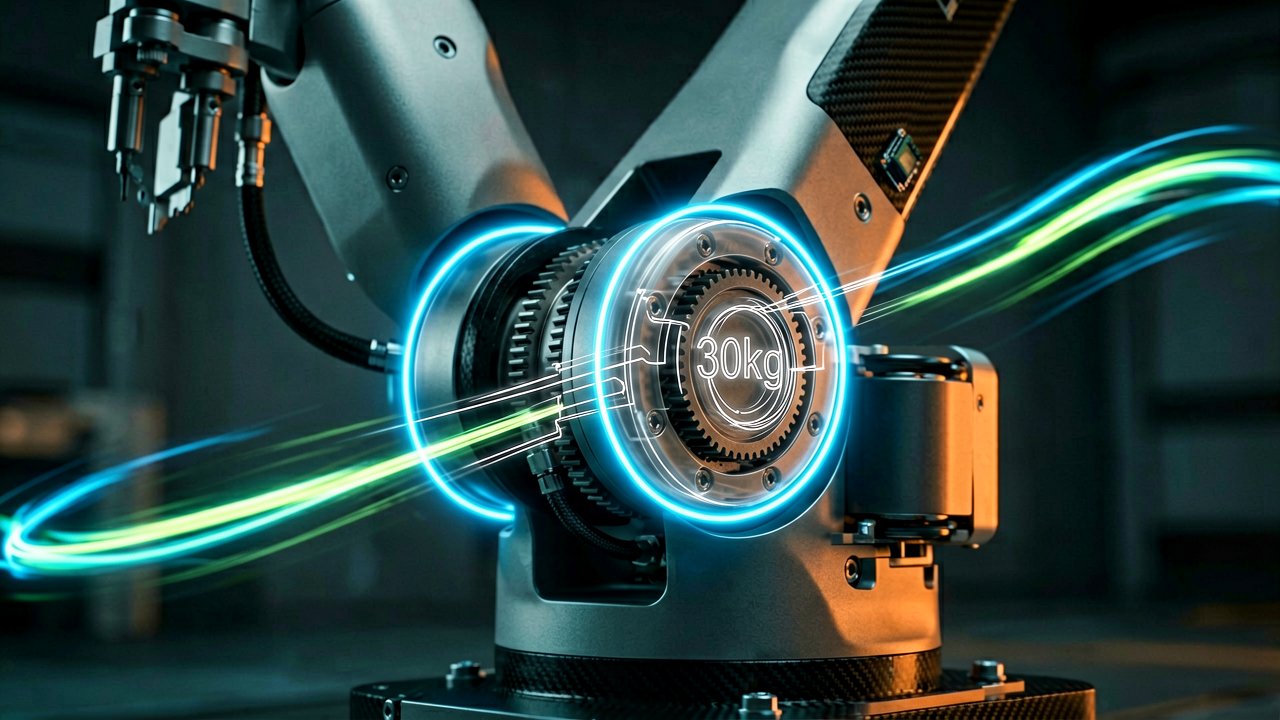
ABB Robotics has officially launched its new PoWa collaborative robot family, positioning the line to bridge a persistent gap in industrial automation between traditional cobots and conventional industrial robots. The announcement marks a significant expansion of the company's collaborative robotics portfolio with industrial-grade performance specifications.
The new PoWa family addresses a specific market problem: traditional cobots often lack the speed and payload capacity needed for demanding industrial applications, while conventional industrial robots typically require specialized, large-scale automation environments. ABB's solution combines the flexibility of collaborative robotics with higher payloads and performance metrics.
According to the company's official press release, the PoWa line includes six different payload categories ranging from 7 kg (15.4 lbs) to 30 kg (66.1 lbs). The robots can reach a top speed of up to 5.8 m/s (13 MPH), which ABB describes as best-in-class for the category. This speed specification applies specifically to the PoWa 10 and PoWa 13 models.
ABB's official documentation confirms the technical specifications and deployment timeline. The company states that PoWa cobots can be unboxed and operational within an hour, featuring plug-and-play integration with a wide range of tools and third-party accessories.
Andrea Cassoni, Head of Collaborative Robots at ABB Robotics, explained the strategic reasoning behind the launch. "Cobots are growing significantly faster than traditional industrial robots, driven by demands from both small and midsized companies starting their automation journey as well as large enterprises," Cassoni said. "These customers are seeking higher speeds and payloads, but also greater ease of use, and compact designs."
The PoWa name itself symbolizes the product's positioning: powerful, industrial-grade performance in a compact collaborative robot form. This is not a subtle rebranding exercise. The company is explicitly targeting manufacturers who want to automate heavier, fast-cycle applications without the complexity and operational rigidity of traditional industrial robots.
From a physical interaction standpoint, the robots feature programmable buttons on the arm-side interface and support no-code programming. Operators can set up and redeploy systems across different tasks with minimal training. The OmniCore controller platform powers the new cobots, delivering motion control, speed, and precision that integrates with ABB's software suite including RobotStudio and Wizard Easy Programming.
Independent reporting from The Robot Report corroborates the core specifications and market positioning. The outlet notes that ABB estimates the global cobot market will grow by 20% annually through to 2028, providing context for why the company is investing heavily in this segment.
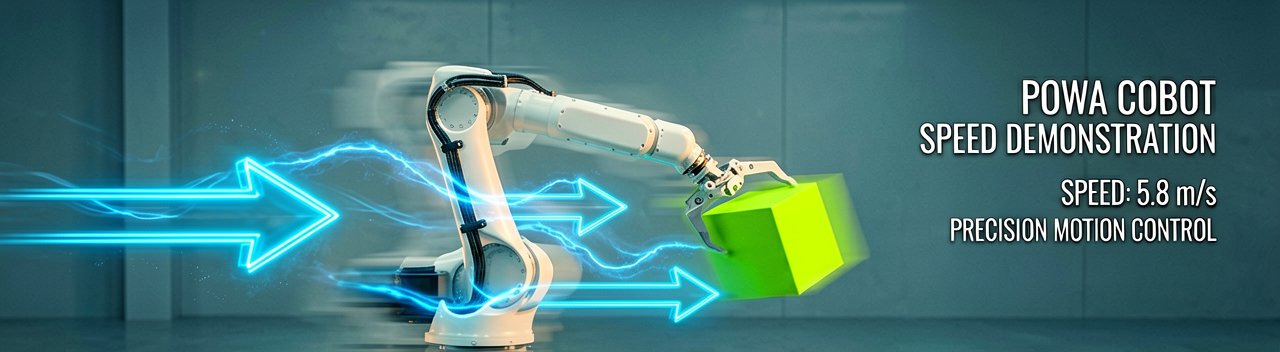
The applications ABB has identified for PoWa include high-speed machine tending, palletizing, screwdriving, and arcwelding. These are not toy applications. They represent real industrial processes where throughput matters and where traditional cobots have historically fallen short. The robots are purpose-built for compact environments where space constraints prevent deployment of larger industrial systems.
There's an interesting backdrop to this launch that deserves mention. In October 2025, ABB Group announced plans to sell its robotics unit to SoftBank Group for $5.3 billion. ABB Robotics has about 7,000 employees, with U.S. headquarters and factory operations in Auburn Hills, Michigan. The PoWa launch occurs during this transition period, suggesting the new product line was in development before the sale announcement.
The competitive landscape for industrial cobots has become increasingly crowded. Companies like Universal Robots, Fanuc, and KUKA have all expanded their collaborative offerings in recent years. ABB's PoWa family enters this space with specific claims about payload capacity and speed that directly challenge existing market leaders. Whether those claims translate to real-world performance remains to be seen (though the specs look promising on paper).
From a deployment perspective, the one-hour operational timeline is ambitious. Setting up industrial automation equipment typically involves calibration, safety testing, and integration with existing production systems. The plug-and-play capability suggests ABB has invested significantly in standardizing interfaces and reducing configuration complexity. This matters for manufacturers who need to redeploy automation quickly across different production lines.
The OmniCore controller platform represents another layer of integration. ABB's existing customer base already uses this platform across their industrial robot portfolio, meaning PoWa cobots can potentially integrate with legacy systems without requiring entirely new infrastructure. This backward compatibility is a practical advantage for established manufacturers looking to expand automation incrementally.
ABB positions PoWa as part of its broader vision for more autonomous and versatile robotics (AVR). The company describes this as developing intelligent, flexible, adaptive, and collaborative multi-skilled robots that can learn, understand, and plan independently. This language suggests future software updates may add AI-powered capabilities beyond the current hardware specifications.
The pricing structure for PoWa remains unannounced in the available materials. Industrial cobots typically range from $20,000 to $80,000 depending on payload capacity and features. Given the higher specifications compared to traditional cobots, PoWa will likely position at the premium end of the collaborative robot market. This pricing tier could limit adoption among smaller manufacturers despite the stated goal of lowering barriers to automation.
Market analysts note that the cobot segment has grown faster than traditional industrial robots, but adoption rates vary significantly by industry. Automotive and electronics manufacturers have been early adopters, while other sectors remain cautious about the return on investment. The PoWa family's higher payload capacity could unlock applications in industries like food processing, pharmaceuticals, and general manufacturing that previously found cobots insufficient for their needs.
The real test for PoWa will come during actual deployment cycles. Specifications on paper differ from performance in production environments where dust, temperature variations, and continuous operation create stress that lab testing cannot fully replicate. Early adopters will provide the real data on whether these cobots can maintain their speed and payload claims over extended use.
Whether manufacturers actually pay premium prices for these specifications remains the real question. The cobot market has seen price competition intensify, and ABB's positioning as a premium provider may face resistance from cost-conscious buyers. The company's success will depend on demonstrating clear ROI advantages over both traditional cobots and conventional industrial robots.
Artūras Malašauskas is an AI Systems Integrator with 20+ years of production-grade web engineering experience. He has designed, shipped, and scaled enterprise Python/PHP systems for logistics, SaaS, and public-sector clients. For the past year, he has focused exclusively on AI integrations: deploying open-source LLMs, building generative media pipelines (image, audio, video), and engineering multi-agent workflows for real production environments. His standard: reproducibility, security, cost-efficient inference—no vaporware. He documents and evaluates emerging AI tooling, separating verified capabilities from marketing noise. Technical editor at: muza-ai.eu, ai-verslas.lt, ai-naujinos.lt Connect on LinkedIn
Comments