Southwoods Health Deploys ExcelsiusGPS Robotic Spine Surgery Platform
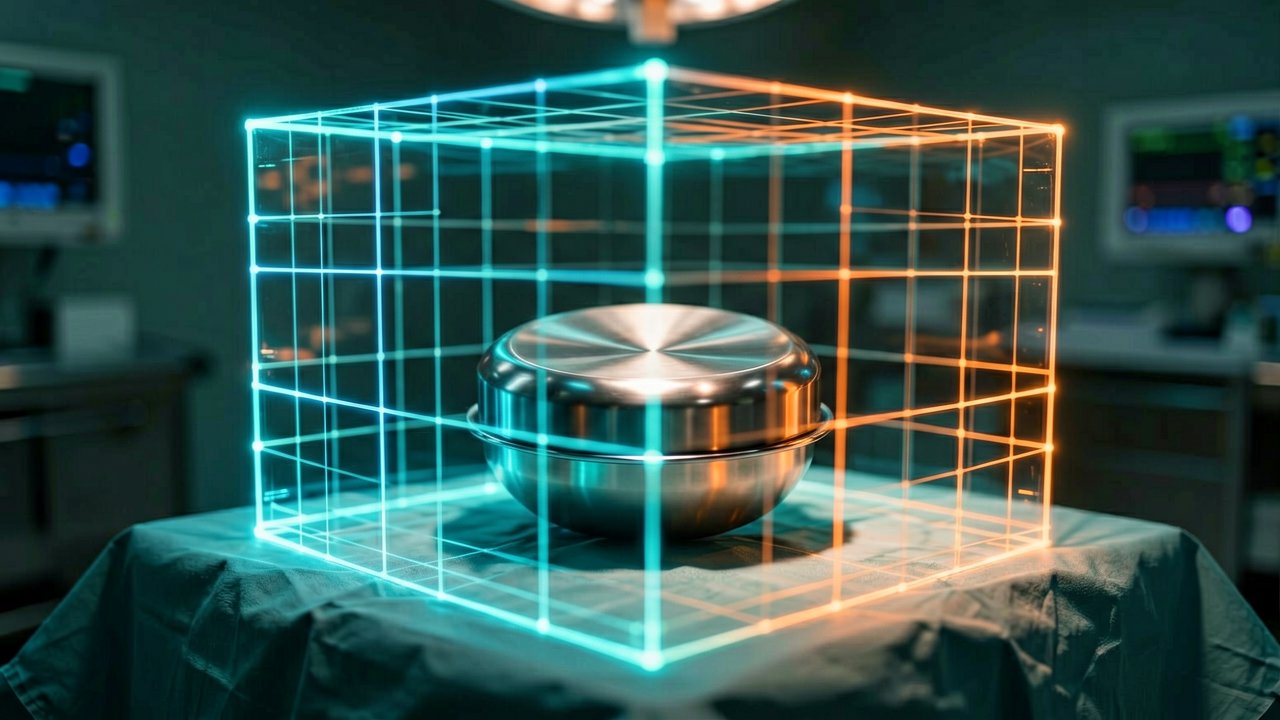
A robotic navigation platform designed to offer spinal surgery patients a more precise alternative was unveiled Tuesday in Boardman. Southwoods Health, with locations in five counties, has introduced the ExcelsiusGPS to its patients. The move represents a $1.3 million investment, the health system said in a news release.
Over the past two years, spine surgeons at the Southwoods Pain & Spine Center have evaluated robotic-assisted systems that improve surgical planning and navigation. In February, Dr. Frank Grisafi performed the region's first robotic spine surgery using this platform. As this technology continues to emerge as a standard of care, Southwoods spine surgeons are expanding its use across their spine program.
The system is fully controlled by the surgeon and uses GPS-based navigation to deliver highly detailed, real-time visualization of a patient's anatomy. On the day of surgery, medical images are captured by the platform that allow the surgeon to map out the exact placement of implants based on each patient's unique structure. During the procedure, 3D navigation guides positioning, improving accuracy and patient outcomes.
This isn't about robots operating on their own. The surgeon maintains complete control throughout. Think of it like a GPS navigation system for your car, except instead of guiding you to a restaurant, it's guiding a surgical instrument to a millimeter-precise location in someone's spine (which is, admittedly, a much higher-stakes destination).
According to the official announcement from Southwoods Health, the technology is the first of its kind available across Mahoning, Trumbull, Columbiana, Portage and Stark counties. Local reporting from Tribune Today corroborates the investment amount and deployment timeline.
"I think ExcelsiusGPS offers tremendous benefits to our patients and believe it will become the standard of care—as it has in larger metropolitan health systems including Cleveland and Pittsburgh," Grisafi said. "This technology allows us to plan procedures in advance, reduce operating times for complex cases and expand our ability to perform minimally invasive surgeries."
The physical reality of this technology matters. Surgeons aren't just looking at static X-rays anymore. They're working with real-time 3D navigation that updates as instruments move. The system captures medical images on the day of surgery, mapping implant placement to each patient's unique structure. This means less guesswork, less time spent adjusting, and potentially less time under anesthesia.
"This system combines advanced navigation, imaging and robotic technology to benefit both surgeons and patients," said Steve Davenport, president of Southwoods Health. "It allows for greater surgical precision and offers patients a less invasive surgical option for spine surgery."
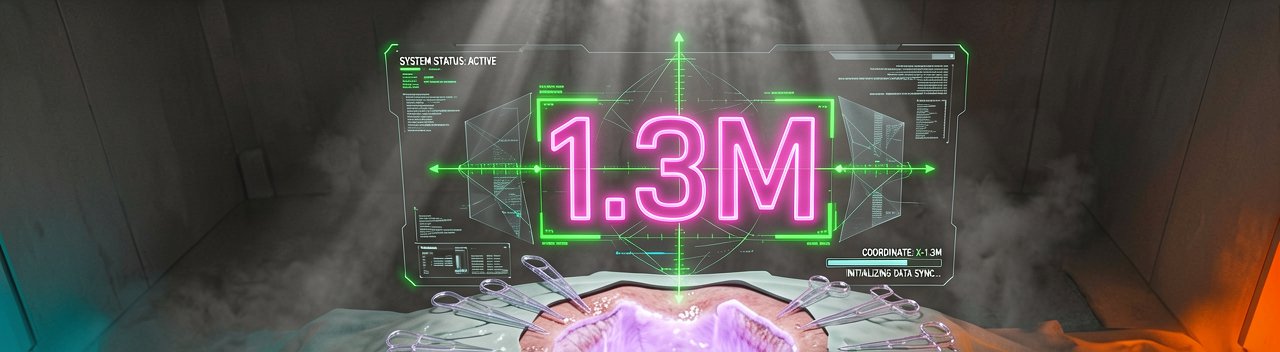
Among ExcelsiusGPS benefits include improved imaging and surgical accuracy; smaller incisions that minimize muscle and soft tissue trauma; faster recovery times; and reduced risk of surgical complications. The technology was developed and marketed by Globus Medical, headquartered in Audubon, Pennsylvania.
The investment timing is notable. Two years of evaluation preceded the February 2026 first surgery. This suggests Southwoods didn't rush into adoption. They tested, evaluated, and then committed. That's the kind of due diligence that matters when you're dealing with spinal surgery, where margins for error are measured in millimeters.
For patients, the practical implications are straightforward. Smaller incisions mean less tissue damage. Less tissue damage means less post-operative pain. Less pain means faster recovery. The chain reaction is logical, but the real question is whether the technology delivers on these promises consistently across different surgeons and different patient anatomies.
Spine surgery remains inherently complex. Even with robotic assistance, outcomes depend on surgeon skill, patient health, and the specific pathology being addressed. The ExcelsiusGPS platform doesn't eliminate risk. It reduces certain types of error, particularly those related to implant placement accuracy.
The technology supports several common procedures. Discectomy removes herniated disc portions causing pain. Cervical disc replacement removes damaged discs and replaces them with artificial devices. Spinal fusion joins specific vertebrae using bone grafts. Vertebral augmentation addresses fractures and restores proper placement. Each procedure benefits from the precision navigation, but each also carries its own risk profile.
Minimally invasive techniques are emphasized. These procedures use smaller incisions with goals of less post-operative pain, shorter hospital stays, and faster recovery times. The robotic platform facilitates this approach by allowing surgeons to work through smaller access points while maintaining accuracy.
Regional healthcare competition is another factor. Grisafi noted that larger metropolitan systems in Cleveland and Pittsburgh have already adopted this technology. Southwoods Health is essentially catching up to urban centers, bringing capabilities previously unavailable in northeastern Ohio's smaller markets. This matters for patients who might otherwise travel hours for specialized care.
The $1.3 million price tag isn't trivial. For a regional health system, that's a significant capital investment. It signals commitment to the spine program, but it also means the technology needs to generate value—whether through improved outcomes, reduced complications, or increased patient volume.
Patients seeking information can visit SouthwoodsPainandSpine.com for details about spine services. The site outlines the full range of procedures and the evaluation process for determining surgical candidacy.
Whether this investment translates to measurably better patient outcomes remains to be seen. The technology promises precision, but real-world results depend on consistent application across cases and surgeons. Time will tell if the smaller incisions and faster recoveries materialize at scale. For now, the hardware is in place. The proof will come from the surgeries themselves.
Artūras Malašauskas is an AI Systems Integrator with 20+ years of production-grade web engineering experience. He has designed, shipped, and scaled enterprise Python/PHP systems for logistics, SaaS, and public-sector clients. For the past year, he has focused exclusively on AI integrations: deploying open-source LLMs, building generative media pipelines (image, audio, video), and engineering multi-agent workflows for real production environments. His standard: reproducibility, security, cost-efficient inference—no vaporware. He documents and evaluates emerging AI tooling, separating verified capabilities from marketing noise. Technical editor at: muza-ai.eu, ai-verslas.lt, ai-naujinos.lt Connect on LinkedIn
Comments