China Launches Test Satellites for Direct-to-Phone Internet Technology

China successfully deployed a new set of test satellites for internet technology from the Xichang Satellite Launch Center in southwestern Sichuan Province on Friday, April 24, 2026. The launch occurred at 2:35 p.m. Beijing Time aboard a Long March-2D carrier rocket, marking the 639th flight mission of the Long March series. According to Xinhua News, the satellites have entered their preset orbits and will conduct technology tests and verifications.
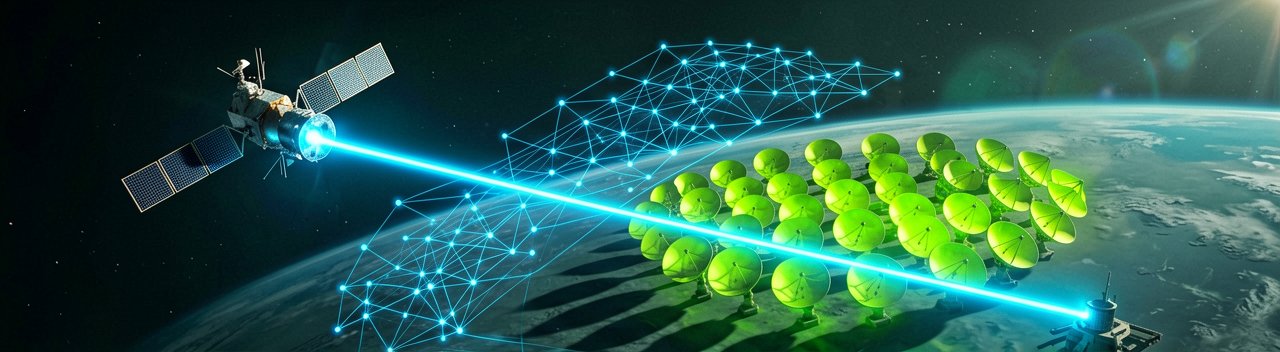
The mission focuses on two critical technical objectives: direct satellite-to-phone broadband connectivity and space-ground network integration. These capabilities represent a significant shift from traditional satellite internet architectures that require ground stations as intermediaries. Direct-to-cell technology eliminates that middleman, allowing smartphones to connect directly to orbiting satellites (a capability that has been the holy grail of rural connectivity for years).
Independent reporting from Global Times corroborates the launch details and technical scope. The publication confirms the satellites will test direct-to-cell broadband satellite links alongside space-ground network integration protocols. This dual focus suggests China is building infrastructure that can operate both independently and in coordination with terrestrial networks.
The physical reality of this technology matters more than the press releases suggest. Current satellite internet solutions require users to mount bulky dishes on rooftops, calibrate alignment, and deal with weather interference. Direct-to-phone connectivity would let users pull out their existing devices and connect without additional hardware. The friction of setup disappears. That's the real value proposition here.

Space-ground network integration adds another layer of complexity. This involves synchronizing orbital satellite networks with ground-based 5G/6G infrastructure, creating seamless handoffs as users move between coverage zones. The technical challenge resembles trying to coordinate a symphony where half the musicians are in orbit. Latency management, signal routing, and authentication protocols must all work in concert.
The Long March-2D rocket has a proven track record for this type of mission. As the 639th flight in the Long March series, it demonstrates China's sustained launch cadence and operational maturity. The Xichang facility, located in Sichuan Province, specializes in geosynchronous and medium-altitude orbit deployments. The site's latitude provides optimal trajectories for the orbital parameters these satellites require.
Industry context matters here. Multiple global players are pursuing similar direct-to-satellite connectivity. SpaceX has partnered with T-Mobile for Starlink direct-to-cell services. Apple has integrated satellite emergency messaging into iPhone models. China's test satellites position the country to compete in this emerging market segment, particularly for domestic coverage and Belt and Road Initiative partners.
The timing aligns with broader Chinese space infrastructure development. 2026 has seen increased activity in China's satellite internet constellation programs. These test satellites likely validate technologies before full-scale deployment. That's the standard playbook: test, verify, scale. The alternative—launching unproven systems at scale—has burned other companies.
Technical verification will take time. The satellites now in orbit need to undergo months of testing before any commercial applications materialize. Performance metrics like latency, bandwidth, and reliability under various conditions must be measured. Regulatory approvals for spectrum allocation and international coordination also factor into the timeline.
Whether these tests translate to consumer-ready services remains uncertain. The gap between successful orbital deployment and usable consumer technology is substantial. Hardware compatibility, network capacity, and pricing models all need resolution. Users will ultimately decide if the value justifies the cost.
The launch itself was clean. No complications reported. The satellites reached their designated orbits. That's the easy part. Making the technology work reliably for millions of users is where the real engineering begins. Time will tell if China's approach delivers on the promise of ubiquitous satellite internet access.
Artūras Malašauskas is an AI Systems Integrator with 20+ years of production-grade web engineering experience. He has designed, shipped, and scaled enterprise Python/PHP systems for logistics, SaaS, and public-sector clients. For the past year, he has focused exclusively on AI integrations: deploying open-source LLMs, building generative media pipelines (image, audio, video), and engineering multi-agent workflows for real production environments. His standard: reproducibility, security, cost-efficient inference—no vaporware. He documents and evaluates emerging AI tooling, separating verified capabilities from marketing noise. Technical editor at: muza-ai.eu, ai-verslas.lt, ai-naujinos.lt Connect on LinkedIn
Comments