Carnegie Mellon and Fujitsu Launch Physical AI Research Center
The Carnegie Mellon University campus in Pittsburgh now hosts a new research facility that bridges academic theory with industrial deployment. On April 23, 2026, Fujitsu Limited and CMU announced the launch of the Fujitsu-Carnegie Mellon Physical AI Research Center. The center will operate out of CMU's Robotics Innovation Center, a 150,000-square-foot facility that opened earlier this year at Hazelwood Green.
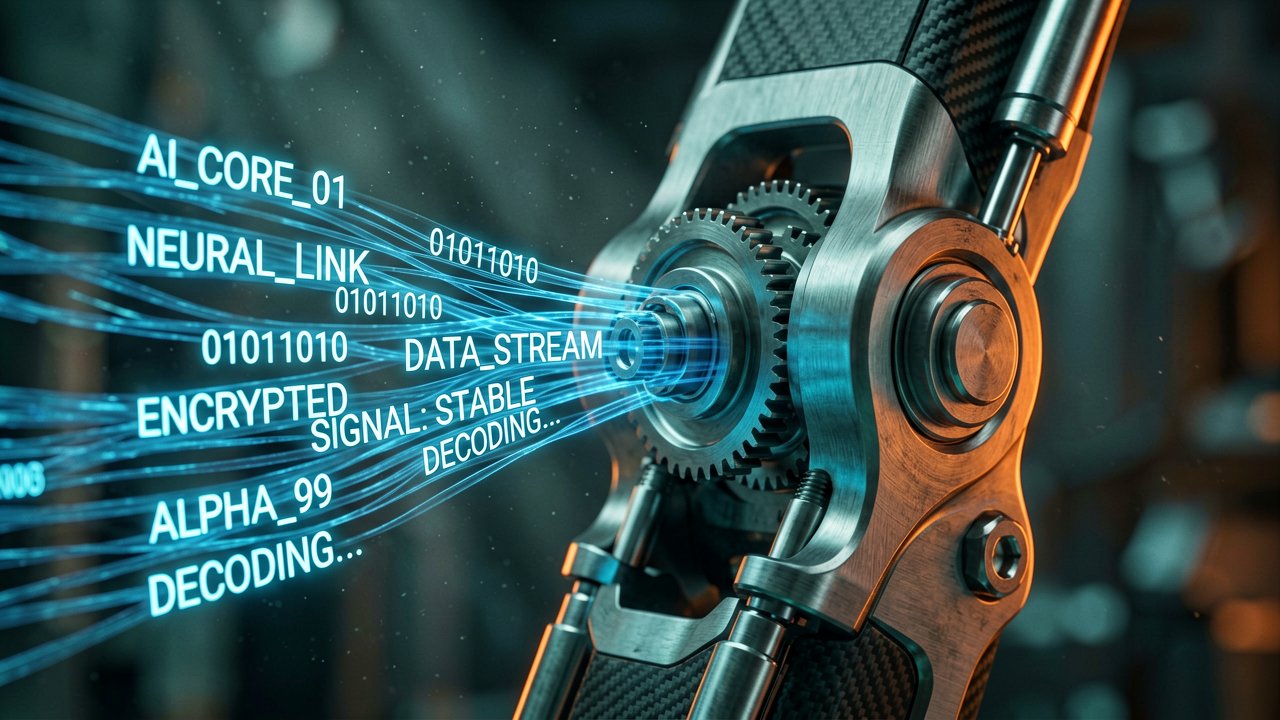
Physical AI differs from the generative models dominating headlines. This work embeds artificial intelligence directly into mechanical systems—robots that move, sensors that perceive, actuators that respond. The goal is automation in sectors where labor shortages and safety concerns create genuine operational friction.
According to the official CMU announcement, the center brings together faculty from robotics, machine learning, language technologies, human-computer interaction, electrical and computer engineering, civil and environmental engineering, and philosophy. That last discipline—philosophy—appears deliberately. Ethics and social acceptance matter when deploying autonomous systems in hospitals or construction sites.
The research focus breaks into concrete technical areas: action generation and learning, spatial perception and environmental understanding, multi-robot coordination, human-robot collaboration, and simulation-to-reality integration. These aren't abstract concepts. They're the problems engineers face when a robot needs to navigate a warehouse without hitting a human worker, or when multiple drones must coordinate during infrastructure inspection.
Fujitsu is contributing more than funding. The company is developing Fujitsu Kozuchi Physical OS, a platform that integrates robots, sensors, systems, and physical spaces. The OS combines what Fujitsu calls "brain intelligence"—enhancing robot adaptability through prior experience and human imitation—with spatial intelligence for environmental understanding. This matters because most AI systems today operate in isolation. Real-world deployment requires coordination across devices, networks, and physical constraints.
Vivek Mahajan, a leader at Fujitsu, stated in a public statement that the company aims to create value through convergence of AI, computing, networking, and robotics. The language is corporate, but the intent is clear: Fujitsu wants reliable physical AI that can be deployed in mission-critical domains supporting social infrastructure.
CMU's Martial Hebert, robotics professor and dean of the School of Computer Science, emphasized trust as a critical factor. Physical AI will fuel machines of tomorrow, allowing for competent decision-making, enhanced efficiency, greater safety, and trust to work alongside humans in critical fields. Trust is the bottleneck. Users won't adopt systems they don't understand or can't predict.
The center builds on existing CMU AI infrastructure. Last September, the Bank of New York Mellon invested $10 million in an AI Lab on campus. In January, the university launched Learnvia, an AI learning resource serving as a tutor for students in gateway courses at 38 higher-education institutions nationwide. These investments suggest CMU is positioning itself as an AI hub beyond traditional research publication.

A Georgetown University report from the Center for Security and Emerging Technology (CSET) notes that interest in physical AI stems from potential to improve productivity, mitigate labor shortages, and promote safety in manufacturing, logistics, construction, infrastructure, and healthcare. However, the report also identifies inhibitors: gaps in the supply chain and lack of collaboration and standardization. The Fujitsu-CMU center explicitly addresses the collaboration gap.
The physical reality of this work involves specialized facilities. The Robotics Innovation Center provides collaborative space to test physical AI in real-world environments. Researchers won't just run simulations on servers. They'll deploy systems in spaces where sensors encounter dust, lighting varies, surfaces have texture, and humans move unpredictably. That friction between simulation and reality is where most physical AI projects fail.
Participating researchers include Yonatan Bisk (Language Technologies), Fernando De La Torre (Robotics), Tim Dettmers (Machine Learning), Laszlo Jeni (Robotics), Kris Kitani (Robotics), David Lindlbauer (Human-Computer Interaction), Yorie Nakahira (Electrical and Computer Engineering), Graham Neubig (Language Technologies), Jean Oh (Robotics), Sean Qian (Civil and Environmental Engineering), Sebastian Scherer (Robotics), Peter Spirtes (Philosophy), and Kun Zhang (Philosophy). The roster spans technical and ethical domains, which is necessary when building systems that will operate in public spaces.
Industry analysts note this positions CMU differently from universities pursuing purely theoretical AI. The collaboration with Fujitsu connects academic research with commercial deployment pathways. Whether that translates to faster adoption or just more patents remains to be seen (though the $10M BNY Mellon investment suggests industry sees value).
The center aims to serve as a global research hub driving social implementation of physical AI technologies. That's ambitious language. Implementation requires regulatory approval, safety certification, cost justification, and user acceptance. None of those factors appear in the technical research agenda, yet all determine whether these systems reach deployment.
Physical AI faces supply chain constraints that software-only AI doesn't encounter. Robots require hardware components, sensors, actuators, and specialized manufacturing. A shortage in any component delays deployment. The CSET report identifies this as a key inhibitor. Fujitsu's integrated approach—combining AI, computing, and networking—may help mitigate some constraints, but hardware bottlenecks remain outside pure research control.
The announcement came through PRNewswire on April 23, 2026, from Kawasaki, Japan and Pittsburgh. The dual location reflects the international nature of the partnership. Fujitsu scientists, engineers, and technicians will work alongside CMU researchers. That geographic separation introduces coordination challenges—time zones, travel, communication protocols—that don't appear in press releases but affect real-world collaboration.
Whether this center produces deployable systems or primarily academic publications depends on funding continuity, industry demand, and regulatory evolution. The technology exists in fragments. Integration at scale is the actual challenge. Users will care less about research breakthroughs than whether these systems work reliably in their specific environments.
The question isn't whether physical AI can be built. It's whether it can be built cheaply enough, safely enough, and reliably enough that organizations will replace human labor with autonomous systems. That calculation involves economics, not just engineering. Time will tell if the Fujitsu-CMU center produces solutions that clear that bar.
Artūras Malašauskas is an AI Systems Integrator with 20+ years of production-grade web engineering experience. He has designed, shipped, and scaled enterprise Python/PHP systems for logistics, SaaS, and public-sector clients. For the past year, he has focused exclusively on AI integrations: deploying open-source LLMs, building generative media pipelines (image, audio, video), and engineering multi-agent workflows for real production environments. His standard: reproducibility, security, cost-efficient inference—no vaporware. He documents and evaluates emerging AI tooling, separating verified capabilities from marketing noise. Technical editor at: muza-ai.eu, ai-verslas.lt, ai-naujinos.lt Connect on LinkedIn
Comments