Reflow Medical Launches Next-Gen Cora Microcatheters for Complex Coronary Work
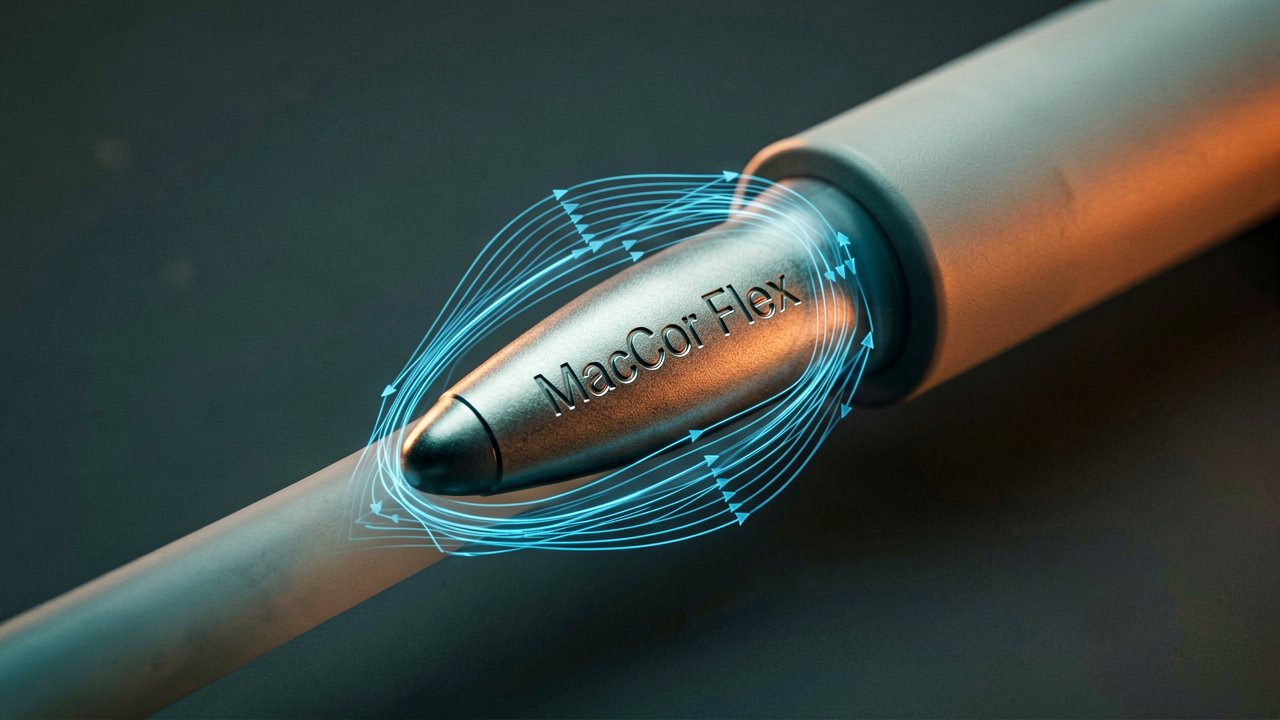
San Clemente, California-based Reflow Medical announced the U.S. market launch of its next-generation Cora Flex and Cora Force torqueable microcatheters on April 23, 2026. The devices target complex coronary interventions where traditional catheters struggle with tortuous anatomy and calcified lesions. This represents a notable expansion of the company's coronary portfolio beyond its established peripheral vascular offerings.
The announcement came via official press release, with industry coverage following through medical device trade publications. Reflow's official statement details the technical specifications and clinical positioning. MassDevice provided additional context on the engineering approach and market implications.
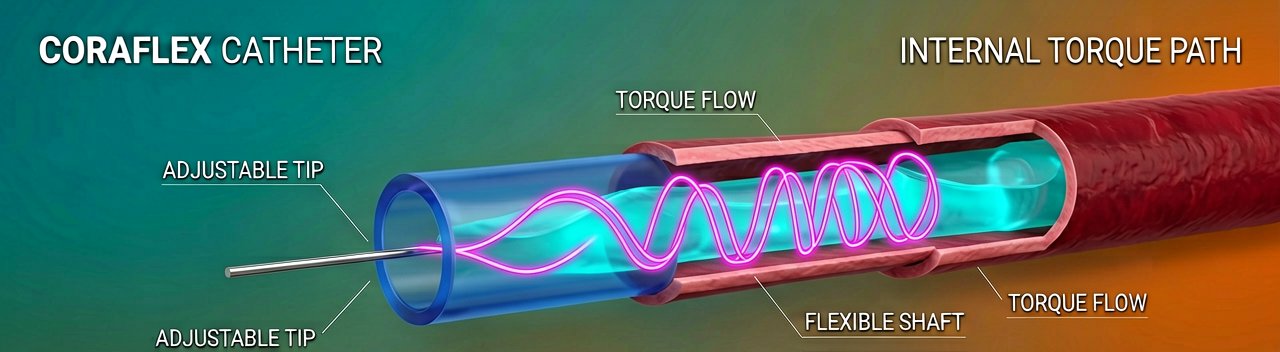
Both microcatheters build on Cora Tech, a proprietary construction featuring a no-liner design with PTFE-coated coils. This architecture enables unrestricted torque rotation—a critical feature when navigating the winding paths of diseased coronary arteries. The stainless-steel braid provides controlled torque transmission and catheter stability. Think of it like steering a bicycle through a narrow alley versus a wide highway; the difference in precision becomes immediately apparent when you're working millimeters from critical tissue.
Cora Flex targets navigation in tortuous vessels, septals, and microchannels. Cora Force adds a metal tip for increased pushability and tip force in resistant, calcified, and fibrotic lesions. The distinction matters clinically. A physician facing a heavily calcified lesion needs different mechanical properties than someone threading through a winding septal channel. One tool cannot optimally serve both scenarios.
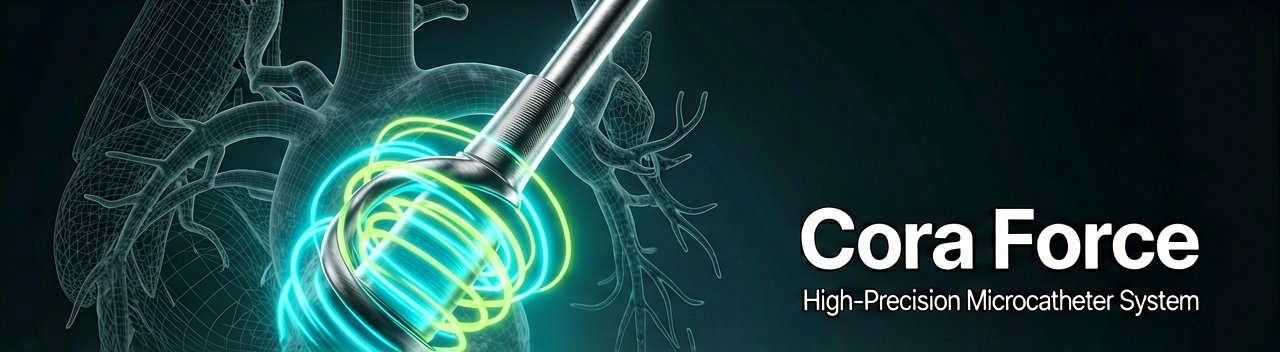
Hub design, shaft construction, and distal profile refinements aim to improve handling, pushability, and trackability. These aren't abstract improvements. They translate to the physical sensation of rotating the catheter hub without the guidewire locking up inside the shaft. That friction—when the wire binds and resists rotation—can derail an entire procedure. Spinning freedom eliminates that friction point.
Garrett B. Wong, MD, FACC, FSCAI, Clinical Professor of Medicine at UC Davis Medical Center, participated in the iterative development process. He described the devices as "truly next-generation" that will become standard in daily practice. Dr. Wong specifically highlighted spinning freedom as a major benefit when crossing challenging anatomies. His involvement during development suggests the refinements address real procedural pain points rather than theoretical improvements.
Outhit Bouasaysy, Vice President of Engineering at Reflow Medical, emphasized the focus on optimizing rotational behavior, torque transmission, and overall handling characteristics. The enhancements reflect direct physician input. This matters because endovascular tools live or die by how they feel in the operator's hands during a 45-minute procedure. (Engineers can model torque transmission perfectly on paper, but the catheter either works or it doesn't when you're actually using it.)
Dejan Ilic, Vice President of Global Marketing, positioned the launch as an important step in expanding the coronary portfolio to support patients with coronary artery disease. The company has recently expanded its presence in the coronary segment, including first-in-human data from the DEEPER CORONARY study evaluating the Spur Elute Coronary Sirolimus-Eluting Retrievable Stent System for coronary in-stent restenosis.
Reflow's portfolio includes coronary and peripheral microcatheters, crossing catheters, and its proprietary Retrievable Scaffold Therapy platform. The coronary Cora Catheters line carries FDA approval. Peripheral products including Wingman, Spex, Spex LP, and Spur have FDA clearance and CE Mark registration. The company partners with leading physicians to develop technologies addressing unmet clinical needs in endovascular treatment of complex cardiovascular disease.
The market for coronary microcatheters remains competitive. Established players like Boston Scientific, Abbott, and Medtronic dominate the space with decades of product iteration. Reflow's approach—building on physician feedback and focusing on specific mechanical advantages—positions the Cora platform as a specialist tool rather than a general-purpose alternative. That's a narrower but potentially more defensible market position.
Physicians performing complex coronary interventions face specific challenges. Chronic total occlusions, heavily calcified lesions, and tortuous anatomy all require precise catheter control. The guidewire-catheter interface becomes critical. When the wire binds inside the catheter lumen, torque transmission degrades. The operator loses control. Procedures extend. Radiation exposure increases. Patient outcomes suffer.
The no-liner design with PTFE-coated coils addresses this binding issue. PTFE provides low-friction surfaces. The no-liner construction removes an additional layer that could create friction points. Combined with the stainless-steel braid for torque transmission, the system should maintain predictable rotational behavior throughout the procedure. That predictability translates to shorter procedure times and potentially better outcomes.
Whether the market adopts these devices depends on several factors. Pricing relative to established competitors matters. Distribution networks matter. Clinical data demonstrating improved outcomes will matter most. The launch announcement doesn't include comparative performance data against existing microcatheters. That information will come through peer-reviewed publications and real-world evidence over time.
Reflow's strategy of physician collaboration during development shows promise. Dr. Wong's involvement and positive assessment suggests the devices address genuine clinical needs. But physician endorsement during development differs from adoption in practice. Procurement decisions involve hospital purchasing committees, insurance reimbursement considerations, and competitive bidding processes. None of those factors appear in the launch announcement.
The timing aligns with Reflow's broader coronary expansion. The DEEPER CORONARY study data presentation indicates the company is investing in coronary indications beyond microcatheters. A comprehensive coronary portfolio—microcatheters, stents, and scaffolds—creates cross-selling opportunities. It also signals commitment to the segment beyond opportunistic product launches.
For interventional cardiologists, the choice between Cora Flex and Cora Force depends on lesion characteristics. Flex for tortuosity. Force for calcification. That specialization makes sense clinically but adds inventory complexity for catheterization labs. Facilities must stock both variants to handle the full range of coronary anatomy. That's a consideration for adoption rates.
The technology itself represents incremental refinement rather than radical innovation. No-liner designs and PTFE coatings aren't new concepts in endovascular devices. The value proposition lies in execution—getting the torque transmission, spinning freedom, and handling characteristics right for specific clinical scenarios. That's harder than it sounds.
Whether users actually pay for it remains the real question. The medical device market rewards proven outcomes, not engineering specifications. Reflow will need to demonstrate that Cora Flex and Cora Force improve procedure times, reduce complications, or enable successful interventions where other catheters fail. The launch announcement establishes availability. Clinical validation comes next.
Artūras Malašauskas is an AI Systems Integrator with 20+ years of production-grade web engineering experience. He has designed, shipped, and scaled enterprise Python/PHP systems for logistics, SaaS, and public-sector clients. For the past year, he has focused exclusively on AI integrations: deploying open-source LLMs, building generative media pipelines (image, audio, video), and engineering multi-agent workflows for real production environments. His standard: reproducibility, security, cost-efficient inference—no vaporware. He documents and evaluates emerging AI tooling, separating verified capabilities from marketing noise. Technical editor at: muza-ai.eu, ai-verslas.lt, ai-naujinos.lt Connect on LinkedIn
Comments