Nothing Launches Essential Voice Speech-to-Text Feature
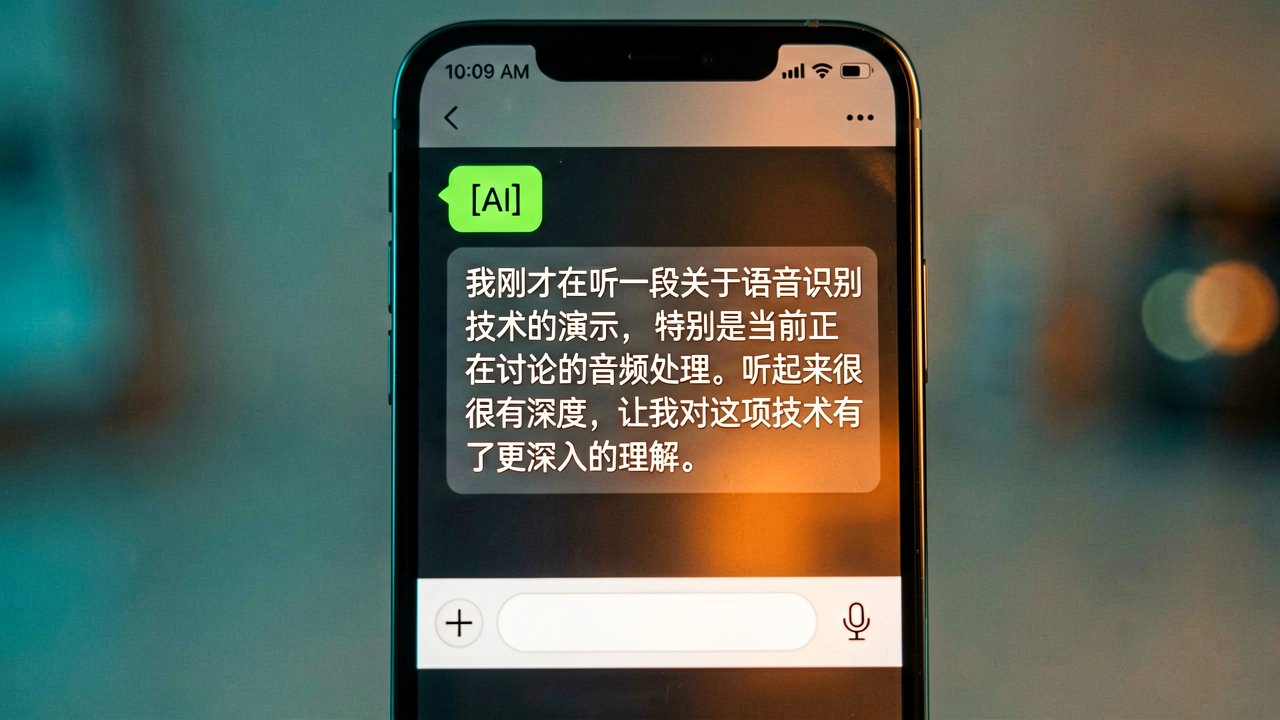
The London-based consumer tech brand Nothing has unveiled Essential Voice, a new speech-to-text transcription feature designed to bridge the gap between traditional typing and dictation. The feature transforms spoken words into clean, ready-to-use text by automatically filtering out filler words like "um" and "uh" that plague standard voice typing tools.
According to the official announcement on the Nothing community forum, the company identified a clear problem with current voice interaction methods. Speaking is naturally four times faster than typing—people average 36 words per minute on phones versus 150 words per minute when speaking. Yet traditional dictation leaves users with fragmented transcripts requiring manual cleanup before sending.
Essential Voice addresses this through several practical tools. The auto-correction function enhances clarity by removing filler words and tidying sentence structure. Personal mappings let users create custom voice shortcuts for specific words, links, templates, and repeated phrases. A translation agent enables users to speak in one language while having text written in another. The feature supports over 100 languages with auto-detection and regional variants like Latin American Spanish or Simplified Chinese.
Activation is straightforward but requires physical interaction. Users can trigger Essential Voice by long-pressing the Essential Key on the phone's side or enabling it directly on the keyboard. This physical button press matters—transcription stops the moment you release the key, giving users tactile control over when recording begins and ends (a small but meaningful detail that separates it from always-listening competitors).
Independent testing from Android Central confirms the feature works as advertised. The reviewer noted that pauses, fill words, and natural speech patterns are handled better than Google's voice typing, which often translates hesitations into text requiring post-editing. The hands-on test included writing an entire article using Essential Voice, with only minor punctuation adjustments needed afterward.
Availability is staggered across Nothing's device lineup. Essential Voice launched first on Phone (3), with Phone (4a) Pro support following later in the month. Phone (4a) users will receive the feature in early May. Future updates promise context awareness, allowing the system to adapt to different scenarios—whether composing a message, drafting a work email, or performing a search.
Privacy handling follows a specific architecture. Essential Voice activates only when users choose to use it and does not listen in the background. Once activated, audio recordings are encrypted and processed on Nothing's servers. The generated text returns to the device and is not stored on their servers. This server-side processing means the feature requires network connectivity—there is no offline support currently available.
The network dependency represents a genuine limitation. Users without reliable internet access cannot use the feature at all. Nothing has indicated they hope to bring offline transcribing capability in the future, even if it takes longer to process locally. For now, the cloud-based approach enables the more sophisticated AI filtering that distinguishes Essential Voice from basic dictation.

Nothing positions Essential Voice as the foundation of a voice-first interface across its ecosystem of smart products. The company's broader ambition extends beyond phones to create an interface that adapts to how people think, live, and communicate. Whether this vision materializes depends on execution across multiple product categories.
Physical interaction remains central to the experience. The Essential Key's presence on the phone's side provides a tactile anchor in an increasingly gesture-driven interface. Long-pressing the button feels deliberate—there's no accidental activation while pocketing the device. This physical requirement may frustrate power users seeking hands-free convenience, but it prevents the privacy concerns of always-listening microphones.
The feature's real-world utility depends on use cases. For quick messages or notes, the speed advantage is clear. For formal documents, the auto-correction may still require review. The translation capability could prove valuable for multilingual users, though accuracy across all 100+ languages remains unverified in independent testing.
Whether users actually pay for this capability remains the real question. Nothing has not announced any subscription fees for Essential Voice, suggesting it will be included as a standard feature. The competitive landscape includes Google's voice typing and Apple's dictation, both of which have mature ecosystems. Nothing's advantage lies in the filler-word filtering and personal mappings—features that directly address documented pain points.
Time will tell if Essential Voice becomes a defining feature or a niche tool. The technology works, the privacy model is transparent, and the physical interaction feels intentional. Whether it changes how people communicate on phones depends on adoption rates and whether the convenience outweighs the network dependency. For now, it's a solid step forward in voice-first interfaces, even if the execution isn't perfect.
Artūras Malašauskas is an AI Systems Integrator with 20+ years of production-grade web engineering experience. He has designed, shipped, and scaled enterprise Python/PHP systems for logistics, SaaS, and public-sector clients. For the past year, he has focused exclusively on AI integrations: deploying open-source LLMs, building generative media pipelines (image, audio, video), and engineering multi-agent workflows for real production environments. His standard: reproducibility, security, cost-efficient inference—no vaporware. He documents and evaluates emerging AI tooling, separating verified capabilities from marketing noise. Technical editor at: muza-ai.eu, ai-verslas.lt, ai-naujinos.lt Connect on LinkedIn
Comments