Medtronic Launches Adaptive DBS for Parkinson's in India
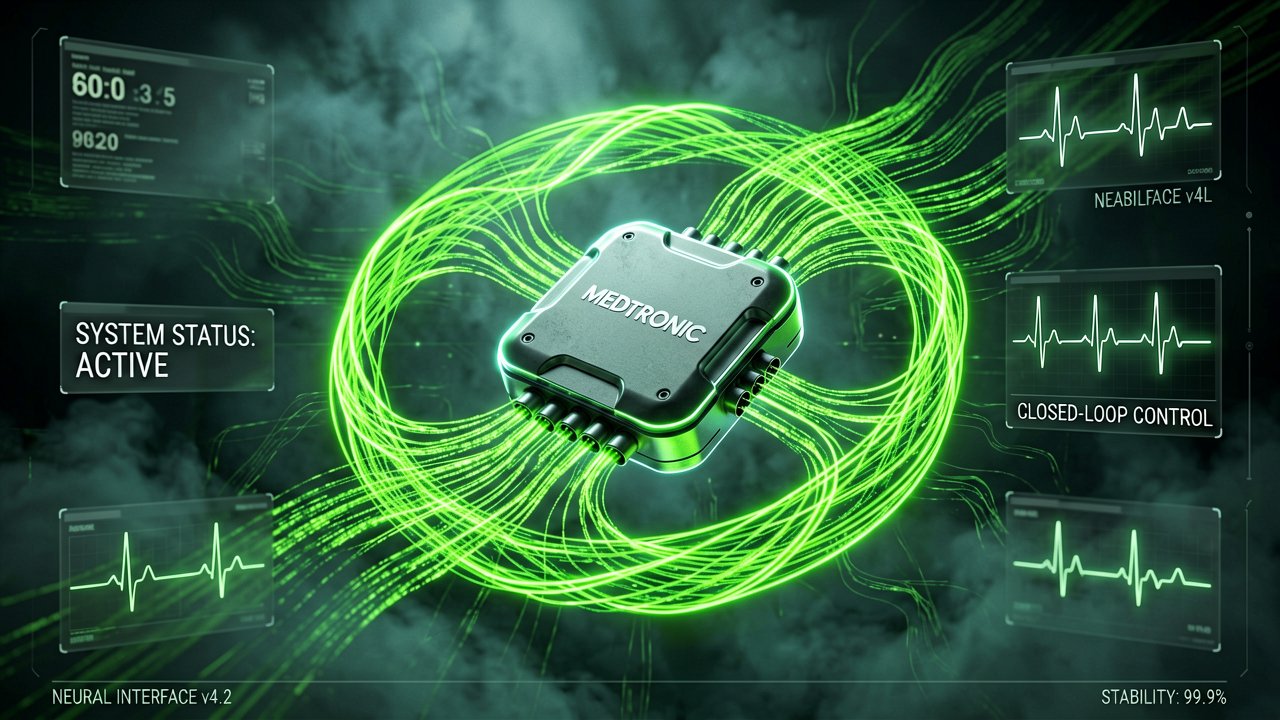
Medtronic announced the launch of its Adaptive Deep Brain Stimulation (aDBS) system in India on April 23, 2026, marking a significant expansion of its closed-loop therapy platform into one of the world's largest emerging healthcare markets.
The company's official press release confirms the system is now available to patients and clinicians across the country, following FDA approval of the BrainSense aDBS technology in February 2025. Medtronic's announcement positions this as the world's first closed-loop DBS system for Parkinson's disease, a distinction that matters when discussing how the technology actually functions.
Conventional deep brain stimulation requires manual adjustment of stimulation levels throughout the day, typically managed by patients or caregivers using external controllers. The aDBS system changes this dynamic by automatically adapting therapy based on real-time brain signals and patient activity. It's a fundamental shift from reactive to responsive treatment (which is the difference between a thermostat that clicks on and off versus one that modulates continuously).
The technology delivers through the Medtronic Percept neurostimulator, a small pacemaker-like device implanted under the skin of the chest. This device sends electronic signals to specific areas in the brain that control movement, effectively blocking some of the neural messages that cause Parkinson's-related movement symptoms. The physical reality of this means patients no longer need to constantly monitor and adjust settings based on how they feel that morning.
Prateek Tiwari, Senior Director of Neuroscience and Specialty Therapies at Medtronic India, emphasized the timing of this launch. He stated the company is "extremely proud to introduce this advanced technology in India, where Parkinson's disease is an increasingly significant healthcare concern." The quote reflects Medtronic's broader mission statement about alleviating pain, restoring health, and extending life.
The market context matters here. India currently accounts for roughly 10% of the global Parkinson's disease burden, which represents a considerable public health challenge. Industry projections suggest India could become the second-highest globally for Parkinson's cases within the next five years. The aDBS system arrives as the disease burden is expected to rise significantly.
MassDevice's coverage of the launch corroborates the technical specifications and timeline. The trade publication notes the system provides real-time adaptive therapy that dynamically adjusts stimulation based on each person's unique brain activity, both in clinical settings and during daily life.
BrainSense technology, which powers the adaptive functionality, has been FDA-approved and is designed to improve DBS programming by ensuring optimal initial contact selection in less time. This matters for clinicians who need to balance precision with efficiency during programming sessions, which can be lengthy and technically demanding.

The adaptive therapy aims to deliver more consistent symptom management while minimizing side effects. It also helps extend the life of the implanted device's battery, which is a practical consideration for patients who face the prospect of replacement surgeries every few years. Battery longevity directly impacts long-term treatment costs and surgical risk.
Patients considering deep brain stimulation typically begin by consulting a Movement Disorder Specialist, usually a neurologist, who evaluates whether their condition may benefit from this therapy. The process follows a coordinated, team-based approach with patients often referred to a comprehensive DBS clinic or neurosurgery board for further assessment. If deemed suitable, a Functional Neurosurgeon—specially trained to perform the procedure—works alongside the care team to implant and program the device.
There is currently no cure for Parkinson's disease, but deep brain stimulation has been transforming lives for more than three decades. The shift to adaptive systems represents an evolution in how the therapy is delivered, not a fundamental change in the underlying mechanism. The signals still block movement-related brain messages, but now they do so with automated precision rather than manual intervention.
Whether this technology becomes widely accessible across India's healthcare system remains an open question. The device requires specialized surgical expertise, ongoing programming support, and significant infrastructure investment. Hospitals in tier-one cities may adopt it quickly, but rural and semi-urban centers face different constraints. The cost structure for patients and insurers has not been publicly disclosed in the announcement.
Medtronic's expansion into India with aDBS signals confidence in the market's capacity to absorb advanced neurological therapies. The company has positioned itself as a leader in bringing cutting-edge healthcare technologies to the region. Whether patients actually experience meaningful quality-of-life improvements at scale depends on access, affordability, and long-term clinical outcomes that will take years to fully assess.
Artūras Malašauskas is an AI Systems Integrator with 20+ years of production-grade web engineering experience. He has designed, shipped, and scaled enterprise Python/PHP systems for logistics, SaaS, and public-sector clients. For the past year, he has focused exclusively on AI integrations: deploying open-source LLMs, building generative media pipelines (image, audio, video), and engineering multi-agent workflows for real production environments. His standard: reproducibility, security, cost-efficient inference—no vaporware. He documents and evaluates emerging AI tooling, separating verified capabilities from marketing noise. Technical editor at: muza-ai.eu, ai-verslas.lt, ai-naujinos.lt Connect on LinkedIn
Comments