KNDS Unveils Phorio Radio for Military Robots at DSA 2026
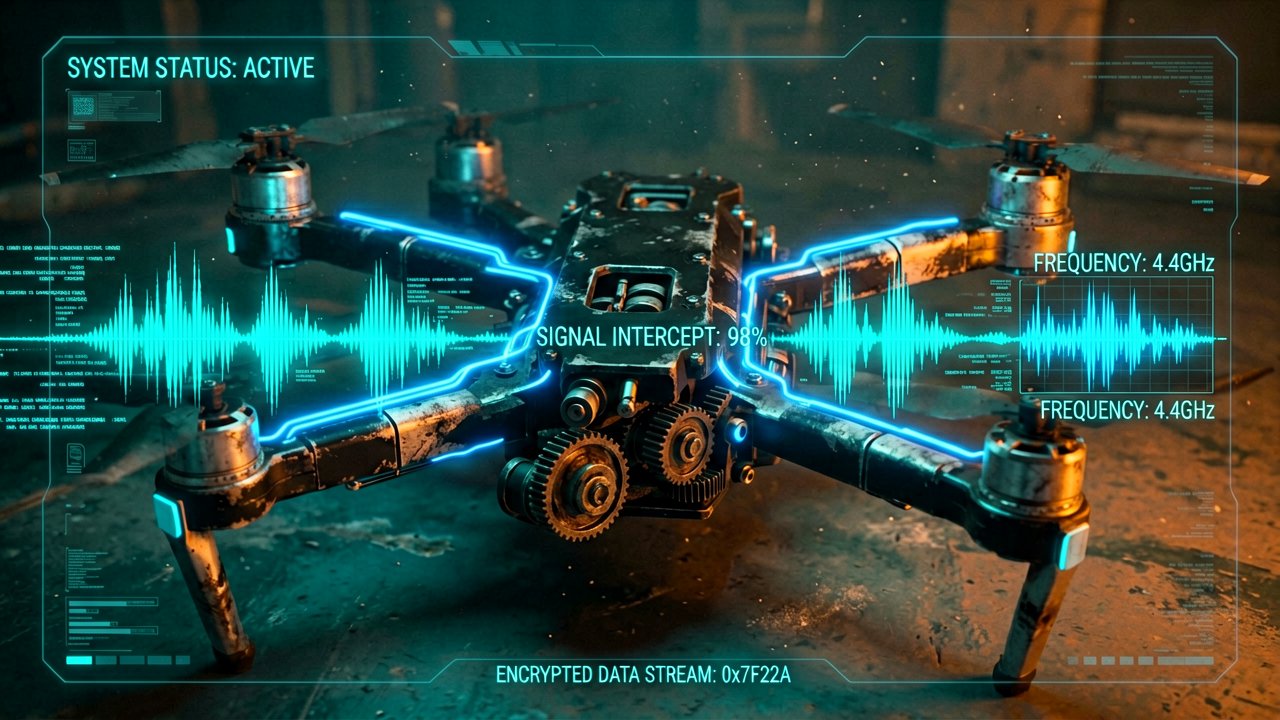
At the Defence Services Asia (DSA) 2026 exhibition in Kuala Lumpur, KNDS officially unveiled Phorio, a new tactical radio engineered specifically for remote-controlled robotic systems. The announcement came during the April 20–23 event, with the company highlighting the system's ability to maintain communications in contested electromagnetic environments where traditional radios fail.
Joël Morillon, Deputy Managing Director at KNDS Robotics, told Asian Military Review that Phorio was developed with funding from the French Ministry of Defence because current radios encounter difficulties and fragility in unstructured environments. These communication problems reduce trust in the operational credibility of robots. The system is therefore designed for modern battlefields, where adversaries routinely disrupt and jam radio frequencies.
Phorio depends on a software-defined radio architecture. This optimises radio performance, and its design allows scalability without hardware modifications. A second benefit is resistance to jamming, because it uses frequency hopping protocols and a wide radio frequency spectrum. KNDS stated, "Thanks to its advanced frequency-hopping and transmission security capabilities, Phorio ensures uninterrupted communications in the face of modern electromagnetic threats, particularly to enable the use of teleoperated weapons."
Thirdly, Morillon said Phorio has the range and bandwidth to simultaneously transmit and receive data such as command-and-control signals, video streams, voice and data. The physical reality here matters: operators no longer toggle between separate channels for video feeds and control inputs. Everything flows through one link. (a problem that has plagued users for years, frankly). Finally, Phorio features open architecture to accept a customer's various interfaces, plus the system can be fitted to any unmanned platform.
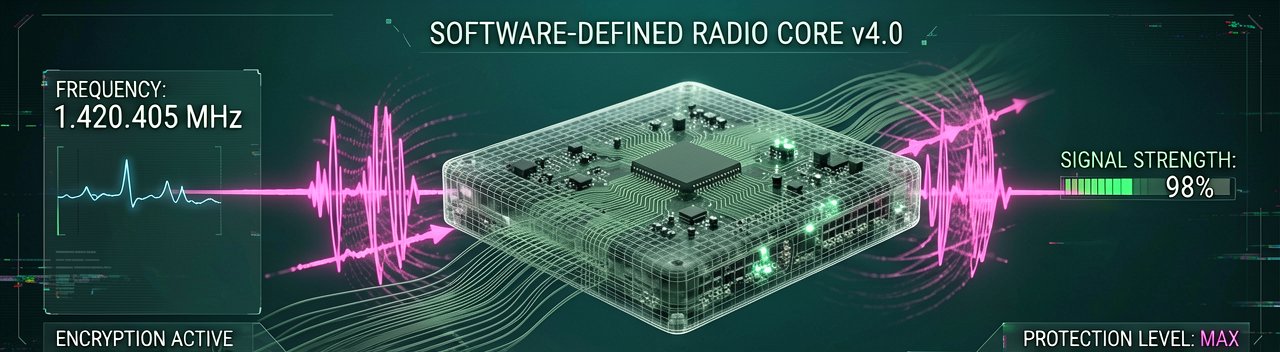
According to the official KNDS press release, the radio is designed for ground-based and aerial robotic systems, taking into account environmental and integration constraints. New communication modes and customer-specific protocols can be integrated, and the core software can be easily updated. KNDS concluded, "Phorio thus offers technological longevity, reduces obsolescence cycles, and enables armed forces to benefit from incremental capability improvements throughout the system's lifecycle."
KNDS has already sold some Phorio radios to the French MoD. The new system can be selected for tasks where its capabilities are required, or clients can still opt for legacy radios if they wish. The most popular product in KNDS's robotic catalogue is the Nerva micro-UGV. KNDS has sold more than 1,000 UGVs to 40 countries to date, including Australia, Indonesia, Malaysia, Singapore and Thailand in the Asia-Pacific region.
However, KNDS's specialty is providing robotic kits for third-party UGV platforms, something it has been doing since its robotics division was created in 2013. Its portfolio of UGVs evolved significantly since 2018 too, when the company started introducing heavier platforms. KNDS is experienced in command-and-control and fire control systems, something essential when UGVs are fitted with weapons. A representative said KNDS can guarantee a safe and reliable line of fire for armed UGVs.
Discussing the future of unmanned ground systems, a KNDS spokesperson told AMR that "adoption of UGVs is expected to accelerate significantly across modern militaries, driven by operational, technological and doctrinal factors." KNDS expects missions such as force protection to be the primary driver, but also mentioned expanded mission sets such as last-mile logistics, human-machine teaming, secure teleoperation and controlled fires, swarm potential and modular payloads.
Incidentally, KNDS recently announced completion of acquisition of Texelis Defense on 2 April, and the entity has now been renamed KNDS Mobility. Texelis specialised in military mobility platforms, including drivetrains and chassis. There is an Asian connection here too, because Texelis aided Indonesian company PT SSE to develop the P2 Tiger 4×4 protected vehicle. A scale model of the P2 Tiger was displayed at the KNDS booth at DSA 2026.
Whether militaries actually deploy Phorio at scale remains the real question. The technology addresses genuine problems, but adoption depends on budget cycles and whether operators trust software-defined systems in life-or-death scenarios. Time will tell if the radio performs as advertised under actual combat conditions.
Artūras Malašauskas is an AI Systems Integrator with 20+ years of production-grade web engineering experience. He has designed, shipped, and scaled enterprise Python/PHP systems for logistics, SaaS, and public-sector clients. For the past year, he has focused exclusively on AI integrations: deploying open-source LLMs, building generative media pipelines (image, audio, video), and engineering multi-agent workflows for real production environments. His standard: reproducibility, security, cost-efficient inference—no vaporware. He documents and evaluates emerging AI tooling, separating verified capabilities from marketing noise. Technical editor at: muza-ai.eu, ai-verslas.lt, ai-naujinos.lt Connect on LinkedIn
Comments