Tesla Optimus Gen 3 Production Starts July; Ford Dissolves EV Division
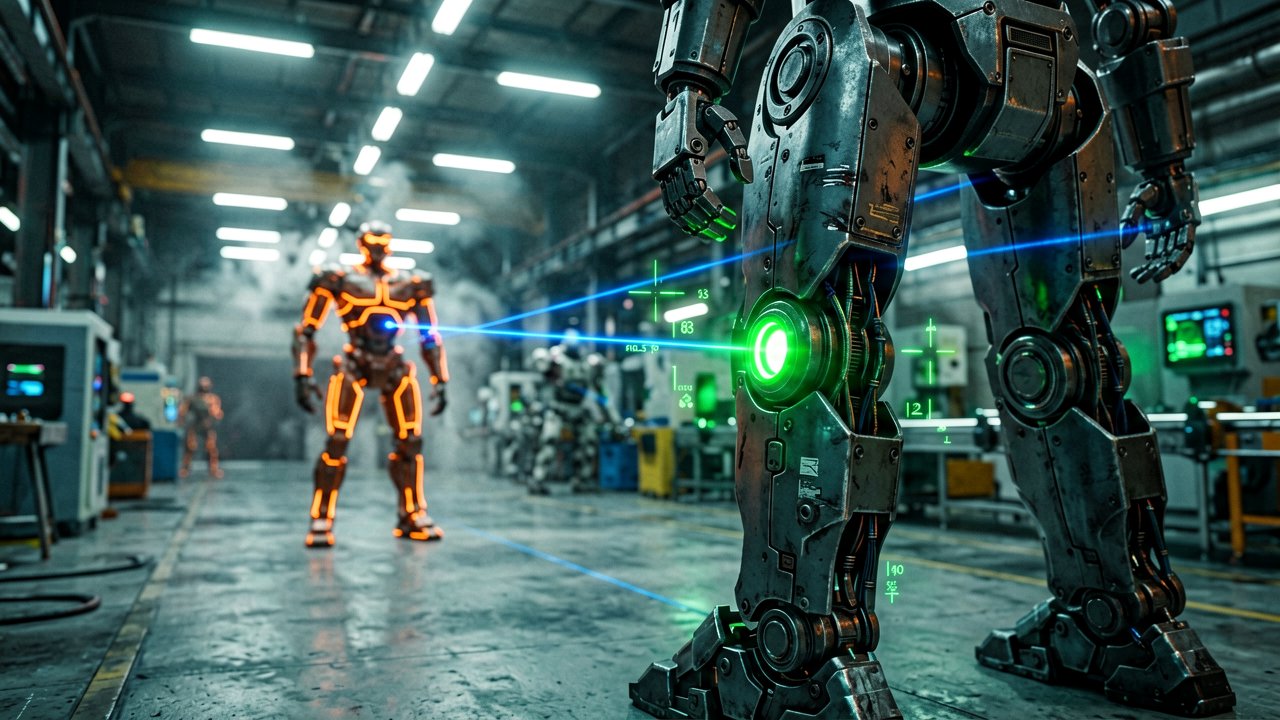
Two major automotive industry shifts emerged this week: Tesla confirmed its third-generation humanoid robot will debut mid-2026 with production starting at Fremont, while Ford Motor Company announced the dissolution of its standalone electric vehicle division.
During Tesla's Q1 2026 earnings call, CEO Elon Musk laid out an aggressive timeline for the Optimus Gen 3. Production will begin at the Fremont, California facility in late July or August 2026, with enterprise deliveries expected in the second half of the year. External deployment is anticipated to start in 2027.
The timeline is tight. Tesla will halt Model S and Model X production in early May, ending a 14-year run for the Model S and 11 years for the Model X. The company produced over 610,000 of these vehicles combined, though sales had dwindled to roughly 30,000 annually—a fraction of the line's 100,000-unit capacity.
Musk described the four-month conversion as unprecedented. "If we were able to go from stopping production on one line, dismantling that entire line, reinstalling a whole new line, and turning that on in a matter of four months, that is an insanely fast speed. I don't think any other company on Earth has ever done that before," he said during the earnings call, per Electrek's coverage.
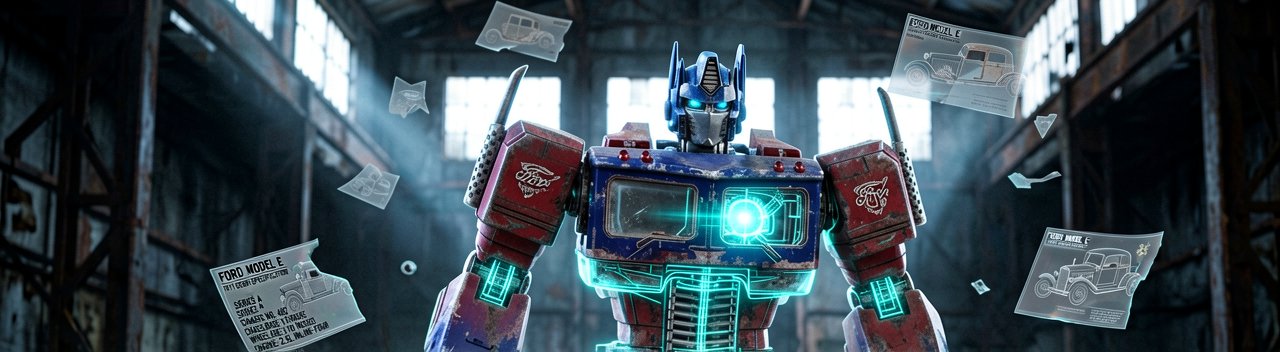
The physical reality of this conversion is brutal. Workers will dismantle the entire production line from the ground up—starting with smaller parts production equipment and working forward to final assembly. Then comes installation of entirely new production equipment for Optimus, including all wiring, communications, and testing infrastructure. It's the kind of industrial surgery that leaves no room for error.
Musk was candid about the challenges. Optimus has over 10,000 unique parts across an entirely new production line—none of which have been through mass production before. "It will move as fast as the least lucky, slowest, dumbest part in the entire 10,000," Musk said. "It is impossible to predict these things."
He declined to provide any production target for 2026, calling initial output "quite slow." This represents a significant walk-back from Musk's January 2025 prediction of "roughly 10,000 Optimus robots" being built that year—a target Tesla missed entirely, with Musk admitting in January 2026 that zero Optimus robots were doing "useful work" in Tesla's factories.
Initial skills for the robots will be "simple skills in the factory" before building up from there. The company is also constructing a second Optimus factory at Giga Texas, with production expected to begin around summer 2027. That facility is being built on the north campus expansion and is expected to eventually produce the higher-volume Gen 4 variant.
As for the Gen 3 reveal originally expected in Q1 2026, Musk pushed the timeline again—this time to "probably middle of this year." The reason? Tesla says competitors "do a frame-by-frame analysis whenever we release something and copy everything they possibly can." (Competitors are definitely watching, though whether they can replicate the engineering remains debatable.)
Meanwhile, Ford is taking a different approach to its EV future. The automaker announced a major organizational overhaul—dissolving its standalone EV division, Model e, and establishing a new Product Creation and Industrialization Division that will deeply integrate electric, digital, design, and global manufacturing operations.
The move will be led by Chief Operating Officer Kumar Galhotra. Doug Field, the former Tesla executive who spearheaded Ford's EV transition, will depart in May after nearly five years leading Ford's push into software-defined EVs. Field joined Ford in 2021 from Apple, where he ran the company's secretive car program, before that serving as senior VP of engineering at Tesla where he led development of the Model 3.
According to Gasgoo's reporting, the restructuring combines "Electric Vehicle, Digital and Design" with Ford's "global Industrial System"—manufacturing, supply chain, and industrialization.
Field's departure fits a clear pattern. Over the past year, CEO Jim Farley has systematically unwound the bets that defined Ford's early EV strategy. The company killed the original F-150 Lightning EV and replaced it with a Lightning EREV—a range-extender hybrid. It scrapped its planned three-row electric SUV. It cut Model e workforce at the Rouge plant. And now it has dissolved the standalone EV unit entirely.
What survives is the Universal EV Platform and the Louisville pickup, which Ford claims has 15% better aerodynamics than any other pickup on the market, uses LFP batteries and unicastings, and can be assembled 40% faster than a Ford Escape.
Financially, Ford continues to target breakeven for Model e in 2029. CFO Sherry House outlined the outlook during Ford's fourth-quarter 2025 earnings call, noting losses could reach as much as $4.5 billion in 2026. "We expect losses of $4 billion to $4.5 billion for Ford Model e," House said. "This reflects about $1.6 billion of improvement in Gen 1 products driven by lower U.S. volume and cost savings from restructuring the business."
Those gains will be partially offset by around $600 million in higher Gen 2 costs as Ford nears the launch of LFP batteries in Marshall, Michigan and its UEV platform in Kentucky, along with roughly $400 million in startup costs for Ford Energy.
The contrast between Tesla and Ford's approaches is stark. Tesla is betting everything on a product that doesn't exist at scale yet, converting car lines to build robots with 10,000 unproven parts. Ford is consolidating, cutting losses, and focusing on lower-cost EVs built on proven platforms.
Neither approach guarantees success. Tesla's robot production timeline is aggressive to the point of recklessness. Ford's EV division has burned billions with no clear path to profitability. Whether either company's strategy pays off depends on execution that neither has fully demonstrated yet.
The market will decide which bet was smarter. For now, both companies are making moves that could reshape the automotive industry—or leave them behind.
Artūras Malašauskas is an AI Systems Integrator with 20+ years of production-grade web engineering experience. He has designed, shipped, and scaled enterprise Python/PHP systems for logistics, SaaS, and public-sector clients. For the past year, he has focused exclusively on AI integrations: deploying open-source LLMs, building generative media pipelines (image, audio, video), and engineering multi-agent workflows for real production environments. His standard: reproducibility, security, cost-efficient inference—no vaporware. He documents and evaluates emerging AI tooling, separating verified capabilities from marketing noise. Technical editor at: muza-ai.eu, ai-verslas.lt, ai-naujinos.lt Connect on LinkedIn
Comments