Path Robotics Launches Rove Mobile Welding System for Heavy Industry
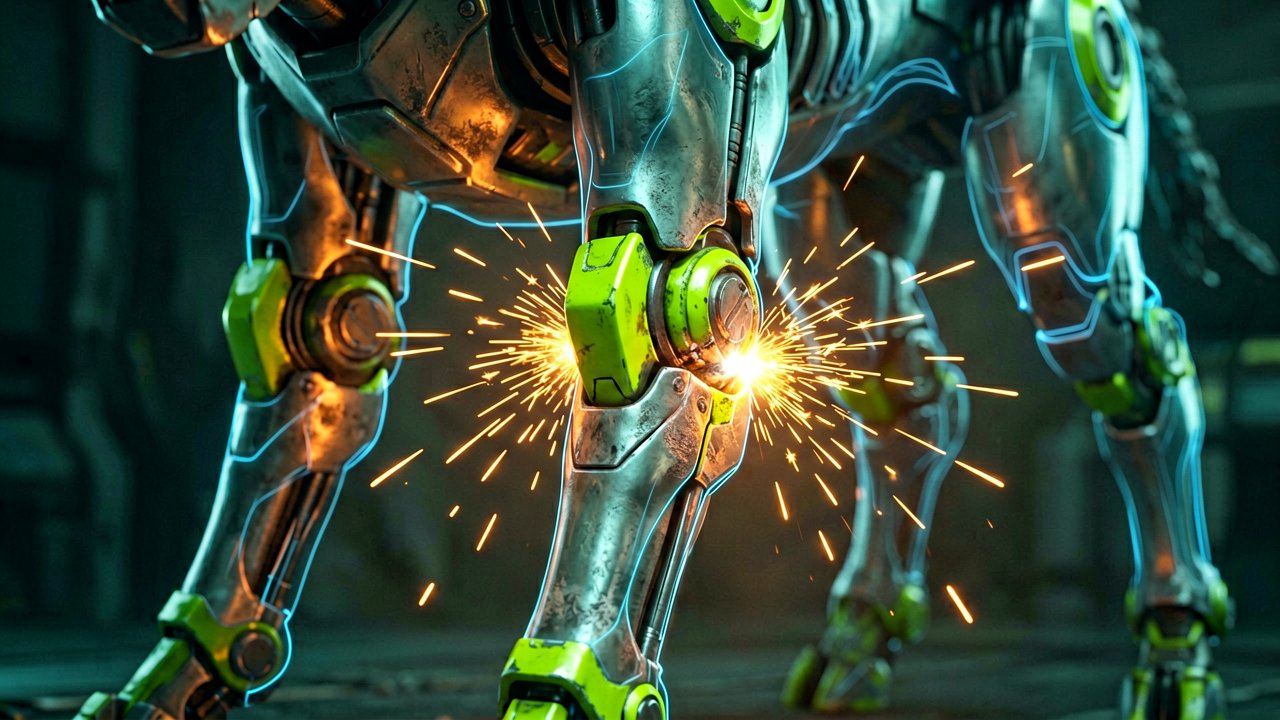
The Columbus-based robotics firm Path Robotics announced the launch of Rove, a mobile robotic welding system designed to automate work on massive, immovable structures. The system pairs the company's proprietary Obsidian physical AI model with a quadruped robot platform, fundamentally changing how welding automation reaches large-scale fabrication sites.
Traditional industrial robots are bolted to factory floors, requiring parts to be perfectly positioned within a fixed cell. Rove flips this model entirely. Instead of bringing the workpiece to the robot, the robot goes to the workpiece. This matters because sectors like shipbuilding and heavy construction deal with assemblies too large to move, let alone fixture inside a standard welding cell.
According to the company's official announcement, Rove extends Obsidian's adaptive welding capability into the field. The system uses computer vision to perceive and adjust to inconsistent fit-ups typical of massive metal assemblies. Legged robots have historically been considered too unstable for precision welding (a problem that has plagued users for years, frankly). Path claims its AI perception layer provides the stability necessary for industrial-grade output in high-variability environments.
Path Robotics' official press release confirms the April 16, 2026 launch date and details the early adopter program. The company has raised more than $300 million since its 2018 founding to tackle chronic labor shortages through physical AI—software that allows machines to perceive and adapt to their surroundings in real-time.
CEO and co-founder Andy Lonsberry described the move as a significant next step customers have been seeking. Manufacturers can now deploy Obsidian wherever welding is needed—across large assemblies, production sites, and in environments where moving the part isn't an option. The quote appears in multiple sources, including coverage from Ohio Tech News.
The physical reality of using Rove involves navigating uneven terrain while maintaining weld precision. The quadruped form factor allows the system to traverse production sites on four legs, reaching welds that stationary robots physically cannot access. This isn't just about mobility—it's about reaching the parts that were previously deemed un-automatable.
Heavy industry is currently squeezed between a surge in infrastructure demand and a dwindling workforce. The American Welding Society projects a massive deficit of skilled workers. Rove is designed to automate the tasks that were previously impossible to automate. The timing aligns with defense spending plans calling for 41 new ships by 2027, including 18 battle and 16 non-battle naval vessels.
Saronic Technologies, a developer of autonomous maritime vessels, signed on as one of Rove's first early adopters. The firm plans to integrate the system into its shipbuilding operations in Franklin, Louisiana. John Morgan, Head of Manufacturing at Saronic, stated that building the next generation of autonomous vessels means rethinking not just how ships operate, but also how they're made.
Path unveiled Rove at the Sea-Air-Space 2026 expo in National Harbor, Maryland, April 19–22. Attendees could see the system demonstrated at booth T76. The company has opened an early adopter program for manufacturers in heavy industry looking to pilot mobile automation. This isn't a theoretical product—it's being tested in actual shipyards.
The technology builds on Path's existing Obsidian model, which already powers autonomous welding in fixed environments. The company has collected north of 200,000 hours of welding data to train the model. That dataset spans 1,000 standards and different material types across multiple industries. The generalization inside the welding vertical allowed Path to take key learnings and pass them into adjacent tasks like assembly and post-weld finishing.
Path's expansion into shipbuilding is a fairly new undertaking for the Columbus-based firm. The last 18 months have been extremely busy, according to Lonsberry. The startup's early journey focused primarily on small- and medium-size businesses, primarily operating in automotive. As 2024 turned into 2025, Path began looking at larger, more complex customers with even higher quality standards.
The company opened new verticals in defense, shipbuilding, AI data centers, energy infrastructure, and construction mining equipment in 2025. Market adoption has been massive. Path also announced a partnership with barge-builder LAD and a memorandum of understanding with HII, the largest military shipbuilder in the U.S. The latter was notably a promise to explore the integration of Path's tech.
Whether users actually pay for it remains the real question. The technology addresses a genuine labor shortage, but mobile robotics in welding introduces new variables—terrain, power, maintenance, and the cost of deploying legged robots at scale. The early adopter program will reveal if the economics work for manufacturers facing the welder shortage crisis.
By 2030, American manufacturing faces a critical shortage of skilled welders. The average welder age is 55, with 43% retiring in 10 years and a 30% annual turnover rate. Manual arc-on time sits at 10-12%. Rove promises to address these constraints, but the path from demonstration to widespread deployment is rarely smooth. Time will tell if the investment pays off for shipyards and construction firms.
Artūras Malašauskas is an AI Systems Integrator with 20+ years of production-grade web engineering experience. He has designed, shipped, and scaled enterprise Python/PHP systems for logistics, SaaS, and public-sector clients. For the past year, he has focused exclusively on AI integrations: deploying open-source LLMs, building generative media pipelines (image, audio, video), and engineering multi-agent workflows for real production environments. His standard: reproducibility, security, cost-efficient inference—no vaporware. He documents and evaluates emerging AI tooling, separating verified capabilities from marketing noise. Technical editor at: muza-ai.eu, ai-verslas.lt, ai-naujinos.lt Connect on LinkedIn
Comments