NVIDIA, Synopsys Announce $2B Partnership for AI-Driven Engineering
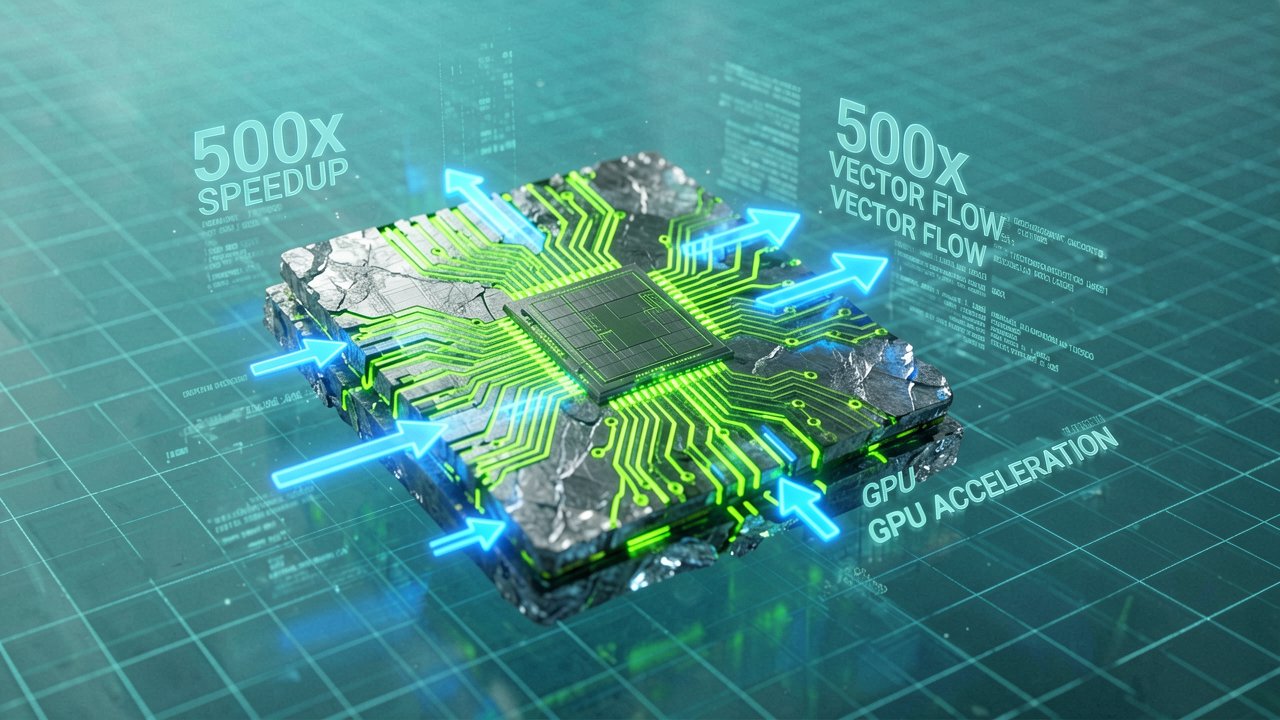
NVIDIA and Synopsys, Inc. (NASDAQ: SNPS) announced an expanded strategic partnership on December 1, 2025, with NVIDIA investing $2 billion in Synopsys common stock at $414.79 per share to accelerate engineering workflows across industries.
The multiyear collaboration integrates NVIDIA's CUDA accelerated computing with Synopsys' engineering solutions to address rising challenges in R&D complexity, development costs, and time-to-market pressures. Key initiatives include accelerating Synopsys applications using NVIDIA CUDA-X libraries, advancing agentic AI engineering through Synopsys AgentEngineer technology, and enabling digital twins via NVIDIA Omniverse for industries including semiconductor, aerospace, and automotive.
"CUDA GPU-accelerated computing is revolutionizing design—enabling simulation at unprecedented speed and scale, from atoms to transistors, from chips to complete systems," stated Jensen Huang, NVIDIA's founder and CEO, in the official announcement. "Our partnership with Synopsys harnesses the power of NVIDIA accelerated computing and AI to reimagine engineering and design."
Sassine Ghazi, Synopsys president and CEO, emphasized the strategic alignment: "The complexity and cost of developing next-generation intelligent systems demands engineering solutions with deeper integration of electronics and physics, accelerated by AI capabilities and compute. No two companies are better positioned to deliver AI-powered, holistic system design solutions than Synopsys and NVIDIA."
Technical validation includes Synopsys' Ansys Fluent software achieving a 500x speedup through NVIDIA GPU-accelerated computing and AI initialization, as demonstrated at NVIDIA's GTC 2026. The partnership also enables cloud access to GPU-accelerated engineering solutions, making advanced capabilities accessible to teams of all sizes.
Industry analysts note this represents a strategic shift from traditional CPU-based simulation to AI-driven engineering workflows. The collaboration builds on existing technology partnerships, with NVIDIA's physics-based AI frameworks like PhysicsNeMo now integrated into Synopsys' computational engineering tools. This integration allows for "autonomous design capabilities" in electronic design automation (EDA) and simulation workflows, reducing iteration cycles from weeks to hours.
For semiconductor manufacturers, the partnership directly addresses bottlenecks in circuit simulation—Synopsys projects up to 30x performance gains on NVIDIA's Grace Blackwell platform for next-generation chip design. The joint development of digital twins will enable virtual testing of complex systems before physical prototyping, potentially reducing development costs by 20-30% in aerospace and automotive applications, according to Synopsys' partner page.
As engineering workflows increasingly demand AI integration, this partnership signals a broader industry transition toward "holistic system design solutions" where physics-based simulation and AI-driven optimization converge. The $2 billion investment positions both companies to lead in a market projected to reach $12.7 billion by 2028 for AI-accelerated engineering tools, according to Gartner's 2025 analysis.
Artūras Malašauskas is an AI Systems Integrator with 20+ years of production-grade web engineering experience. He has designed, shipped, and scaled enterprise Python/PHP systems for logistics, SaaS, and public-sector clients. For the past year, he has focused exclusively on AI integrations: deploying open-source LLMs, building generative media pipelines (image, audio, video), and engineering multi-agent workflows for real production environments. His standard: reproducibility, security, cost-efficient inference—no vaporware. He documents and evaluates emerging AI tooling, separating verified capabilities from marketing noise. Technical editor at: muza-ai.eu, ai-verslas.lt, ai-naujinos.lt Connect on LinkedIn
Comments