Silicon in the Classroom: Analyzing the Economic and Structural Shifts of the Humanoid EdTech Pilot
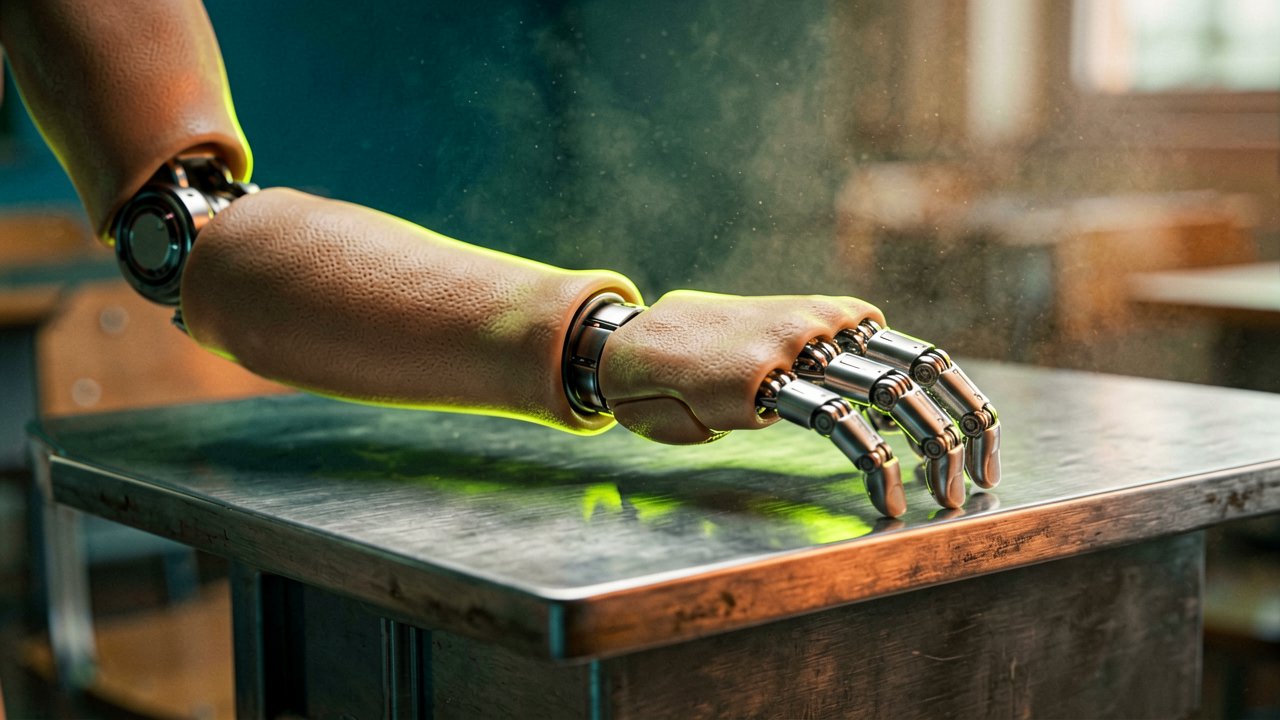
The integration of embodied artificial intelligence into the United States public education system reached a critical milestone when the Salamanca City Central School District in New York partnered with robotics developer Realbotix to pilot "Sally," the first lifelike humanoid robot teaching assistant. Costing $57,000, the machine features silicone skin, facial expressions, and a custom memory logging architecture designed to track individual student progression across STEM courses. While marketed as a tool to alleviate administrative pressure on overworked faculty, the deployment has triggered intense regulatory friction, prompting the New York State Department of Education to raise serious concerns over student data privacy and professional displacement.
From a market analysis perspective, this pilot marks a pivot from passive software platforms to physical, agentic hardware. For years, the educational technology landscape focused heavily on generative AI software models and digital dashboards. Introducing a physical, humanoid presence changes classroom dynamics by simulating emotional connections and mirroring behavioral engagement. However, the pilot faced an immediate bottleneck, as the school district had to pause the program following intense backlash from local educators, parents, and state officials who argue that commercial hardware should not replace certified human judgment.
Market Displacement and the Assistant Labor Arbitrage
The economic justification for deploying a $57,000 humanoid robot highlights a calculated capital shift within school district budgeting. Hardware installations represent a predictable capital expenditure compared to recurring human salaries, benefits, and long-term pension liabilities. Representatives from labor groups, including local teachers' unions, argue that school boards risk treating students as test subjects for unproven automation platforms. This creates a precedent where entry-level human support staff face direct cost competition from corporate hardware developers.
Regulatory Friction and Data Privacy Safeguards
Because the Realbotix platform logs student profiles to maintain continuity over subsequent sessions, it creates complex compliance challenges under existing youth data protections. According to statements documented by The Guardian , the assistant commissioner of public affairs for the New York State Department of Education explicitly warned of risks regarding student privacy and accountability safeguards. EdTech vendors targeting public schools must satisfy rigorous engineering requirements to prevent biometric or performance data from leaving local servers or being used for algorithmic training.
Strategic Imperatives for Future Automation Vendors
The sudden operational pause of the New York pilot offers crucial market lessons for technology companies developing classroom hardware. Future automation deployments require extensive pre-clearance frameworks involving state boards, local unions, and parent-teacher associations before hardware arrives on-site. Furthermore, hardware developers must position their systems exclusively as backend analytical tools rather than human alternatives. Managing public perception and securing regulatory approval remains a far steeper hurdle for humanoid EdTech adoption than the underlying computational engineering.
Behind the Scenes of the Automation Standoff
The Real Friction Point: While public discourse surrounding the Salamanca pilot frequently centers on the sci-fi spectacle of a silicone-skinned robot standing at a whiteboard, the underlying corporate and political mechanics tell a much deeper story. Realbotix initially secured the district's cooperation by promising an innovative, immersive method to boost engagement in historically underfunded STEM tracks. However, the rapid intervention by the New York State Department of Education revealed a widening chasm between aggressive tech vendors and highly protective public regulatory bodies. This administrative clash exposed a fundamental oversight by the developers, who prioritized the machine's interactive features while underestimating the strict data governance required by modern public school systems.
Historically, the educational technology market has grown by steadily absorbing small, non-instructional tasks. From automated grading software to digital hall passes, algorithms slowly institutionalized themselves as background efficiencies. The deployment of a physical, expressive humanoid marks a sudden, aggressive leap from backend software to front-facing instruction. For labor advocates and teachers' unions, this transition threatens to bypass established pedagogical standards. The collective pushback was not merely an emotional reaction to a robotic presence, but a calculated defense of professional credentials against a commercial apparatus designed to commodify the instructional role.
The financial architecture of the pilot also highlights an emerging economic model within public education. School districts frequently struggle to attract and retain certified specialized educators, particularly in rural or low-income regions. Tech vendors exploit these labor shortages by framing humanoids as a fixed-cost investment that never requires a pension, health benefits, or sick leave. Yet, critics note that a $57,000 baseline hardware cost is deceptive. When factoring in mandatory software licensing fees, proprietary cloud computing architecture, and specialized maintenance contracts, the true total cost of ownership quickly rivals or exceeds the annual salary of a human educational aide, funneling public tax dollars into private tech equities.
Ultimately, the immediate pausing of the Salamanca program demonstrates that the path forward for classroom automation will not be determined by computational capability, but by regulatory compliance. For humanoid AI to find a permanent foothold in American classrooms, engineering firms must abandon the "move fast and break things" ethos that defines consumer software development. Future initiatives will require completely transparent, local-first data processing models that guarantee student metrics are never monetized or exported. Until developers can balance their engineering ambitions with the rigorous privacy mandates of public policy, these machines will remain expensive novelties rather than systemic classroom solutions.
Reading Between the Lines: The Fallacy of the Autonomous Instructor
Reading Between the Lines: The institutional enthusiasm surrounding classroom automation rests on a glaring paradox. Proponents celebrate these machines for their ability to deliver uniform, bias-free, and hyper-personalized instruction, yet this value proposition completely ignores the chaotic reality of primary and secondary education. An AI model thrives on clean datasets and linear interactions, but a room full of thirty adolescents is a volatile environment defined by unpredictability, emotional crises, and subtle behavioral shifts. Compelling a mechanical chassis to navigate these interpersonal nuances does not optimize the learning environment; rather, it forces human educators to spend fewer hours teaching and more hours serving as technical handlers, system chaperones, and literal hardware mechanics.
Furthermore, the persistent narrative that these platforms are designed strictly to complement—rather than replace—human faculty ignores standard corporate incentives. Tech developers operate under intense venture capital pressure to scale, commodify, and secure long-term recurring revenue. While school boards enthusiastically market these pilots as supportive aids to ease administrative burdens, history shows that once expensive technology is integrated into public infrastructure, it is invariably used to justify subsequent austerity measures. It requires very little cynicism to foresee a future where struggling districts scale back human hiring initiatives, utilizing a single credentialed teacher to oversee multiple automated classrooms managed by mechanical counterweights.
This dynamic introduces a troubling architectural shift in how public education is valued and distributed. Richer private institutions will undoubtedly continue to command premium tuition rates by explicitly marketing the exclusivity of a low student-to-human-teacher ratio, branding unmediated interpersonal instruction as the ultimate luxury good. Meanwhile, resource-starved public school districts will increasingly rely on automated interfaces to manage their crowded student bodies. By framing expensive hardware as an equalizer for underfunded regions, the tech sector inadvertently constructs a stark digital divide, where wealthy children are nurtured by human mentorship while lower-income demographics are managed by a network of corporate servers disguised as friendly silicone faces.
"We are told these mechanical assistants will perfectly bridge the gap for schools that cannot find qualified staff. It is a comforting thought, right up until the moment a district realizes that while a human teacher might occasionally call in sick, a humanoid robot requires a fiber-optic network upgrade, a software patch from a vendor facing a quarterly deficit, and a specialized technician who charges by the hour just to fix a jammed smile."
Artūras Malašauskas is an AI Systems Integrator with 20+ years of production-grade web engineering experience. He has designed, shipped, and scaled enterprise Python/PHP systems for logistics, SaaS, and public-sector clients. For the past year, he has focused exclusively on AI integrations: deploying open-source LLMs, building generative media pipelines (image, audio, video), and engineering multi-agent workflows for real production environments. His standard: reproducibility, security, cost-efficient inference—no vaporware. He documents and evaluates emerging AI tooling, separating verified capabilities from marketing noise. Technical editor at: muza-ai.eu, ai-verslas.lt, ai-naujinos.lt Connect on LinkedIn
Comments