Zhiyuan Innovation Restructures into Independently Funded Subsidiaries Ahead of Landmark Hong Kong IPO
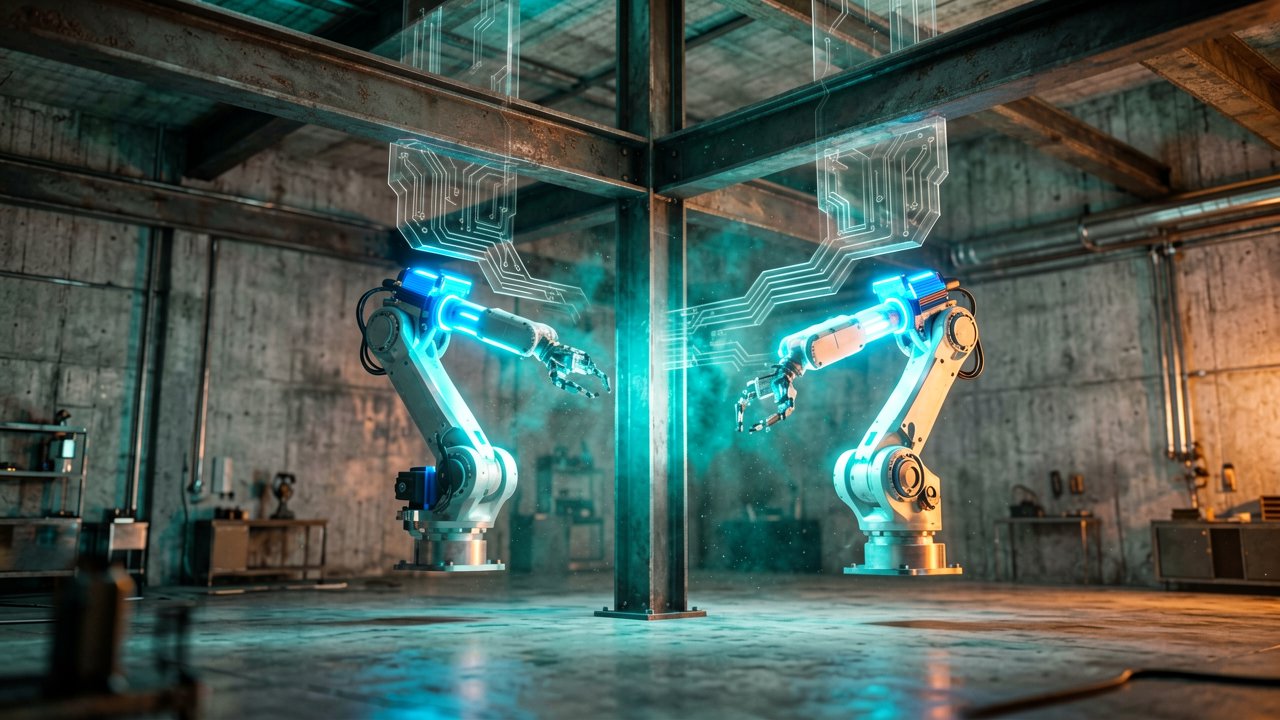
Humanoid robotics pioneer Zhiyuan Innovation—widely recognized in global markets as AgiBot—has officially initiated its initial public offering process on the Hong Kong Stock Exchange, as reported by the Reuters network via domestic financial media. The capital market entry represents a watershed moment for China's embodied artificial intelligence sector, positioning the enterprise to secure a targeted market valuation between HK$40 billion and HK$50 billion. By filing its preliminary listing coordinates, the Shanghai-based firm has secured its position as the frontrunner among dozens of domestic robotics startups racing to access public equity markets.
Simultaneously, the parent organization is executing a profound structural shift by decentralizing its corporate ecosystem into specialized, independently funded subsidiaries. This business separation strategy, which began with spinning off commercial cleaning unit Zhiding Robot, as documented by BigGo Finance, empowers standalone divisions to pilot their own capital-raising rounds. By offloading the localized financial burdens of precise component manufacturing and narrow-use hardware refinement to independent venture rounds, the parent entity can maintain an asset-light profile optimized for a public listing.
Capital Decentralization as a Hardware Scaling Strategy
The decision to split the robotics empire into independently financed nodes addresses the immense capital expenditure demands associated with scaling hardware. Industrial and humanoid robotics require continuous, heavy injections of capital to navigate the engineering bottlenecks of high-torque actuators, specialized sensor fusion, and adaptive dexterous hands. Allowing individual subsidiaries to pursue dedicated funding rounds ensures that specific hardware development cycles do not deplete the parent company’s core treasury. This structural arrangement offers institutional investors an unbundled choice, shielding the upcoming public entity from early-stage hardware operational risks while preserving downstream integration advantages.
Market Headwinds and Competitive Dynamics in Hong Kong
Zhiyuan Innovation is entering a revitalized public arena, capitalizing on a significant wave of listing filings on the Hong Kong Stock Exchange. According to analysis by Capital.com , the transaction is backed by high-profile corporate stalwarts, including Tencent Holdings, BYD, and Hillhouse Investment, which signals strong state and industrial alignment. However, the business faces immediate domestic execution pressure from rival developers like Unitree Robotics, which are simultaneously ramping up factory production capacities and chasing public market access. The company's ultimate public performance will depend on its ability to transition from subsidized industrial deployments to sustainable, positive unit economics.
The Hidden Fault Lines of Decentralized Automation
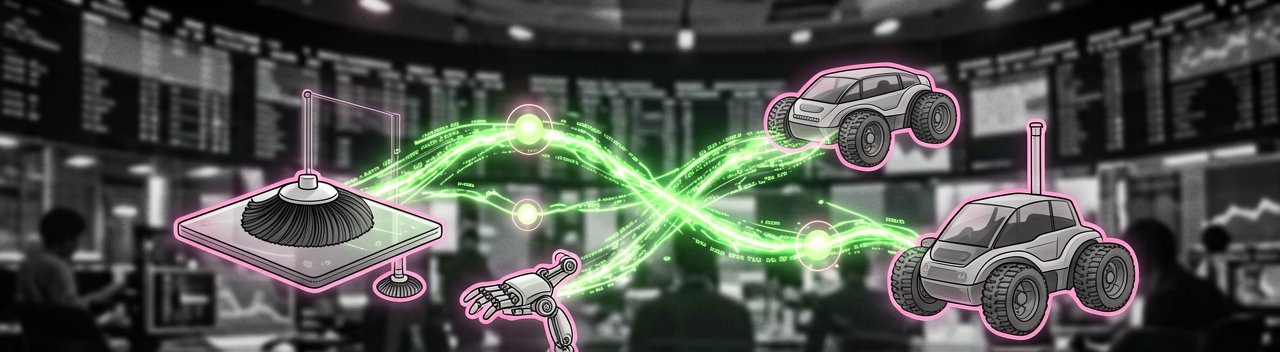
Reading Between the Lines: The prevailing market enthusiasm surrounding Zhiyuan Innovation’s corporate balkanization glosses over a fundamental contradiction in the robotics industry: hardware scaling inherently requires deep vertical integration. While spinning off subsidiaries creates lean, asset-light balances that please public market underwriting teams, it actively fragments the unified data pipeline necessary to train truly generalized AI. When specialized components like dexterous hands, wheeled cleaning platforms, and manufacturing limbs operate under entirely distinct corporate entities with separate cap tables, proprietary hardware and software silos inevitably form. This operational friction threatens to stifle the cross-pollination of sensor and kinetic data, which is the foundational resource needed to build versatile, multi-purpose robotic systems.
Furthermore, the strategy assumes that private venture capital will continue to enthusiastically bankroll high-risk, early-stage hardware subsidiaries while the parent company reaps the liquidity benefits of a public listing. This creates an asymmetric risk profile that could alienate institutional backers over the long term. If a standalone division tasked with perfecting precision joint actuators faces extended research delays or supply chain bottlenecks, it can no longer lean on the financial cushion of a diversified corporate giant. By offloading these high-expenditure engineering liabilities to separate entities, the parent firm risks starving its own vital limbs of capital if private funding markets freeze up or shift focus to other emerging technological trends.
The broader structural trend of rushing to public equity markets like the Hong Kong Stock Exchange raises significant skepticism regarding the actual maturity of the technology. Historically, premature initial public offerings in emerging tech sectors serve as an exit strategy for early investors rather than a mechanism for sustainable, operational scaling. If Zhiyuan’s public valuation relies heavily on projections of mass-producing tens of thousands of units, any near-term failure to secure positive unit economics at scale will trigger severe market corrections. The public market demands predictable, quarter-over-quarter revenue growth, an unforgiving environment for an industry that is still fundamentally anchored in volatile capital expenditures and experimental deployment phases.
Projecting the macro implications of this move reveals a highly volatile competitive landscape across the regional hardware ecosystem. If competing firms follow this blueprint and fracture into localized, subsidized entities to chase rapid capital, it will create an oversaturated market filled with hyper-specialized, incompatible robotic platforms. This fragmentation will likely delay the establishment of unified industry standards for operating systems and hardware interoperability. Instead of a cohesive, rapidly advancing automation industry, the push for decentralized listings could result in a fractured ecosystem of specialized machinery that requires expensive, custom software patches to communicate with alternative enterprise networks.

"In the modern tech race, the absolute fastest way to convince Wall Street or Hong Kong that you are a highly profitable software company is to frantically hide all of your expensive, metal-built robots in the corporate equivalent of the basement."
Artūras Malašauskas is an AI Systems Integrator with 20+ years of production-grade web engineering experience. He has designed, shipped, and scaled enterprise Python/PHP systems for logistics, SaaS, and public-sector clients. For the past year, he has focused exclusively on AI integrations: deploying open-source LLMs, building generative media pipelines (image, audio, video), and engineering multi-agent workflows for real production environments. His standard: reproducibility, security, cost-efficient inference—no vaporware. He documents and evaluates emerging AI tooling, separating verified capabilities from marketing noise. Technical editor at: muza-ai.eu, ai-verslas.lt, ai-naujinos.lt Connect on LinkedIn
Comments