Epson Flexes Its Automation Muscle with Next-Gen Robots and Smarter Software in Mumbai
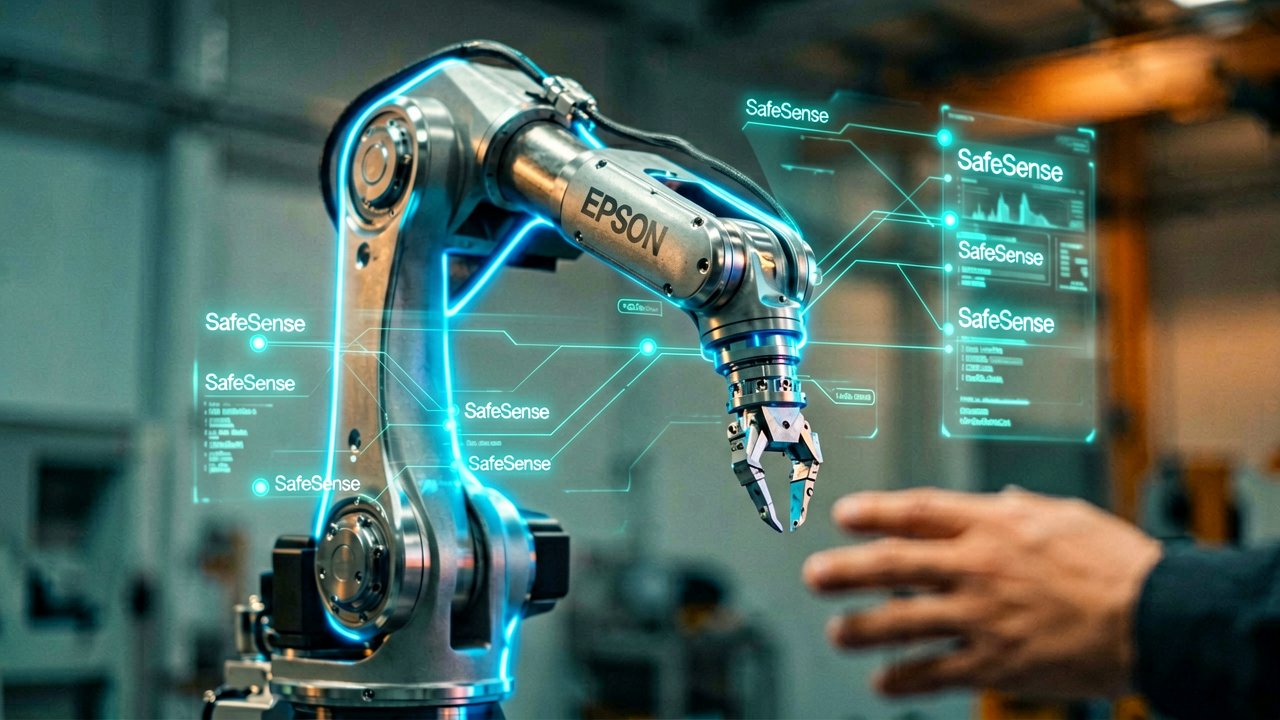
Epson isn't just playing around with factory efficiency; it's aggressively rewriting the rules of human-robot collaboration. The hardware giant officially pulled the curtain back on a brand-new series of industrial robots and advanced control software at the Automation Expo Mumbai 2026. This isn't just another incremental upgrade. It is a highly targeted expansion aimed squarely at maximizing manufacturing throughput and untangling chaotic production workflows for factories scaling up to meet global demands.
The timing couldn't be better. As India rapidly cements its status as an international manufacturing powerhouse, floor managers are hunting for systems that offer both extreme precision and fast deployment. Epson is answering that call by expanding its hardware family with the brand-new CX-A Series 6-axis robots and the LS-C Series SCARA robots, providing a massive spectrum of payload options for complex handling tasks.
High-Speed Hardware Meets Safe Collaboration
The heavy lifter making waves on the show floor is the compact LS-C SCARA platform, which boasts a hefty 50-kilogram payload capacity, a 1,000-millimeter reach, and blistering cycle times that clock in as fast as 0.298 seconds. For intricate, multi-axis manipulations, the CX-A Series steps in with a seven-kilogram capacity and a 900-millimeter reach, shipping in specialized IP67, cleanroom, and electrostatic discharge (ESD) variants to survive harsh industrial environments. According to report coverage by Motoring Trends, the lineup targets demanding automation applications like parts transfer, high-precision assembly, and material handling.
Hardware means nothing without safety, and Epson’s new SafeSense technology tackles this head-on. By incorporating hardcoded Safety Limited Speed (SLS) and Safety Limited Position (SLP) functions, these arms can safely operate in closer proximity to human workers. The real-world upside is huge: factories can drastically minimize or entirely eliminate bulky safety fencing, saving precious real estate on the production floor.
Software Built for Modern Developers
On the digital front, Epson rolled out its updated RC+ 8.0 programming platform. It acts as a single, integrated environment for system simulation, diagnostics, and management. To entice modern software engineering teams, it introduces robust native support for Visual Studio and C++ development, throwing out the old-school proprietary bottlenecks that typically stall factory integrations. As documented by The Packman, Epson’s leadership emphasized that this suite delivers the exact speed and intelligence needed to stay agile in a hyper-competitive, dynamic marketplace.
Behind the Convergence of Silicon and Steel: What standard press releases fail to capture is the massive architectural shift Epson is executing behind the scenes. Historically, the industrial robotics sector has been plagued by rigid, siloed proprietary codebases that made integrating a 6-axis arm feel like a multi-month software engineering nightmare. By decoupling their ecosystem and opening the RC+ 8.0 platform to universally understood environments like C++ and Visual Studio, Epson is executing a textbook land-grab for the modern developer's mindshare. This open-armed approach recognizes that the next bottleneck in industrial automation isn't the physical hardware speed, but the availability of engineers capable of programming it.
Industry insiders note that this aggressive rollout in Mumbai highlights a pivot toward flexible, mid-tier manufacturing networks rather than just mega-factories. The inclusion of specialized IP67, ESD, and cleanroom variations for the CX-A Series reveals an acute awareness of India's booming electronics and pharmaceutical sectors. These industries require hyper-sterile or statically shielded environments where traditional, bulky robotic systems fail to adapt. Epson is banking on the idea that modular, easily reprogrammable cells can outmaneuver the massive, single-purpose assembly lines of yesterday.
The Real Estate Premium on the Factory Floor
There is also an intense economic driver behind the debut of the SafeSense collision mitigation architecture. Every square meter of a modern manufacturing facility represents high overhead costs, and old-school safety enclosures—monolithic steel cages or heavy light curtains—eat up massive amounts of physical space. By embedding hardcoded Safety Limited Speed (SLS) and Safety Limited Position (SLP) functions directly into the control firmware, Epson is essentially shrinking the physical footprint required for automation. Floor managers can now pack cells tighter together, vastly increasing the output density of their existing real estate without risking human safety.
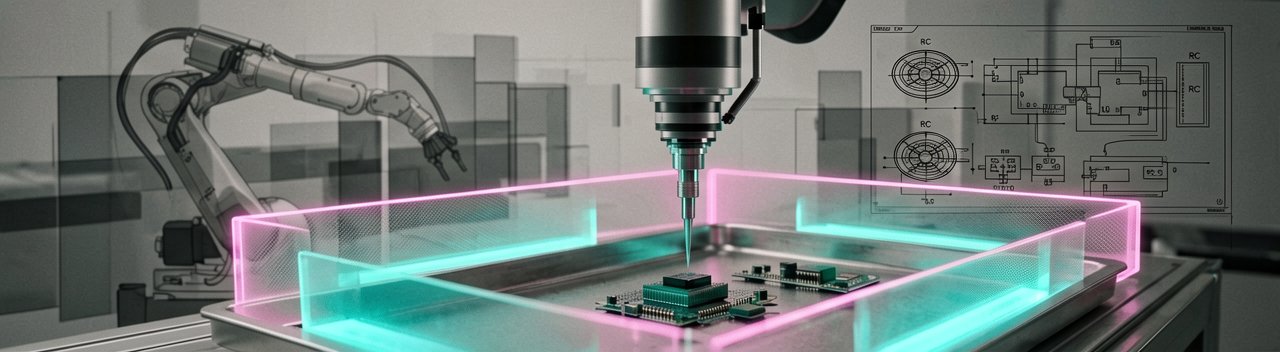
This brings a fascinating tension to the forefront of the automation debate, specifically the balancing act between pure, unbridled throughput and human-in-the-loop flexibility. While the LS-C SCARA platform can tear through cycles at a dizzying 0.298 seconds under normal conditions, the integration of SafeSense means the hardware can dynamically throttle its own momentum when a human operator steps into its peripheral zone. This hybrid approach yields a fluid, collaborative environment where humans handle nuanced, qualitative tasks while the machines manage the repetitive, high-speed strain.
Ultimately, Epson's latest portfolio signals that the competitive edge in robotics has moved beyond raw payloads and tolerances. The battlefield is now entirely about deployment velocity and ecosystem integration. As factory lifecycles compress and consumer demand shifts overnight, the manufacturers who win will be the ones who can unbox a robot, wire it into their existing software stack, and have it safely collaborating alongside human workers in a matter of days rather than weeks.
Reading Between the Lines: While Epson's grand stage presentation in Mumbai paints a picture of a seamless, friction-free automated utopia, a healthy dose of industrial skepticism is warranted. The promise of open ecosystems like C++ and Visual Studio integration sounds like a dream for Silicon Valley engineers, but it presents a stark contradiction on the actual shop floors of mid-tier manufacturing. The traditional workforce keeping these factories alive is steeped in proprietary ladder logic and legacy PLC programming. Expecting a sudden influx of high-level software developers to optimize factory throughput overlooks the deep-seated talent shortage plaguing the industrial sector, potentially turning an open platform into an unmanageable troubleshooting nightmare.
Furthermore, the heavy marketing emphasis on eliminating bulky safety cages via SafeSense technology overlooks the stubborn realities of human psychology and insurance liabilities. Hardcoded firmware limits like Safety Limited Speed are technically impressive, but they rely entirely on the premise that sensors will never fail and humans will always behave predictably. In high-velocity environments where an LS-C SCARA arm moves at fractions of a second, the margin for error is razor-thin. Factory floor managers, risk-averse by nature, are unlikely to tear down their physical steel barriers overnight merely because a software algorithm promises it is safe to do so.
The Real Velocity of Deployment
There is also the glaring question of capital expenditure versus actual, realized throughput. Epson boasts a blistering 0.298-second cycle time, but that peak performance inevitably degrades the moment a robot is forced to throttled down to accommodate human proximity. This creates a paradox where a factory pays a premium for high-speed hardware, only to run it at a fraction of its capability to maintain a "collaborative" environment. If an enterprise truly requires maximum output, completely isolated, fully automated lines still hold the crown, making these hybrid collaborative spaces a costly compromise for industries that cannot decide between human touch and raw mechanical speed.
Ultimately, this aggressive push into the Indian market feels less like an immediate solution to current manufacturing bottlenecks and more like a defensive moat building exercise against lower-cost competitors. By packing their systems with advanced software layers and safety protocols, Epson is trying to justify a premium price tag in a market that is increasingly being flooded by cheaper, no-frills robotic alternatives. Whether the average factory actually needs this level of software sophistication, or if they are simply being upsold a digital sledgehammer to crack a nut, remains to be seen as these systems deploy into the wild.
"We are rapidly approaching an era where an industrial robot can safely share a workspace with a human, speak three programming languages, and calculate its own thermal wear in real-time—yet it still ultimately spends its entire eight-hour shift doing nothing more sophisticated than moving a plastic widget three inches to the left."
Artūras Malašauskas is an AI Systems Integrator with 20+ years of production-grade web engineering experience. He has designed, shipped, and scaled enterprise Python/PHP systems for logistics, SaaS, and public-sector clients. For the past year, he has focused exclusively on AI integrations: deploying open-source LLMs, building generative media pipelines (image, audio, video), and engineering multi-agent workflows for real production environments. His standard: reproducibility, security, cost-efficient inference—no vaporware. He documents and evaluates emerging AI tooling, separating verified capabilities from marketing noise. Technical editor at: muza-ai.eu, ai-verslas.lt, ai-naujinos.lt Connect on LinkedIn
Comments