The Orbital Repair Era Is Officially Here: NASA-Backed Servicing Mission Blasts Off
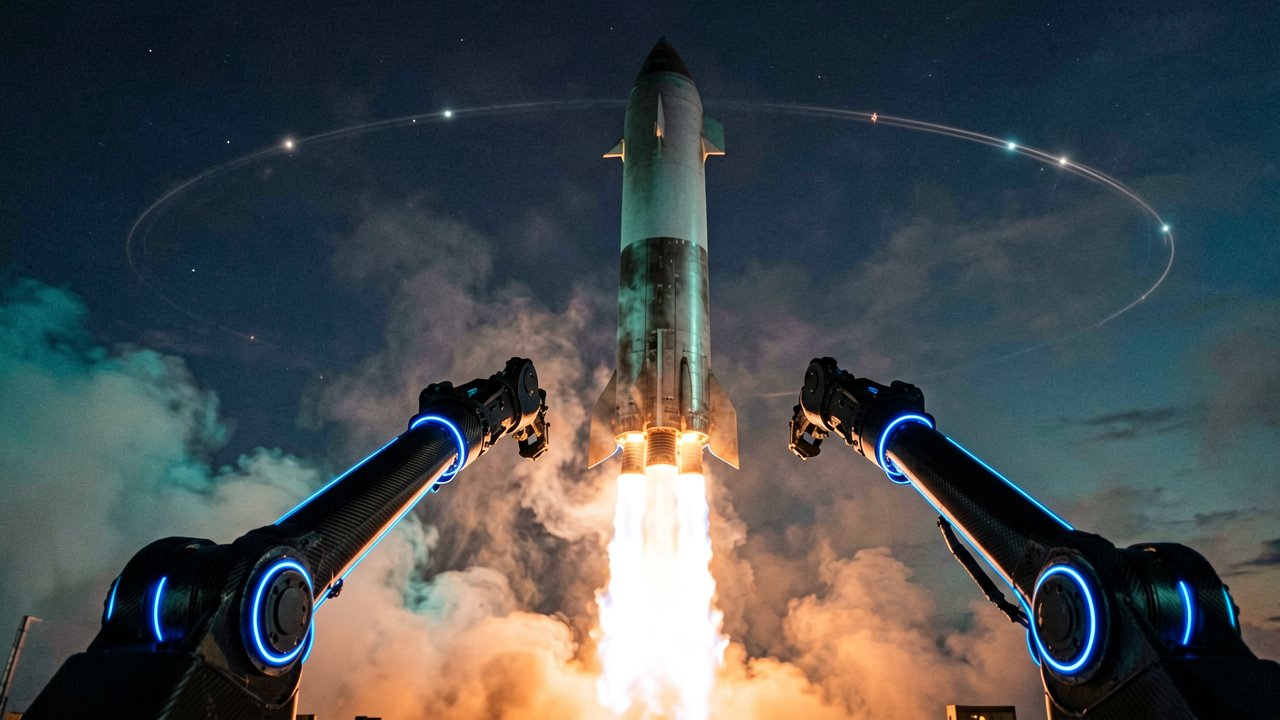
We have spent decades treating multi-million dollar satellites like disposable cups—running them until they run out of gas, then letting them drift into graveyard orbits. That wasteful era just took a massive step toward obsolescence. On July 21, 2026, a groundbreaking robotic servicing mission successfully lifted off from Cape Canaveral Space Force Station in Florida, riding an expendable SpaceX Falcon 9 rocket to pave the way for a self-sustaining orbital infrastructure.
This isn't just another routine launch; it is a major paradigm shift in how we maintain assets in the harsh environment of space. Backed by key technology transfers and research support from NASA, the commercial mission is spearheaded by Northrop Grumman and its subsidiary, SpaceLogistics. The payload features the highly anticipated Mission Robotic Vehicle (MRV) riding along with three proprietary Mission Extension Pods (MEPs). Equipped with cutting-edge autonomous robotics, this mechanics' shop in the sky is heading straight toward Geosynchronous Earth Orbit (GEO) to prove that old spacecraft can learn new tricks.
Breaking Down the Orbital Mechanics
Instead of relying on rigid, pre-programmed commands, the MRV utilizes two advanced ten-foot robotic arms designed to carefully grasp client satellites that were never originally built to be serviced. Think of it as a highly delicate, high-stakes game of cosmic surgery. Once the MRV matches orbits and securely docks with an aging communications satellite, it will install one of its specialized "jetpacks"—the MEPs—which seamlessly take over the host vehicle's propulsion and attitude control, instantly extending its operational lifespan by at least six extra years.
Why Autonomous Refueling and Repair Matter
Building and launching a modern communications payload costs a fortune, yet their expiration dates are almost always dictated by fuel capacity rather than hardware failure. By establishing an in-orbit pit stop, operators can stretch the ROI of their current hardware while minimizing the growing hazard of space debris. Industry analysts tracked by Ars Technica note that this mission also serves as a critical testbed for future military and commercial applications, including structural inspection, hardware upgrades, and fluid replenishment. If the MRV delivers on its promises over the coming months, the logic of treating spacecraft as finite consumables will vanish forever.
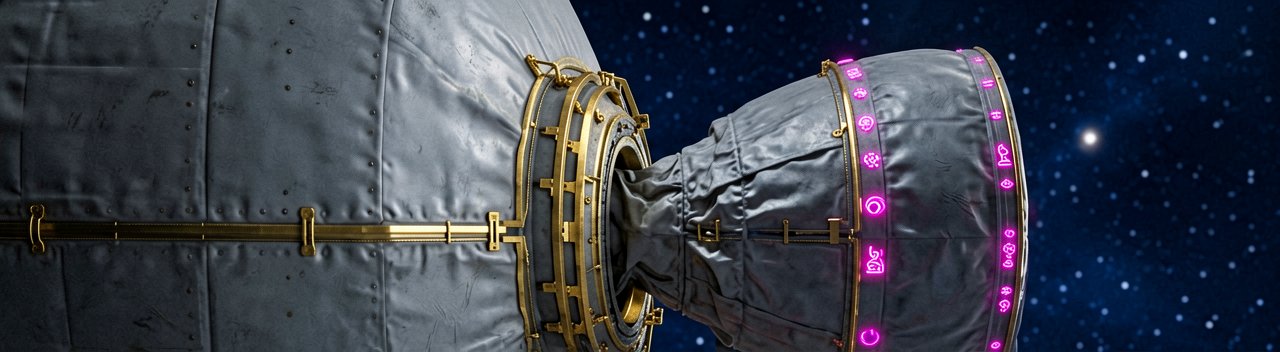
Behind the Scenes: The technical choreography required for this mission highlights a fascinating evolution in aerospace engineering. For decades, satellite design followed a rigid, one-and-done philosophy where any post-launch mechanical failure spelled instant death for a mission. Northrop Grumman’s SpaceLogistics team had to reverse-engineer docking procedures for legacy targets that were launched long before the concepts of orbital refueling or autonomous servicing were ever taken seriously. Engineers spent years building high-fidelity simulators to mimic the unpredictable physics of contact in microgravity, ensuring the Mission Robotic Vehicle's mechanical arms could clamp onto a target without accidentally sending it into an unrecoverable tumble.
The Economics of the New Space Logistics Market
From an operator's perspective, this launch shifts satellite maintenance from a capital expenditure nightmare into a manageable operational cost. Telecommunications giants have traditionally been forced to build, launch, and insure entirely new spacecraft just as their existing ones neared the end of their fuel reserves, even if the on-board transponders and instruments were functioning flawlessly. By choosing to buy a life-extension lease instead of commissioning a replacement vessel, commercial companies can defer hundreds of millions of dollars in capital spending. This newfound financial flexibility is completely altering the risk calculations for satellite fleet management, making older orbital slots incredibly valuable assets once again.
The strategic implications extend far beyond commercial television broadcasts and internet relays. Defense planners are watching this mission with intense scrutiny, recognizing that the ability to repair, refuel, and upgrade orbital assets in real time is a geopolitical game-changer. Space has rapidly transformed into a contested domain, and the capacity to inspect a compromised asset or quickly restore a maneuvering satellite's fuel supply provides a distinct tactical advantage. NASA’s extensive involvement via technology transfers underscores a broader federal push to establish a robust domestic supply chain for in-space servicing, assembly, and manufacturing, ensuring western infrastructure remains resilient against both natural hazards and adversarial threats.
Looking ahead, the successful deployment of these mission extension pods sets the stage for a much more ambitious orbital ecosystem. Industry visionaries envision a future where specialized transport tugs regularly shuttle fuel bladders from low Earth orbit up to geosynchronous pathways, acting as a celestial pipeline network. Satellites of the next decade will likely be built with standardized refueling ports and modular bay doors, explicitly designed from day one to be upgraded by autonomous robotic mechanics. By breaking the cycle of single-use space hardware, this mission marks the definitive starting point for a sustainable, circular economy beyond our atmosphere.
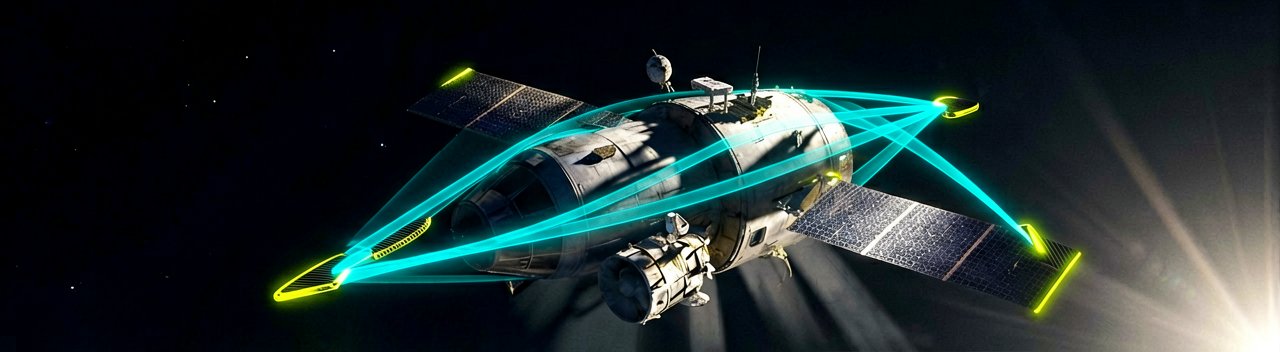
Reading Between the Lines: While the aerospace industry is eager to celebrate this launch as the dawn of a sustainable green era in orbit, the reality is far more complicated and full of corporate contradictions. We are told that life-extension missions will drastically reduce space debris by keeping older satellites operational, yet the business model simultaneously relies on the survival of legacy platforms that lack modern debris-mitigation features. By keeping these aging relics functional for an extra decade, operators are effectively bottlenecking prime orbital slots in geosynchronous Earth orbit, potentially delaying the deployment of next-generation, high-throughput satellites that are vastly more efficient than their predecessors.
The Fine Line Between Service Mechanic and Orbital Weapon
There is also a glaring geopolitical paradox underlying this technology that civilian space agencies prefer to downplay. The exact same autonomous robotic arms engineered to gently attach a life-extension pod to a friendly commercial satellite can just as easily be commanded to approach, inspect, and disable an adversary’s military hardware. Every advance in civilian in-space servicing inherently dual-用途izes the technology, creating a deeply uncomfortable security dilemma. While NASA and its commercial partners champion these systems as peaceful infrastructure tools, international observers are acutely aware that the line between a mobile space mechanic and an offensive anti-satellite weapon is entirely a matter of software intent.
Furthermore, the long-term economic sustainability of the orbital repair market remains unproven. Private equity has poured billions into space logistics startups on the assumption that refueling will always be cheaper than replacing, but the rapidly tumbling cost of heavy-lift launches—driven by fully reusable rockets—threatens to flip that equation on its head. If launching a brand-new satellite becomes cheap enough, paying a hefty premium for a complex, risky robotic repair mission in a distant orbit will suddenly look like an unnecessary luxury. SpaceLogistics and its rivals are racing against a clock dictated not just by satellite fuel gauges, but by the ruthless deflation of launch costs back on Earth.
"We have spent half a century dreaming of grand space stations and robotic mechanics fixing our grandest cosmic infrastructure, only to realize that the first true orbital gig economy consists of a high-tech tow truck delivering a celestial battery pack to a decades-old television satellite so humanity doesn't lose its premium sports broadcasts."
Artūras Malašauskas is an AI Systems Integrator with 20+ years of production-grade web engineering experience. He has designed, shipped, and scaled enterprise Python/PHP systems for logistics, SaaS, and public-sector clients. For the past year, he has focused exclusively on AI integrations: deploying open-source LLMs, building generative media pipelines (image, audio, video), and engineering multi-agent workflows for real production environments. His standard: reproducibility, security, cost-efficient inference—no vaporware. He documents and evaluates emerging AI tooling, separating verified capabilities from marketing noise. Technical editor at: muza-ai.eu, ai-verslas.lt, ai-naujinos.lt Connect on LinkedIn
Comments