The Black Glass Square Dies: How Honor Is Turning the Smartphone into a Living Robot
For over a decade, smartphone design has been stuck in a predictable, iterative rut of bigger camera bumps and progressively thinner slabs of glass. Breaking that mold entirely, consumer tech firm Honor officially shattered the monotony at the 2026 World Artificial Intelligence Conference (WAIC), where CEO Li Jian confirmed the impending global rollout of the industry's first true hybrid device: the Honor Robot Phone. Slated to arrive in consumers' hands this August, the hardware represents a massive leap toward "embodied AI," shaking off the constraints of a flat display to physically interact with the real world.
Rather than relying on software tricks to mimic intelligence, this pocket-sized flagship incorporates a fully motorized, titanium-alloy camera arm that physically pops out of the chassis. According to technical details shared by TechNode , the mechanical architecture relies on a specialized four-degrees-of-freedom (4DoF) gimbal system. Driven by custom micromotors that are roughly 70% smaller than conventional hardware components, the massive 200MP camera sensor can seamlessly pan, tilt, roll, and rotate a full 360 degrees, emerging smoothly from the phone's back plate in less than a second whenever a user initiates a simple palm gesture.
When Hardware Gains Body Language
What makes this device a genuine robotic companion rather than a glorified action camera is how the underlying AgenticOS multimodal software translates digital logic into physical expression. The smartphone moves its mechanical "head" in real time to follow a speaker during a hectic video call, tracks subjects through complex environments using automated AI predictive algorithms, and even sways and bobs dynamically to the beat of playing music. Furthermore, the system communicates through surprisingly charming kinetic gestures—nodding along to signal agreement, shaking its head when a task is blocked, or executing rapid movements to express excitement.
To ensure this unorthodox mechanical hardware stands up to the rigors of daily wear, manufacturing insight published by HONOR Global reveals that engineers repurposed high-performance, durable materials originally developed for premium folding phones. This rugged design allows the intricate, three-axis mechanical stabilization array to compensate for violent shocks and rapid shifts in orientation, ensuring smooth professional-grade framing. Creator peace of mind is further bolstered in domestic markets, where early buyers are being offered a multi-use physical component replacement guarantee to cover accidental damage to the external motorized arm.
Hollywood Magic in a Pocket Form Factor
Beyond its autonomous tracking behavior, Honor is positioning the device as a serious filmmaking powerhouse by forming a strategic technical partnership with cinematic camera legend ARRI. Media coverage from Memeburn indicates that the hardware configuration pairs its 200MP main robotic sensor with an equally dense 200MP periscope telephoto lens and a 50MP ultra-wide shooter. The custom-tuned imaging pipeline supports professional LogC RAW profiles and DaVinci Resolve color tables natively, allowing solo content creators to capture sweeping, perfectly balanced Hollywood-style camera movements without needing a dedicated production crew or a bulky motorized stabilization rig.
Under the hood, the device is an uncompromising flagship, packing a premium Qualcomm Snapdragon 8 Elite Gen 5 processor, an expansive 1.5K flat display with symmetrical bezels, an enormous 6,000mAh battery, and blazingly fast 120W wired charging capabilities. While initial availability remains restricted to the Chinese market ahead of its broader international release, the sheer engineering audacity required to shrink a professional cinema gimbal into a standard phone chassis proves that mobile hardware innovation is far from dead.
Behind the Robotic Veil: While standard press briefs focus entirely on the novelty of a spinning camera arm, the real story here is the frantic engineering war waged behind closed doors to solve the physics of pocketable robotics. For years, the consumer electronics industry has treated hardware as a passive container for software, relying on pixels to simulate change. Honor’s breakthrough effectively flips this paradigm by treating the smartphone as physical infrastructure for an active kinetic agent. According to internal engineering chatter, the primary hurdle wasn't writing the AI models, but preventing the high-frequency micromotors from melting the phone's internal battery or introducing catastrophic electromagnetic interference into the 5G antennae clustered just millimeters away.
Industry analysts view this launch as a calculated gamble to break Apple and Samsung's suffocating duopoly on premium global market share. By shifting the battlefield from incremental camera sensor upgrades to entirely new product categories, Honor is attempting to capture the cultural zeitgeist of the "creator economy" in a way its competitors haven't managed since the invention of the front-facing camera. Veteran supply chain observers note that the reliance on ultra-dense titanium alloys and customized 4DoF gimbals will severely test component yields during the initial August rollout, likely triggering artificial scarcity and inflated gray-market pricing outside of mainland China during the first quarter of availability.
The Hidden Strain on Silicon and Battery
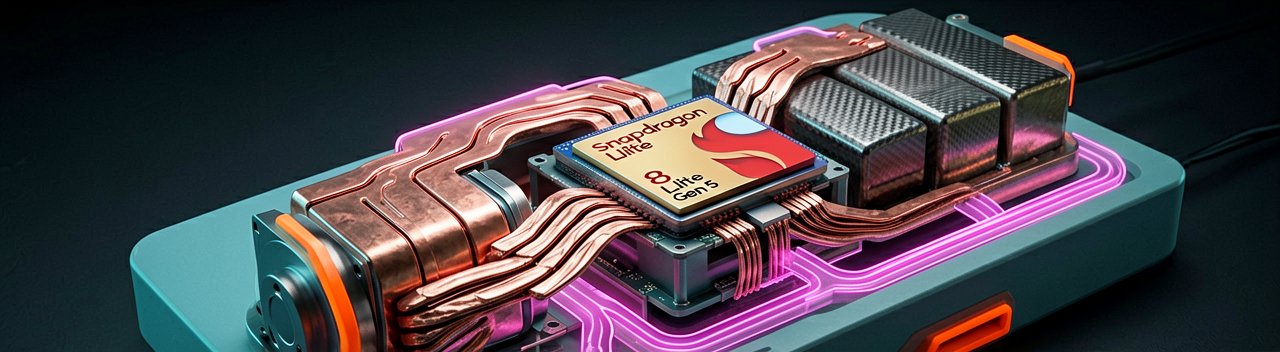
Operating a mechanical robot inside a sealed smartphone chassis introduces brutal thermal realities that traditional hardware architectures are simply not built to handle. Running a 200-megapixel sensor simultaneously with three independent motorized axes causes thermal spikes that would throttle standard silicon within minutes. To circumvent this, the device utilizes an unorthodox, split-vapor chamber cooling loop that wraps directly around the actuator housing, drawing heat away from the moving parts and dispersing it across the phone’s structural mid-frame. This ensures the Snapdragon processor can maintain stable frame rates during heavy algorithmic tracking cycles without turning the device into an unusable pocket heater.
The software side of this equation is equally unprecedented, requiring a total rewrite of power management protocols. Traditional mobile operating systems are designed around a strict binary of screen-on and screen-off battery drain. Honor's new AgenticOS introduces a tertiary "physical idle" state, where the phone's AI models constantly analyze low-power ambient data from structural gyroscopes and microphones. This allows the device to anticipate human movement and deploy its mechanical arm proactively, balancing the immediate power draw of the electric motors against the long-term efficiency of the 6,000mAh silicon-carbon battery pack.
A Paradigm Shift for Personal Privacy
Beyond the undeniable mechanical wizardry, the physical autonomy of the device introduces a hornets' nest of ethical and privacy concerns that the tech industry has yet to reconcile. A smartphone that can independently rotate its lens to track people across a room fundamentally alters the social contract of personal technology. While Honor has implemented strict hardware-level kill switches—including a physical lock that prevents the motorized arm from deploying when the device is face down—critics argue that malicious software exploits could turn these hybrid gadgets into the ultimate, unnoticeable surveillance tools for bad actors.
Ultimately, this device serves as a canary in the coal mine for the broader consumer electronics landscape. As traditional smartphone sales continue to plateau globally, the integration of specialized robotics represents the most viable path forward for companies desperate to justify premium flagship price tags. Whether mainstream consumers will genuinely embrace a phone that actively stares back at them, watches their movements, and expresses synthetic emotion remains an open question, but the era of the static black glass square is officially drawing to a close.
Reading Between the Lines: The tech industry has a long, documented history of mistaking mechanical novelty for genuine evolution, and Honor’s robotic phone risks falling into the exact same trap. On paper, a smartphone that physically tracks your movements feels like a glimpse into a sci-fi future, but the day-to-day reality of consumer tech is defined by friction, drop tests, and lint. Shoving delicate, microscopic gears into a device that spends half its life jammed into tight denim pockets or being tossed onto concrete coffee tables seems almost masochistic from a durability standpoint. No matter how many space-grade titanium alloys Honor promises, a physical hinge is always a single unlucky drop away from becoming an expensive, jammed paperweight.
There is also a glaring contradiction between the device’s cinematic marketing and the economic realities of its target audience. Honor is positioning this hardware as the ultimate tool for solo content creators, yet professional videographers already rely on modular, external gimbals that cost a fraction of a flagship smartphone and can be easily swapped across multiple camera bodies. Forcing a user to buy an entire $1,000-plus ecosystem just to get a built-in motorized arm creates an incredibly narrow value proposition. If a creator decides to upgrade their phone in two years, they are forced to throw away their entire production rig, turning what should be a long-term tool into disposable, rapidly depreciating e-waste.
The Illusion of Autonomy
Furthermore, the heavily hyped "kinetic body language" of the device exposes the superficial nature of current mobile AI. A smartphone nodding or shaking its camera arm to mimic human understanding is a masterclass in anthropomorphic showmanship, but it does nothing to mask the fundamental limitations of on-device LLMs. Stripped of its motorized parlor tricks, the underlying software is still bound by the same hallucination rates and processing bottlenecks plaguing every other AI assistant on the market. It raises the uncomfortable question of whether Honor built a robot because their AI required a physical body, or if they simply needed a flashy mechanical gimmick to distract from the plateauing capabilities of mobile software.
The geopolitical rollout strategy further dilutes the revolutionary narrative surrounding this launch. Launching an experimental, high-maintenance hardware concept exclusively in domestic Chinese markets before a hypothetical global release suggests that even Honor’s executive leadership is treating the initial batch as an expensive public beta test. By utilizing local consumers as a buffer to iron out hardware failures and component degradation, the firm can gauge actual warranty costs before exposing the delicate 4DoF mechanics to the unforgiving scrutiny of Western regulatory bodies and international tech reviewers known for running brutal durability tests on day one.
"We wanted an artificial intelligence that could solve climate change and cure disease, but instead we got a thousand-dollar pocket mirror that physically turns its head to watch us eat lunch alone."
Artūras Malašauskas is an AI Systems Integrator with 20+ years of production-grade web engineering experience. He has designed, shipped, and scaled enterprise Python/PHP systems for logistics, SaaS, and public-sector clients. For the past year, he has focused exclusively on AI integrations: deploying open-source LLMs, building generative media pipelines (image, audio, video), and engineering multi-agent workflows for real production environments. His standard: reproducibility, security, cost-efficient inference—no vaporware. He documents and evaluates emerging AI tooling, separating verified capabilities from marketing noise. Technical editor at: muza-ai.eu, ai-verslas.lt, ai-naujinos.lt Connect on LinkedIn
Comments