Gigabyte Unleashes the AORUS MASTER 16 Gen 2: A Massive Leap Forward for AI-Powered Gaming
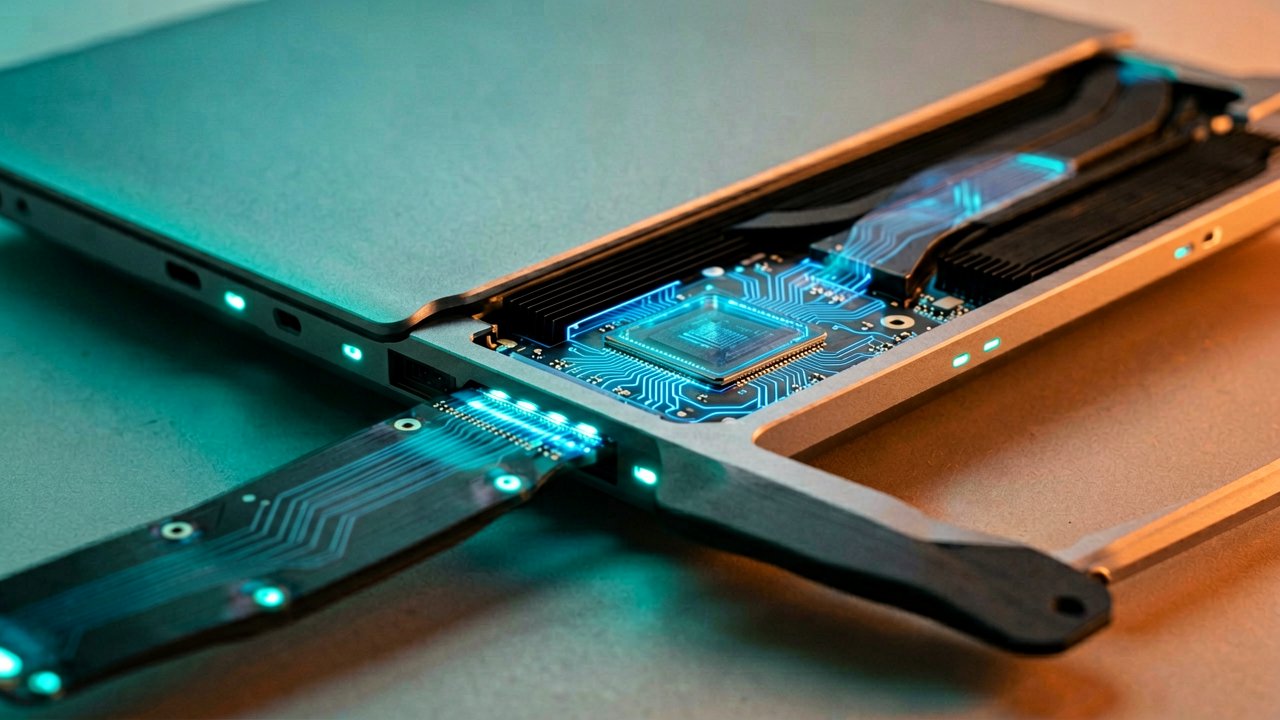
The premium gaming laptop scene just got a serious shake-up today as Gigabyte officially released the highly anticipated AORUS MASTER 16 Gen 2 (2026) into the global market. Designed to push the absolute limits of mobile processing, this machine represents a major shift from traditional performance engineering toward deeply integrated artificial intelligence. By combining cutting-edge architecture with proprietary localized software, the tech giant is looking to redefine what enthusiasts expect from high-end portable battle stations.
Instead of just chasing raw clock speeds, Gigabyte took a smarter route this generation. They packed the laptop with specialized AI hardware that works in tandem with their newly refined GiMATE intelligence framework. This lets the device continuously adapt to whatever you throw at it, making it much more than a typical hardware iteration. It's a fully realized vision of a modern AI PC, built from the ground up for elite players and heavy-duty creators alike.
Unrivaled Under-the-Hood Hardware
To truly drive next-generation AI and gaming performance, the internal specifications are predictably top-tier. Depending on the exact regional configuration, users get treated to desktop-class processing power like the formidable Intel Core Ultra 9 275HX or the devastatingly fast AMD Ryzen 9 9955HX3D, which leverages 3D V-Cache technology. Graphics duties are handled by the monstrous NVIDIA GeForce RTX 50 Series Laptop GPU, which delivers hundreds of AI TOPS to effortlessly accelerate local machine learning models, render advanced ray-traced lighting, and multiply framerates via NVIDIA DLSS 4, as detailed by the official product specs on GIGABYTE Global.
Smarter Cooling and A Cinematic Display
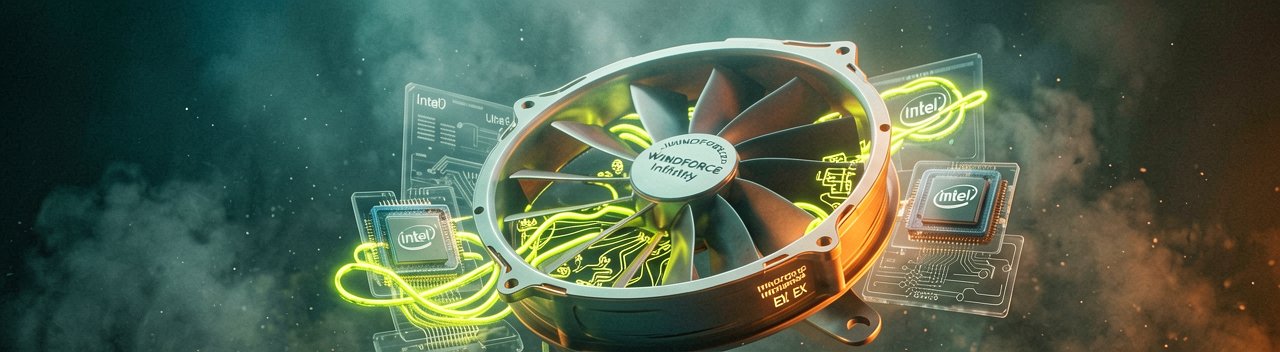
Taming that much high-end silicon requires a serious engineering feat. Gigabyte deployed its upgraded WINDFORCE Infinity EX cooling technology, which can efficiently dissipate up to a combined 230 watts of thermal power when pushed into Turbo Mode. The physical layout utilizes an innovative dual power-fan setup featuring 160 asymmetric blades that are noticeably thinner than previous iterations, successfully maximizing airflow while keeping acoustic noise completely unnoticeable during lighter desktop workflows.
Everything is channeled into a gorgeous 16-inch OLED display with a crisp 16:10 aspect ratio. The screen is an absolute stunner, boasting a blistering 240Hz refresh rate, VESA DisplayHDR True Black 1000 certification, and a peak brightness of 1,000 nits. This factory-calibrated panel covers 100% of the DCI-P3 color gamut, giving video editors and digital artists the perfect tool for color-critical work while ensuring games look incredibly lifelike. Combined with a slim 19mm premium chassis, a massive 99Wh battery, and lightning-fast Wi-Fi 7 connectivity, the AORUS MASTER 16 Gen 2 hits the shelves as a uncompromising mobile powerhouse.
Reading Between the Lines: The Reality of the 2026 AI Laptop Hype
While the hardware configuration of the AORUS MASTER 16 Gen 2 is undeniably impressive, the aggressive marketing push surrounding local AI architecture deserves a healthy dose of industry skepticism. For years, PC manufacturers have chased buzzwords to justify premium price tags, moving rapidly from thin-and-light form factors to creator-centric displays, and now to ubiquitous neural processing units. Gigabyte is betting heavily that gamers want their silicon to think, not just render, yet the immediate practical utility of these localized AI frameworks remains a moving target for the average end user.
The core contradiction lies in how these massive TOPS figures actually translate to real-world frame rates. While features like NVIDIA DLSS 4 and proprietary dynamic TDP balancing rely on machine learning algorithms, these tasks have been handled efficiently by dedicated tensor cores for several GPU generations without requiring a complete rebranding of the chassis as an autonomous intelligent device. The real test for the AORUS MASTER 16 Gen 2 will be whether its GiMATE software provides tangible, microscopic latency improvements in competitive matchmaking, or if it simply acts as a glorified, telemetry-heavy control panel running in the background.
Furthermore, packing a desktop-class processor and a next-generation RTX 50-series GPU into a slim 19mm frame inevitably triggers thermodynamic alarms, regardless of how many asymmetric fan blades are engineered into the vapor chamber. Gigabyte claims a sustained thermal threshold of 230 watts in Turbo Mode, but seasoned laptop enthusiasts know that localized heat density often forces aggressive performance throttling during extended workloads. The inclusion of specialized AI micro-management might just be a sophisticated necessity to keep this mobile reactor from melting through its own premium alloy casing during heavy local model training.
Looking at the broader market trajectory, Gigabyte is positioning itself against rival silicon ecosystems that are increasingly optimizing for efficiency rather than raw, unmitigated wattage. By doubling down on pure power and localized AI capabilities, this machine caters to a very specific, uncompromising niche of the gaming community. If software developers fail to optimize upcoming game engines specifically for these onboard neural accelerators, early adopters risk paying a steep premium for hardware pipelines that will sit idle while waiting for the broader software ecosystem to catch up.
"We have officially reached the era where your gaming laptop possesses more theoretical computing intelligence than the lunar lander, yet its primary evolutionary purpose remains finding increasingly complex ways to keep your lap from catching fire while running an unoptimized battle royale game at maximum settings."
Artūras Malašauskas is an AI Systems Integrator with 20+ years of production-grade web engineering experience. He has designed, shipped, and scaled enterprise Python/PHP systems for logistics, SaaS, and public-sector clients. For the past year, he has focused exclusively on AI integrations: deploying open-source LLMs, building generative media pipelines (image, audio, video), and engineering multi-agent workflows for real production environments. His standard: reproducibility, security, cost-efficient inference—no vaporware. He documents and evaluates emerging AI tooling, separating verified capabilities from marketing noise. Technical editor at: muza-ai.eu, ai-verslas.lt, ai-naujinos.lt Connect on LinkedIn
Comments