AMD Instinct MI400 Series Arrives to Disrupt the Frontier AI and HPC Hardware Landscape
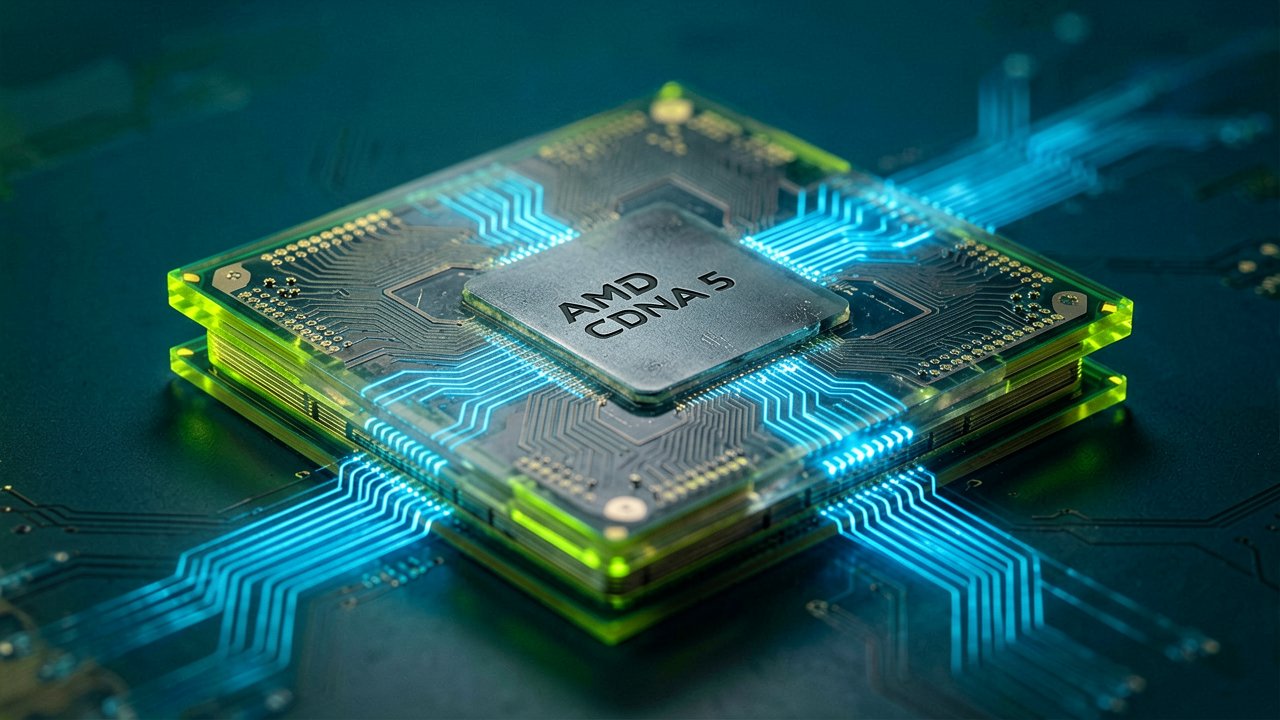
AMD has officially launched its highly anticipated Instinct MI400 series of graphics processing units, explicitly engineered to challenge Nvidia’s dominance in frontier artificial intelligence and high-performance computing (HPC) ecosystems. Unveiled at the AMD Advancing AI 2026 conference, the hardware generation introduces massive architectural jumps designed to handle the multi-trillion parameter scaling demands of next-generation large language models and intensive scientific simulations. This release signals a pivotal shift from standalone chip design to unified, rack-scale computing infrastructures suited for major cloud providers and elite research centers.
The market context surrounding this launch highlights AMD’s aggressive strategy to establish a true hardware alternative during a period of critical infrastructure constraints. By forming extensive hardware-software integration partnerships, including a multi-billion dollar engineering alignment with TechTimes detailed partners like Anthropic, AMD aims to systematically dismantle the proprietary ecosystem barriers that have historically bottlenecked competitor displacement. Enterprise adoption is shifting toward specialized, high-density hardware topologies, allowing this rollout to directly influence global data center deployment strategies over the coming fiscal years.
Architectural Breakdown and Tech Specifications
The foundation of the MI400 series relies on the newly developed AMD CDNA 5 Architecture, prioritizing severe reductions in data movement latency and unprecedented memory scaling. In a profound physical transition, the elite Instinct MI455X model leverages TSMC’s leading-edge 2nm gate-all-around process for its compute chiplets, marking AMD’s first hardware optimized entirely from the ground up for rack-scale deployments. The advanced packaging configuration integrates 8 compute dies alongside a massive 432GB of ultra-fast HBM4 memory, delivering an extraordinary 23.3 TB/s of aggregate memory bandwidth according to analytical reviews from TechPowerUp .
In terms of execution metrics, a single MI455X card outputs a peak of 40.26 petaflops of MXP4 performance and 20 petaflops of MXFP8 computation, directly tackling compute-bound workloads with multi-datatype support. To facilitate cluster scaling, AMD packages these accelerators into the Helios rack-scale system, merging the new GPUs with Zen 6-based EPYC 9006 processors. This unified node approach connects hardware resources via 16-lane AMD Infinity Fabric links, granting 256 GB/s of bidirectional, coherent bandwidth to guarantee seamless intra-rack communication during distributed inference operations.

Market Impact and Strategic Positioning
From a broader industry perspective, the MI400 launch serves as a direct counterweight to proprietary data center frameworks. AMD is heavily leveraging open networking and interconnect standards like UALink and Ultra Ethernet to offer buyers portable, cross-compatible environments that mitigate vendor lock-in. By splitting the product portfolio into the MI455X for frontier AI factories and the specialized MI430X for sovereign AI and mathematical HPC tasks, the manufacturer is effectively catering to distinct public and private sector procurement behaviors described by DIGITIMES.
Expert commentary emphasizes that the commercial victory of the MI400 series hinges on software execution just as much as raw transistor densities. The simultaneously updated ROCm open-software foundation bridges the optimization gap by enabling zero-shot compilation for major deep learning repositories. As hyperscalers seek secondary sourcing pipelines to optimize total cost of ownership, the physical introduction of high-yield 2nm AI infrastructure threatens to democratize elite model training and fundamentally recalibrate long-term enterprise capital expenditures across the global computing market.
Behind the Scenes of the 2nm Shift
The transition to TSMC’s 2nm gate-all-around process technology represents a calculated gamble that shifts the competitive paradigm from incremental silicon refinement to aggressive architectural leapfrogging. Industry insiders reveal that AMD’s decision to bypass extended iterations on intermediate nodes was driven by the compounding thermal and power walls facing modern hyperscale data centers. By anchoring the Instinct MI400 series on this vanguard node, engineers managed to slash power consumption per teraflop while packing unprecedented transistor densities into modular compute chiplets, a engineering feat that addresses the primary operational bottleneck currently plaguing frontier AI training facilities.
This generational leap, however, introduces intricate supply chain complexities that seasoned market observers are watching closely. Securing adequate allocations for both pioneering 2nm wafers and next-generation HBM4 memory puts AMD in direct competition with consumer electronics giants and rival silicon designers. Stakeholder perspectives from major cloud infrastructure providers suggest that procurement strategies for the next twenty-four months will depend heavily on AMD’s packaging yields, specifically their ability to scale the complex co-packaged optics and advanced silicon interposers required to keep the Helios rack systems operating at peak efficiency without deployment delays.

Historically, hardware breakthroughs of this magnitude have been undermined by fragmented software ecosystems, a historical pattern AMD is actively trying to rewrite. Early iterations of the Instinct line suffered from a software compatibility gap that forced developers to spend months rewriting CUDA-optimized code bases. With the MI400 launch, the strategic alignment with major framework developers ensures that modern model architectures run natively out of the box, reflecting a mature understanding that silicon is only as valuable as the software layer orchestrating it.
The broader geopolitical implications of sovereign AI initiatives also play heavily into the distribution strategy for this new hardware generation. By offering a split portfolio that addresses both frontier AI factories and distinct high-performance computing tasks, the company is positioning itself as a flexible partner for nation-states building out localized computational infrastructure. This dual-track approach allows research institutions to bypass the restrictive pipelines of the consumer-cloud monopoly, reshaping how scientific simulation and strategic AI development are funded and executed on a global scale.
Reading Between the Lines: The Reality of Frictionless Interoperability
While the architectural specifications of the Instinct MI400 series project an undeniable hardware triumph, the broader narrative of an immediate market disruption requires a dose of corporate realism. Hyperscalers and enterprise data centers do not swap out multi-billion-dollar infrastructures on raw performance metrics alone. The industry’s systemic dependence on proprietary software ecosystems creates an invisible tax on migration, meaning that even a theoretically superior 2nm architecture faces a steep uphill climb against institutional inertia and deeply entrenched developer habits.
Furthermore, AMD’s aggressive advocacy for open networking standards like UALink and Ultra Ethernet introduces an operational paradox. While championing an open ecosystem appeals to enterprise buyers desperate to escape single-vendor lock-in, open standards historically suffer from fragmented governance and slower optimization cycles compared to vertically integrated, closed solutions. The strategic reliance on a consortium-driven model means that while the MI400 offers unmatched architectural flexibility, it may simultaneously demand higher engineering overhead from the cloud providers tasked with stitching these heterogeneous clusters together.
The financial realities of the 2nm supply chain also challenge the assumption of rapid, democratic hardware availability. Transitioning to leading-edge nodes alongside next-generation HBM4 memory inherently creates a highly constrained yield environment where allocation priority goes to the highest bidder. Consequently, smaller research institutions and sovereign AI projects—the very entities AMD positions as the beneficiaries of this competitive shift—may find themselves pushed to the back of the queue, exposing a stark contradiction between the marketing of democratization and the brutal economics of modern semiconductor manufacturing.
Ultimately, the long-term impact of the MI400 series will not be measured by peak theoretical teraflops, but by the financial tolerance of the market. If the capital expenditures required to deploy rack-scale Helios configurations fail to deliver a proportional reduction in total cost of ownership per training run, the industry may witness a collective retrenchment toward existing, mature nodes. For AMD, the challenge is no longer just proving it can build a spectacular piece of silicon, but proving the broader market can afford to adopt it.
Building a multi-trillion parameter artificial intelligence factory is entirely feasible right up until the electricity bill arrives and the open-source software stack politely informs you of a compilation error on node four hundred.
Artūras Malašauskas is an AI Systems Integrator with 20+ years of production-grade web engineering experience. He has designed, shipped, and scaled enterprise Python/PHP systems for logistics, SaaS, and public-sector clients. For the past year, he has focused exclusively on AI integrations: deploying open-source LLMs, building generative media pipelines (image, audio, video), and engineering multi-agent workflows for real production environments. His standard: reproducibility, security, cost-efficient inference—no vaporware. He documents and evaluates emerging AI tooling, separating verified capabilities from marketing noise. Technical editor at: muza-ai.eu, ai-verslas.lt, ai-naujinos.lt Connect on LinkedIn
Comments