HMD Touch AI Debuts in China: Retro Nokia Lumia Charm Meets ByteDance Intelligence
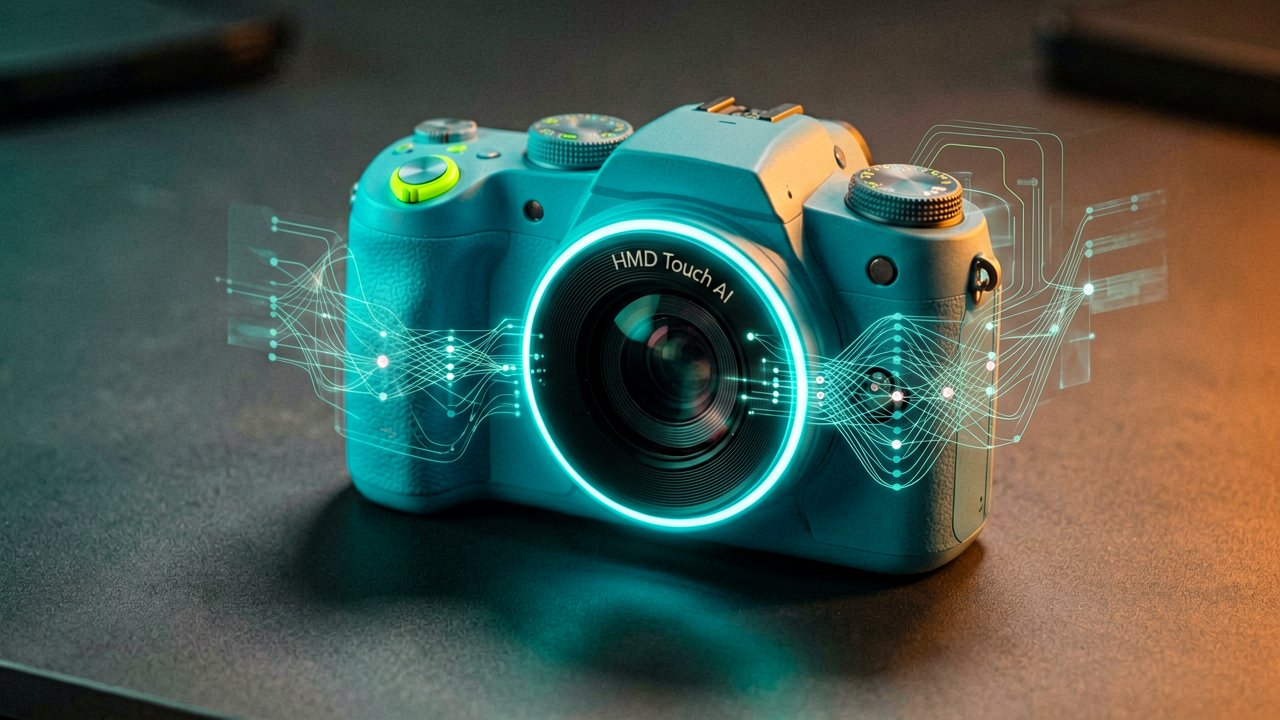
HMD is leaning heavily into nostalgia to carve out a distinct niche in the world's most competitive mobile market. On July 23, 2026, the company officially launched the HMD Touch AI smartphone in China, blending a hyper-compact form factor with sophisticated local artificial intelligence capabilities. It is a striking move that shows how a retro-inspired package can find a second life when paired with modern, localized software ecosystems.
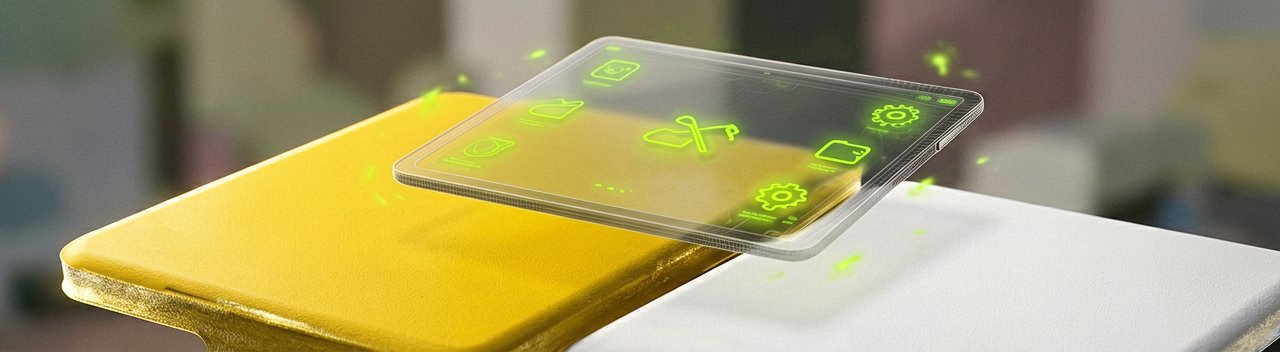
The device instantly commands attention because it borrows its design language directly from the beloved, brightly colored Nokia Lumia era. Sporting a distinct Fabula-style chassis with a signature circular camera housing on the rear, the phone offers a refreshing antidote to today's sea of identical glass slabs. HMD shipped the device in an eye-catching cyan finish, though minimalist and eccentric buyers alike can swap things up using separately sold yellow, blue, or white interchangeable back covers. Beneath that nostalgic veneer sits a tiny 3.2-inch touchscreen display, making this hybrid device exceptionally pocketable in an era of oversized screens.
ByteDance AI and Stripped-Back Hardware
What prevents this miniature phone from becoming a mere gimmick is its deep integration with ByteDance's Doubao AI large language model. This software backbone grants the tiny handset an array of smart features, including real-time English-Chinese translation, smart task management, conversational practice tools, and text-to-image generation. Interestingly, HMD has opted for a closed ecosystem here; the phone completely locks out custom application downloads and skips pre-installed entertainment bloatware, framing it as a highly focused companion or an elegant digital detox tool with a brain.
The remaining hardware specs are remarkably modest but highly functional. According to localized coverage synthesized by Gadgets 360, the device features 2-megapixel cameras on both the front and back, a 1,950 mAh battery, dual SIM capabilities with 4G support across China's major carriers, Wi-Fi hotspot sharing, and native Alipay QR code support for rapid mobile payments. There is also a customizable physical button on the top edge that users can easily map for SOS alerts or custom shortcuts. The device went live for pre-orders at a highly aggressive price of CNY 469, which translates to roughly $70.
Beyond the Detox Gimmick: What most surface-level reports miss about the HMD Touch AI is that it is not merely a play for consumers wanting to scroll less; it represents a major tactical shift in how HMD handles the cutthroat Chinese smartphone landscape. By completely bypassing the hyper-competitive premium tier and targeting a sub-$100 price point, HMD is carving out an intentional middle ground between basic feature phones and full-featured smartphones. The device effectively acknowledges that while users may want a break from algorithmically driven notification loops, modern digital life still demands a Baseline level of connectivity, especially regarding mobile payments and AI utility.
The decision to outsource the software smarts to ByteDance's Doubao AI ecosystem is an incredibly shrewd move for a foreign brand trying to maintain relevance in China. Localizing an AI model in mainland China requires navigating strict regulatory frameworks, compliance checks, and massive infrastructure costs. By embedding Doubao deeply into the operating system right out of the box, HMD gets to leverage a highly mature, culturally attuned virtual assistant that local consumers already trust. This collaboration turns what would otherwise be a low-spec burner phone into an intelligent, voice-driven companion capable of handling sophisticated productivity tasks without needing a massive, battery-draining screen.
A Nostalgic Blueprint for the Post-App Era
From a product design standpoint, reusing the classic Nokia Lumia "Fabula" aesthetic is far more than a cheap nostalgic trick. Industry observers note that HMD is tapping into a growing "Y2K" and mid-2010s retro trend that is highly popular among Gen Z consumers in urban Chinese hubs. By offering interchangeable shells in vibrant cyan and yellow, the phone leans into a tactile, toy-like charm that positions the device as a trendy lifestyle accessory rather than a compromised piece of tech. It is a visual statement that signals the user has intentionally chosen a simpler, more deliberate relationship with their screen.
This closed-ecosystem approach also hints at a broader industry trend where the traditional app store is being sidelined in favor of unified AI interfaces. Because users cannot download standard social media or gaming apps on the HMD Touch AI, the phone forces interaction through voice and text commands processed by the LLM. For HMD, this significantly lowers software maintenance costs and security vulnerabilities, while ensuring that the modest hardware configuration remains snappy and optimized for years to come. It serves as an intriguing test case for whether AI can completely replace the app-centric smartphone paradigm on ultra-budget hardware.
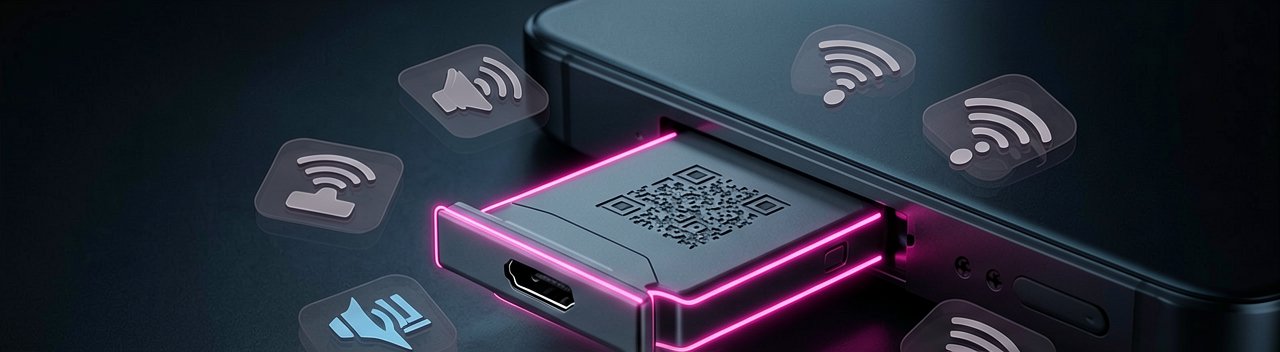
Ultimately, the true measure of success for this hardware experiment will lie in its adoption as a secondary device. While it lacks the processing muscle and camera optics to compete as a primary daily driver, its built-in Alipay QR functionality and Wi-Fi hotspot sharing make it a remarkably viable backup for weekend outings, concerts, or travel. By focusing on deep AI utility rather than raw hardware muscle, HMD may have accidentally stumbled upon the perfect formula for the modern digital detox: a phone that keeps you just connected enough to survive the modern world, without enticing you to waste hours staring at it.
The Paradox of Miniaturization: While the tech industry loves to romanticize the idea of a minimalist digital detox, a cold look at the HMD Touch AI reveals a fascinating contradiction at its core. HMD is marketing a phone designed to break screen addiction, yet they have stuffed it with an advanced, highly engaging large language model explicitly engineered to capture and hold human attention. ByteDance’s Doubao AI thrives on interaction, continuous prompting, and data generation. Swapping a doom-scrolling habit on social media for endless conversational practice or text-to-image prompting with an AI assistant isn't truly disconnecting; it is simply replacing one form of digital dependency with another, albeit wrapped in a highly nostalgic 3.2-inch shell.
There is also reason to be highly skeptical about the longevity of the device’s hardware-to-software balance. Running an LLM requires massive computational backend support, and while the heavy lifting is undoubtedly done in the cloud, the device still relies on consistent network performance and localized caching. Pairing cutting-edge 2026 artificial intelligence with an incredibly modest 1,950 mAh battery and a basic 4G modem feels like an engineering compromise bound to hit a wall. If the phone struggles with latency during real-time translations or rapidly drains its diminutive battery while acting as a Wi-Fi hotspot, consumers will quickly abandon the novelty and relegate the device to a desk drawer.
Market Realities vs. Lifestyle Nostalgia
Furthermore, HMD's aggressive pricing strategy raises questions about the ultimate profitability and purpose of this release. At roughly $70, the hardware margins are razor-thin, suggesting that this device may function primarily as a Trojan horse for ByteDance's software ecosystem or a loss-leader marketing stunt to keep the HMD brand relevant in a region dominated by domestic giants like Xiaomi, Oppo, and Vivo. Historically, Western-backed brands attempting to capture Chinese consumer interest with retro gimmicks face an uphill battle. The local market is notoriously pragmatic, and budget-conscious buyers might easily opt for a discounted, full-sized older smartphone model that offers significantly more utility for the same price.
If this hybrid experiment succeeds, however, it could signal a major shift for the low-end mobile market globally. By proving that consumers are willing to accept stripped-back hardware if it is augmented by an intelligent software layer, HMD might inspire a new wave of "dumb-smart" devices. This could force other manufacturers to reconsider the endless cycle of inflating screen sizes and camera megapixel counts on budget phones. Whether this localized launch remains a quirky footnote exclusive to China or becomes the blueprint for an international lineup depends entirely on whether buyers view the closed-ecosystem limitation as a liberating feature or a frustrating prison.
Selling a phone that intentionally restricts your access to the modern internet while charging you to talk to a generative chatbot is peak tech irony—proving that in 2026, the luxury of being left alone is the most expensive feature of all, even when it only costs seventy dollars.
Artūras Malašauskas is an AI Systems Integrator with 20+ years of production-grade web engineering experience. He has designed, shipped, and scaled enterprise Python/PHP systems for logistics, SaaS, and public-sector clients. For the past year, he has focused exclusively on AI integrations: deploying open-source LLMs, building generative media pipelines (image, audio, video), and engineering multi-agent workflows for real production environments. His standard: reproducibility, security, cost-efficient inference—no vaporware. He documents and evaluates emerging AI tooling, separating verified capabilities from marketing noise. Technical editor at: muza-ai.eu, ai-verslas.lt, ai-naujinos.lt Connect on LinkedIn
Comments