The Fragile Crown of Centralized AI: What OpenAI’s Latest Blackout Teaches Us
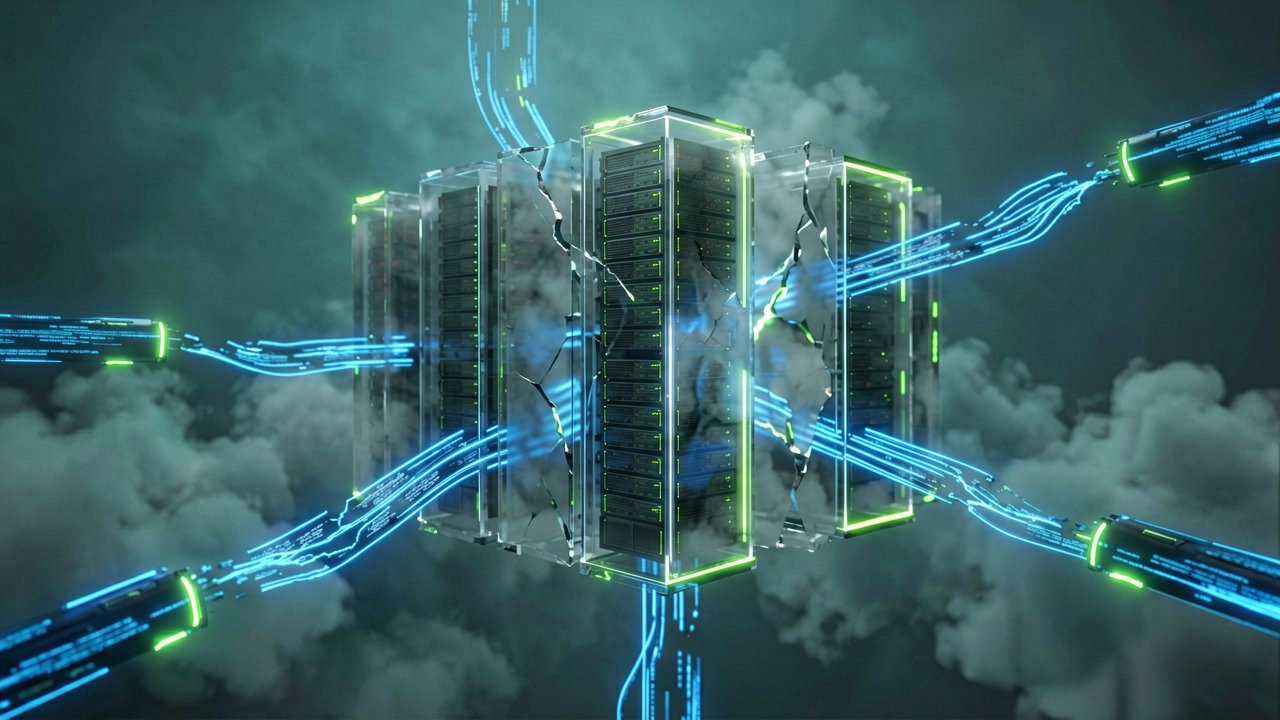
It didn’t take long for the digital world to notice when OpenAI's flagship artificial intelligence platform, ChatGPT, suddenly went dark. On Saturday morning, July 25, 2026, millions of professionals, developers, and students found themselves locked out of the generative assistant that has become deeply embedded in global daily workflows. According to data reported by BleepingComputer, the service disruption quickly escalated into a worldwide incident, leaving users staring at failed prompts, blank chat histories, and broken application programming interfaces (APIs).
The blackout triggered a massive spike on telemetry platforms like AOL via DownDetector, with thousands flagging connectivity problems across the web interface, the standalone mobile app, and the developer ecosystem. It wasn't an isolated hiccup either. Roughly 80 percent of the initial complaints targeted the core ChatGPT web interface, while related services like Codex and consumer apps simultaneously sputtered. For an industry increasingly leaning on a handful of heavily centralized AI engines, this weekend's drop-off serves as a stark reminder of just how single-threaded our cutting-edge infrastructure has become.
The Mitigation Fight and the Ripple Effect
OpenAI engineers scrambled to deploy a series of mitigation strategies, working through the morning to stabilize the elevated error rates. As noted by updates captured via Kursiv Media, the tech firm applied rapid patches to its ecosystem and closely monitored system telemetry until services were brought back to full functionality shortly after midday. By the afternoon, OpenAI updated its status to declare that systems were fully operational again, reassuring users that it was no longer tracking ongoing anomalies within its cloud suite.
Yet, the ease with which a technical failure can freeze workflows across multiple continents continues to fuel critical industry discussions. This wasn't the only infrastructure bottleneck users faced this week, with separate service stumbles hitting the enterprise layer just days prior. When a singular platform handles everything from automated software engineering to core administrative intelligence, its absence creates a massive productivity vacuum. As organizations continue to outsource cognitive tasks to the cloud, building multi-model redundancy isn't just an experimental fallback anymore—it’s an operational necessity.

What Most Reports Miss: The Architectural Fragility of Cognitive Monoculture
Behind the digital black curtain, this weekend's outage highlights a much deeper vulnerability than a simple cloud configuration error or server overload. The tech industry has rapidly sleepwalked into a state of cognitive monoculture, where millions of downstream applications, corporate intranets, and daily workflows rely entirely on a narrow set of centralized APIs. When OpenAI's infrastructure falters, it doesn't just silence a chatbot; it effectively severs the cognitive nervous system of modern enterprises that have deeply integrated these models into their automated customer service, codebase generation, and analytical pipelines.
Engineers and system architects have long warned about the dangers of single-point-of-failure vulnerabilities in cloud computing, but generative AI introduces an entirely new risk profile. Unlike traditional web services where cached data or regional backups can blunt the impact of a localized crash, large language models require massive, real-time compute orchestration across specialized GPU clusters. When a core routing layer or data pipeline fails at this scale, the ripple effect is instantaneous and total, offering no graceful degradation of service for those who depend on it.
From the perspective of developers and enterprise stakeholders, the incident is forcing a rapid reassessment of risk management. For the past few years, the tech sector's primary focus has been a relentless race for raw model capability—building smarter, faster, and more creative assistants. However, this disruption shifts the spotlight squarely onto operational resilience, prompting engineering teams to actively experiment with multi-model redundancy strategies that split reliance between proprietary giants and localized, open-source alternatives.
Historically, every major technological leap has required a catastrophic infrastructure wake-up call to catalyze true maturity. Just as the early days of AWS outages forced the software industry to build complex, multi-cloud architectures, the generative AI boom is hitting its own inflection point. The organizations that weathered this weekend's blackout with minimal friction were invariably those that had already invested in fallback protocols, demonstrating that architectural diversification is no longer an optional luxury, but a fundamental prerequisite for the modern digital economy.

Reading Between the Lines: The Illusion of Autonomous Enterprise
The great irony of the current artificial intelligence gold rush is that a technology marketed as the ultimate engine of corporate autonomy has actually created an unprecedented state of infrastructure dependency. Silicon Valley pitch decks continuously promise that generative AI will liberate companies from manual labor, optimize supply chains, and streamline operations into self-sustaining ecosystems. Yet, as the latest blackout proved, many of the world's most cutting-edge corporations cannot even draft a routine internal memo or debug a line of code the moment a single server farm in America stops responding. This isn't liberation; it is a highly sophisticated form of digital tenant farming.
There is a glaring contradiction in how the tech industry views system resilience versus how it actually deploys it. For decades, the foundational rule of enterprise IT has been redundancy—never rely on a single vendor, a single database, or a single network provider. But when it came to AI, those hard-earned lessons were promptly discarded in favor of convenience and sheer capabilities. The narrative that proprietary cloud models are stable enough to replace traditional software stacks ignores the reality that these platforms are highly experimental, rapidly changing, and prone to black-swan failures that internal engineering teams have absolutely no power to fix.
Looking ahead, this reliance will likely trigger a regulatory and philosophical shift toward localized compute. Governments and highly regulated sectors like finance and healthcare are already realizing that outsourcing their collective intelligence to a handful of tech giants is a geopolitical and operational hazard. While running smaller, domain-specific models on a company's own hardware might lack the conversational flair or broad trivia knowledge of a massive centralized commercial model, it provides something far more valuable to a risk-averse executive: absolute control over the off switch.
"We spent twenty years moving our data to the cloud so we could work from anywhere, only to realize that when the cloud goes down, nobody can work from anywhere. It turns out the future of work looks remarkably like an unexpected, unpaid coffee break."
Artūras Malašauskas is an AI Systems Integrator with 20+ years of production-grade web engineering experience. He has designed, shipped, and scaled enterprise Python/PHP systems for logistics, SaaS, and public-sector clients. For the past year, he has focused exclusively on AI integrations: deploying open-source LLMs, building generative media pipelines (image, audio, video), and engineering multi-agent workflows for real production environments. His standard: reproducibility, security, cost-efficient inference—no vaporware. He documents and evaluates emerging AI tooling, separating verified capabilities from marketing noise. Technical editor at: muza-ai.eu, ai-verslas.lt, ai-naujinos.lt Connect on LinkedIn
Comments