Ride the Lightning: How a Chinese Long March Rocket Survived a Mid-Launch Strike
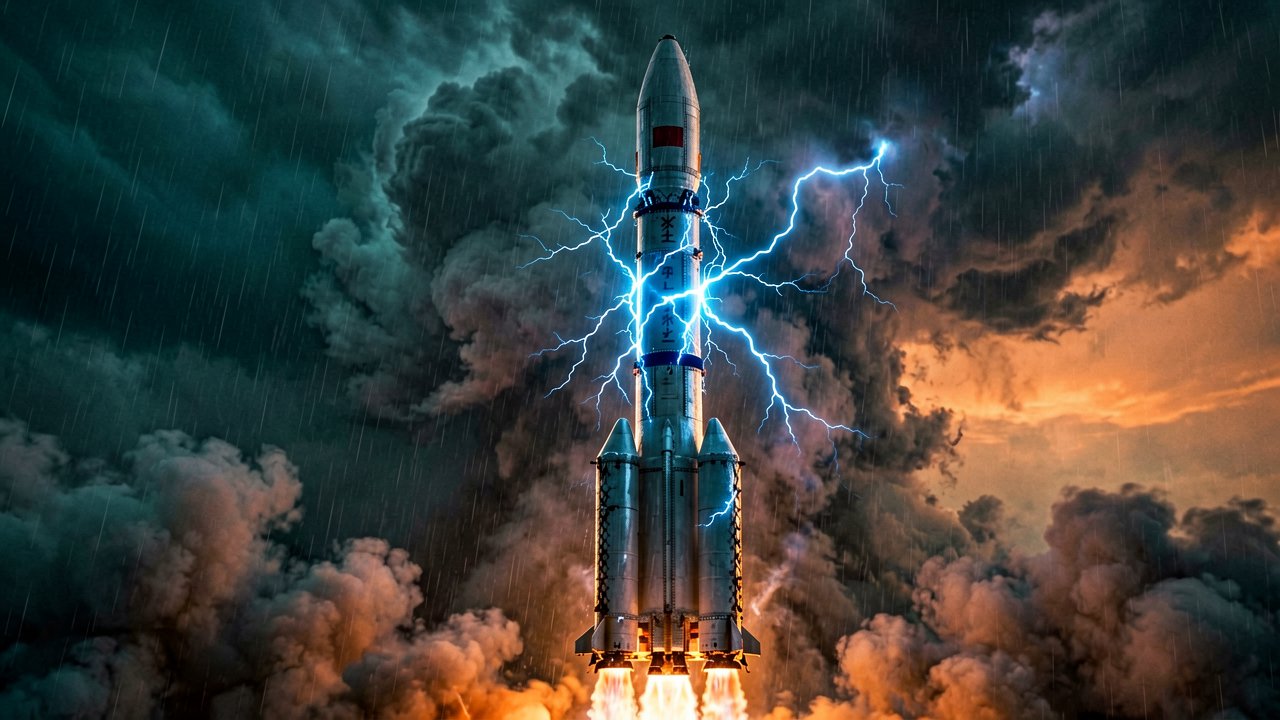
Spaceflight history is packed with reminder notes that mother nature always holds the ultimate veto card. We got another reminder on July 23, 2026, when a Chinese Long March 3B rocket blasted off into a stormy sky and found itself on the receiving end of a spectacular, direct lightning strike just moments after clearing the pad. The breathtaking event, captured perfectly by photographer Zhou Quan, showed a massive bolt connecting with the lower section of the vehicle as it punched through the soup at the Xichang Satellite Launch Center. It is the kind of image that makes flight controllers hold their breath, but thankfully, this dramatic encounter ended with a sigh of relief rather than an explosion.
Despite the terrifying optics of the flash, the China Aerospace Science and Technology Corporation confirmed that the launcher didn't even flinch. The rocket kept its composure, maintained its trajectory, and successfully delivered its payload—the Tianlian-2 06 data relay satellite—right into its target orbit. It turns out that modern rocketry has a built-in defense mechanism for exactly this brand of atmospheric chaos, proving that excellent engineering can occasionally outsmart a thunderstorm.
The Faraday Cage Shielding Aerospace Hardware
You can thank Michael Faraday for saving the day here. Rockets like the Long March 3B are essentially built as giant, flying Faraday cages. The highly conductive skin of the launch vehicle allows massive electrical currents to skin right along the exterior shell, safely grounding the energy back into the exhaust plume without letting dangerous electrical fields penetrate the internal avionics. If that current had reached the digital flight computers, it could've easily sent a hard-over command and torn the rocket apart—a lesson the global aerospace community learned the hard way decades ago.
As detailed by Space.com, managing these atmospheric hurdles remains one of the trickiest parts of launch operations. While the Western world adopted incredibly strict weather commit criteria following similar historical close-calls, this latest inland launch from China shows that sometimes, when the schedule demands it, engineers rely heavily on the resilience of the hardware itself. It makes for an absolutely epic photograph, but it is a gamble most flight directors would still prefer to avoid.
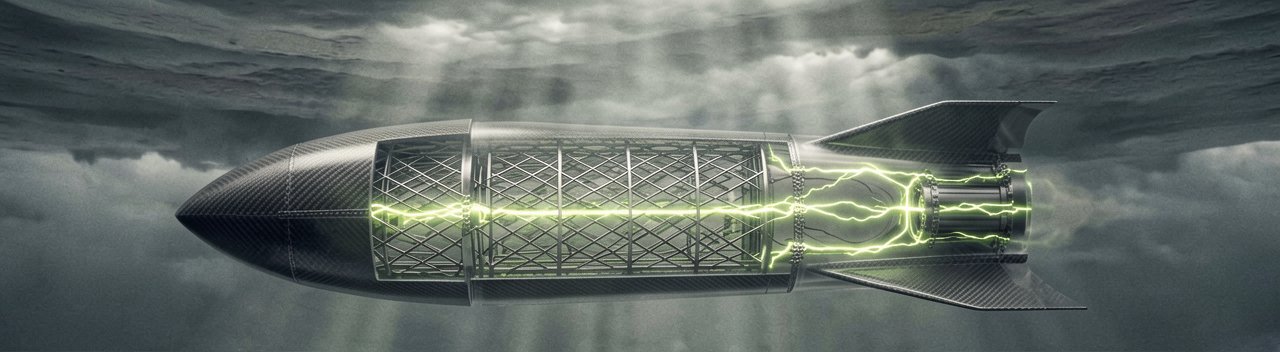
What Most Reports Miss: The dramatic image of the Long March 3B lighting up the Xichang sky isn't just a testament to modern engineering; it highlights a profound, ongoing philosophical divide in how global space agencies manage risk. For Western observers, the launch looks like an unacceptable gamble with an expensive payload. In places like the United States, strict Launch Commit Criteria dictate that a vehicle cannot fly if lightning is detected within ten nautical miles of the flight path. These conservative buffers were written in blood and fried circuits, specifically to prevent a repeat of historical disasters where the rocket itself inadvertently triggered the discharge.
The physics of a ascending rocket actually make it a giant, moving lightning rod. As the vehicle tears through the atmosphere, its metallic hull and highly ionized trailing exhaust plume create a perfect, low-resistance path for electrical energy to equalize between the clouds and the ground. A rocket can effectively "trigger" a lightning strike in weather that would otherwise remain completely dormant. Because of this, agencies like NASA and SpaceX routinely scrub launches during overcast conditions that Chinese flight directors at Xichang routinely fly through, relying instead on heavy-duty shielding to absorb the inevitable hit.
The Legacy of Apollo 12 and the Cost of Resilience
This calculated tolerance for risk has deep historical parallels. Back in 1969, NASA’s Apollo 12 mission was struck by lightning twice within the first minute of liftoff, knocking out the command module's telemetry and blinding the crew's instrument panels. It was only saved by a legendary, obscure switch configuration—"set SCE to Aux"—that restored data to the spacecraft. That close call prompted Western agencies to adopt a hyper-cautious posture, ensuring they rarely test their hardware's electrical defenses in a live environment. China’s aerospace sector, conversely, appears to treat the Faraday cage principle not as a secondary safety net, but as a primary operational clearance.
Building a rocket capable of shrugging off a direct bolt requires a meticulous approach to manufacturing that goes far beyond thick metal skin. Every single structural joint must be perfectly bonded with conductive strapping to ensure the current flows smoothly across the exterior without creating internal sparks. Furthermore, every sensor wire, data bus, and power line leading to the critical guidance computers must be heavily shielded and routed through transient voltage suppressors. It adds dead weight to the vehicle, reducing the maximum payload capacity, but it buys an invaluable insurance policy against the unpredictable mountain weather surrounding the Xichang inland spaceport.

Ultimately, this striking incident underscores the fierce pressure behind China’s packed launch calendar. With the country rapidly expanding its communication, spy, and navigation constellations, delays cascade heavily into subsequent missions. By hardening their vehicles to withstand the elements rather than waiting for blue skies, Chinese mission planners have accepted a higher baseline of atmospheric risk to maintain a relentless operational tempo. It is a gritty, pragmatic approach to the modern space race, proving that while you can't control the weather, you can certainly design a machine to fight its way through it.
Reading Between the Lines: The triumphalist narrative surrounding this successful launch conveniently papers over a much more precarious reality. While aerospace enthusiasts celebrate the engineering triumph of a rocket surviving a direct electrical assault, the incident exposes a worrying vulnerability in China's launch infrastructure. The Xichang Satellite Launch Center is notoriously prone to heavy rainfall and severe thunderstorms due to its subtropical mountain location. Flying a liquid-fueled rocket through a live lightning field is less a demonstration of routine operational capability and more an act of high-stakes brinkmanship that could have easily ended in a catastrophic loss of a critical national asset.
This aggressive posture highlights a fundamental contradiction in China's space program. On one hand, the China Aerospace Science and Technology Corporation showcases state-of-the-art automation, precise orbital insertions, and sophisticated satellite hardware. On the other hand, their operational safety margins frequently mirror the brash, early days of the Cold War space race. The decision to proceed with the countdown despite severe atmospheric electrification suggests that mission commanders are facing immense political or logistical pressure to meet rigid launch deadlines, prioritizing schedule adherence over established global safety protocols.
The Hidden Cost of Atmospheric Gambling
Furthermore, relying on a vehicle's skin to act as a flawless Faraday cage is a statistical gamble that will eventually face the law of averages. While the primary structure of the Long March 3B survived this encounter, the extreme electromagnetic pulse generated by a lightning strike induces severe stress on internal components, even with robust shielding. Microscopic degradation in semiconductor gates or subtle telemetry drift might not cause an immediate explosion during ascent, but it can drastically shorten the operational lifespan of the payload once it reaches orbit. The true success of the Tianlian-2 06 mission won't be determined by its dramatic liftoff, but by whether its delicate electronics can survive for a decade in the harsh vacuum of space after being cooked by millions of volts at launch.
As the global space economy shifts toward reusable launch vehicles, this disregard for atmospheric hazards becomes completely unsustainable. Reusable rockets, like those being developed globally and within China's emerging private aerospace sector, rely on highly sensitive external grid fins, complex thermal protection systems, and exposed sensor suites that cannot tolerate a direct lightning strike without requiring weeks of expensive repairs. If China intends to transition away from its expendable legacy fleet and match the rapid, cost-effective cadence of modern commercial spaceflight, its mission directors will have to abandon their weather-defying bravado and learn the agonizing art of the launch scrub.
"It turns out the most effective way to test a multi-million-dollar rocket's electrical grounding is to fly it directly into a thunderstorm and hope the laws of 19th-century physics hold up better than your flight anxiety."
Artūras Malašauskas is an AI Systems Integrator with 20+ years of production-grade web engineering experience. He has designed, shipped, and scaled enterprise Python/PHP systems for logistics, SaaS, and public-sector clients. For the past year, he has focused exclusively on AI integrations: deploying open-source LLMs, building generative media pipelines (image, audio, video), and engineering multi-agent workflows for real production environments. His standard: reproducibility, security, cost-efficient inference—no vaporware. He documents and evaluates emerging AI tooling, separating verified capabilities from marketing noise. Technical editor at: muza-ai.eu, ai-verslas.lt, ai-naujinos.lt Connect on LinkedIn
Comments