Robots in the High-Rise: Mitsui Fudosan Deploys AI Couriers to Feed Tokyo Office Workers
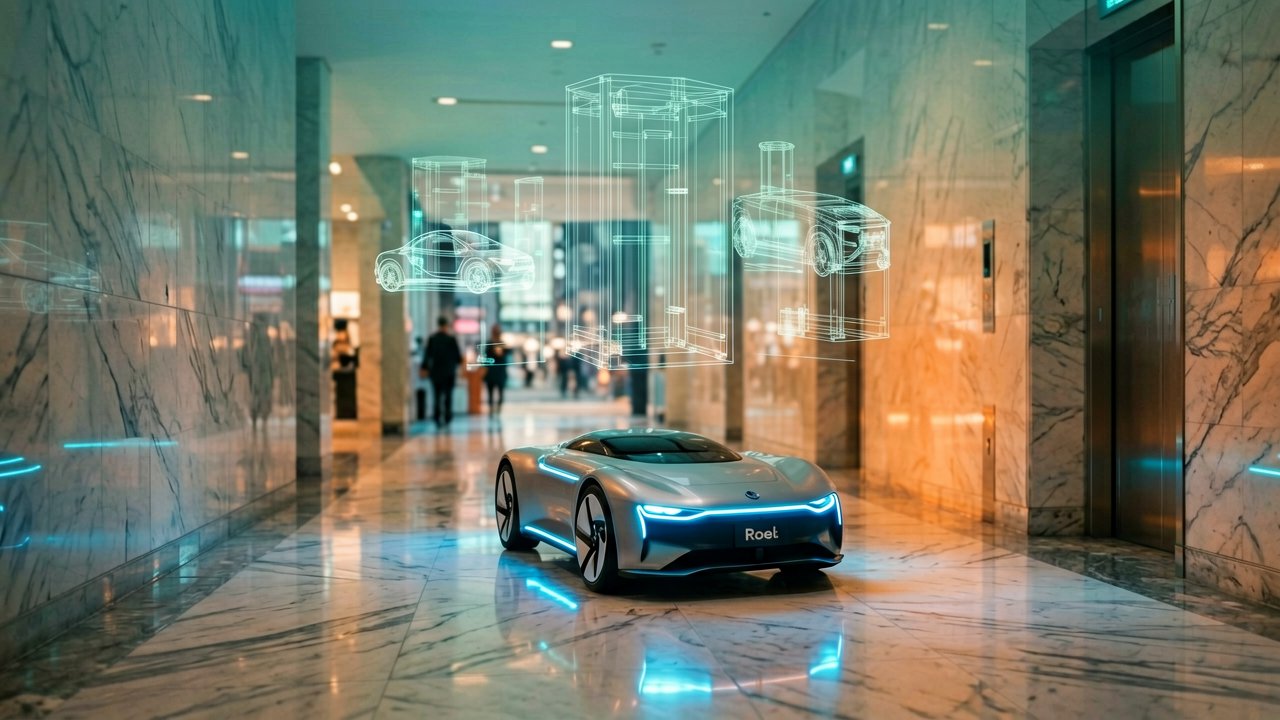
Getting lunch in a crowded skyscrapers can be an absolute hassle, but tech leaders are looking to change that reality by taking delivery apps to a completely literal new level. Real estate giant Mitsui Fudosan, alongside telecommunications provider NTT East and South Korean tech pioneer Naver Cloud, officially kicked off a full-scale autonomous AI delivery robot service on July 21, 2026. Stationed within the bustling Tokyo Midtown Yaesu mixed-use complex, a fleet of sleek "Rookie" robots is now transporting restaurant orders directly to office workers who would rather avoid the midday rush entirely.
Instead of relying on human couriers to navigate security turnstiles and crowded elevator banks, the process is streamlined right from a smartphone. Workers order food or drinks from basement and fifth-floor eateries through a mini-app inside the popular LINE messaging application. From there, Naver Labs’ autonomous indoor delivery units pick up the orders and map their own path up to the seventh-floor offices. It is an impressive display of "physical AI" in action, moving urban infrastructure past static automations into dynamic, self-navigating real-world environments.
The Tech Under the Hood: Digital Twins and Smart Elevators
What makes this rollout stand out is how the robots adapt to spaces that were not originally designed for automation. Thanks to digital twin infrastructure deployed by NTT East and NAVER LABS, the system creates a highly accurate, real-time virtual replica of the building by merging spatial data with live camera feeds. This allows the AI to analyze human traffic patterns and smoothly steer through densely packed corridors without awkward bottlenecks or safety hazards.
Vertical transit is usually the ultimate roadblock for automated indoor couriers, but Tokyo Midtown Yaesu solves this via system integration. The delivery units communicate wirelessly with the building's central operating network to automatically open security gates and page elevators. The elevators select the correct destination floors entirely on their own, allowing the robots to transition between levels without needing a human to press a button. According to coverage by The Japan News, Mitsui Fudosan view this integration as a direct response to evolving work styles and an efficient way to open new revenue streams for in-house restaurants.
A Commercial Litmus Test for Autonomous Real Estate
This initiative represents the first time Naver has commercially exported its flagship "1784" smart building solutions outside of South Korea, serving as a critical testing ground for the future of commercial real estate. Japan's severe, ongoing labor shortages are forcing facility managers to think outside the traditional box when keeping massive commercial spaces running smoothly. Relying heavily on manual labor for basic concierge and distribution tasks inside premium complexes is quickly becoming a thing of the past.
The consortium behind the project is already looking well beyond the lunch rush. As reported by The Korea Times, the ultimate goal for Team Naver, Mitsui Fudosan, and NTT East is to expand this cloud-based digital twin framework across broader building operations. The exact same navigational intelligence and spatial mapping used to deliver a sandwich could easily be deployed for automated nighttime security patrols, commercial cleaning routines, and routine equipment inspections.
The Hidden Architecture of Vertical Autonomy
What most initial reports gloss over: The true miracle of Tokyo Midtown Yaesu’s robot delivery service isn't the physical robot at all, but the complex cloud-to-ground orchestra happening entirely out of sight. In standard urban environments, high-rise buildings are notorious dead zones for autonomous machines. Reinforced concrete walls, reflective glass facades, and heavy cellular interference turn standard GPS navigation into a useless tool, leaving rolling hardware stranded at the first sign of a Wi-Fi blind spot. The technical partnership between NTT East and Naver Cloud addresses this exact vulnerability by introducing an localized edge-computing mesh that blankets the skyscraper's interior, providing seamless handoffs between network nodes as the robots ascend.
This invisible infrastructure relies heavily on Naver’s proprietary ARC (AI-Robot-Cloud) system, which shifts the computational heavy lifting away from the physical robot. Traditional autonomous vehicles carry expensive, heavy processing units on board to calculate mapping data in real time. In contrast, the "Rookie" delivery units operate as lightweight, low-power terminals that offload their spatial processing to the cloud. By executing high-speed localized data transfers over NTT East's high-bandwidth networks, the system updates the building's digital twin layout within milliseconds, allowing a fleet of robots to share a single centralized brain while dramatically lowering production and maintenance costs.
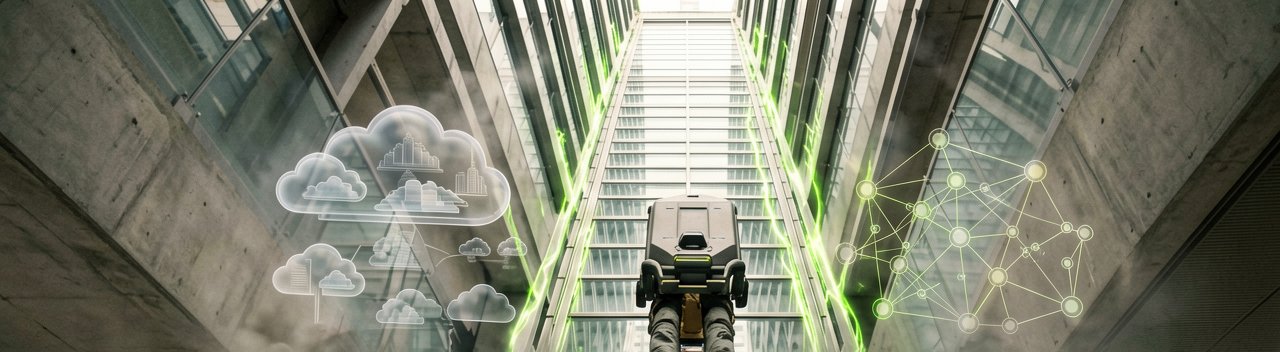
The deepest operational hurdle in high-rise robotics has historically been the elevator bank—a chaotic environment governed by strict weight limits, safety sensors, and unpredictable human behavior. Rather than attempting to manually push physical elevator buttons, the Rookie units bypass the physical interface entirely via a unified Application Programming Interface (API) hooked directly into the building's core management systems. When a robot approaches the elevator lobby, it queries the cloud to request an uncrowded elevator car traveling in its preferred direction. The building's central dispatch system prioritizes the request, reserving space and disabling the elevator’s standard door-closing sequence until the machine is safely secured on board.
For Mitsui Fudosan, this deployment is a calculated experiment designed to redefine modern commercial real estate asset values. Premium office tenants are increasingly demanding integrated smart amenities that improve worker productivity, and eliminating the time lost waiting in lunch lines or commuting down forty floors for a coffee is a distinct selling point. From a macroeconomic perspective, the rollout serves as a practical blueprint for a rapidly aging Japanese workforce, demonstrating that autonomous logistics can seamlessly assume low-complexity hospitality and distribution roles without disrupting the architectural charm or daily flow of luxury corporate hubs.
The Reality Check: Scaling Beyond the Luxury Testbed
Reading Between the Lines: While the automated ballet at Tokyo Midtown Yaesu makes for an exceptional marketing showcase, a sober look at commercial real estate realities reveals significant scaling bottlenecks. The seamless integration touted by the project's stakeholders is largely a luxury born of a brand-new facility built with future-proof tech stacks already baked into its blueprinted DNA. For the vast majority of existing, legacy office towers dominating Tokyo’s skyline, retrofitting traditional elevator relays and analog security gates to communicate with cloud-based digital twins presents a financial and logistical nightmare that most property management boards simply cannot justify.
There is also an inherent contradiction in using high-tech autonomous fleets to solve localized labor shortages when the robots themselves require a quiet army of specialized human technicians behind the curtain. Between the initial network mapping by engineers, constant cloud monitoring, and manual cleanups when a customer drops an unsecure bento box in a shared corridor, the labor has not been eliminated; it has merely been shifted up the skills ladder. This dynamic creates an economic paradox where a service designed to optimize everyday workflows relies on expensive, highly specialized human interventions to maintain its automated appearance.
Furthermore, relying on a localized monopoly like the LINE mini-app ecosystem locks corporate tenants into a curated retail experience, limiting spontaneous consumer choice to a pre-approved list of internal building vendors. While basement eateries get a guaranteed digital pipeline to captive upper-floor office workers, street-level restaurants just outside the property's perimeter are structurally locked out of this elite delivery network. As commercial real estate increasingly leans on proprietary, building-specific logistics networks, the open-market dynamic of urban dining risks becoming fragmented into competing, privatized digital silos.
Ultimately, the long-term viability of high-rise robotics hinges on whether office workers view these autonomous rovers as genuine productivity boosters or merely as novelties that take up valuable elevator space during rush hour. If the technology can successfully pivot into unglamorous, high-friction domains like corporate waste disposal or midnight janitorial logistics, it will prove itself indispensable. Until then, the system occupies a precarious middle ground, balancing somewhere between a transformative urban infrastructure breakthrough and an incredibly over-engineered way to fetch a latte without taking the stairs.
It seems the ultimate promise of the twenty-first-century workplace isn't flying cars or a shorter workweek, but rather a world where humans can comfortably code for twelve hours straight without ever having to make awkward eye contact with a food delivery driver in the elevator.
Artūras Malašauskas is an AI Systems Integrator with 20+ years of production-grade web engineering experience. He has designed, shipped, and scaled enterprise Python/PHP systems for logistics, SaaS, and public-sector clients. For the past year, he has focused exclusively on AI integrations: deploying open-source LLMs, building generative media pipelines (image, audio, video), and engineering multi-agent workflows for real production environments. His standard: reproducibility, security, cost-efficient inference—no vaporware. He documents and evaluates emerging AI tooling, separating verified capabilities from marketing noise. Technical editor at: muza-ai.eu, ai-verslas.lt, ai-naujinos.lt Connect on LinkedIn
Comments