Pyrrhic Victory in Orbit: SpaceX Nails Starlink V3 Deployment as Second Stage Suffers Familiar Crippling Blow
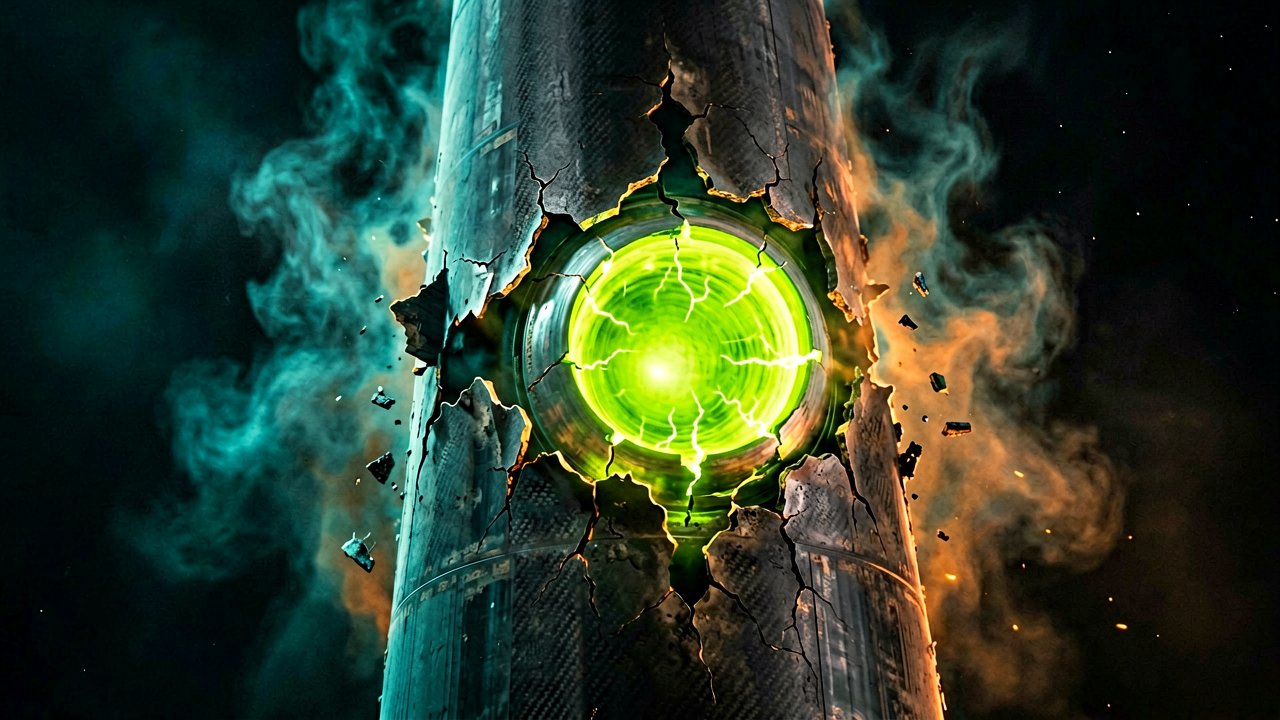
SpaceX successfully pushed its next-generation Starlink V3 hardware into orbit, yet the celebration inside the company's Hawthorne headquarters was cut incredibly short. A severe off-nominal condition struck the Falcon 9 upper stage shortly after payload deployment, casting a dark shadow over what should have been a triumphant milestone. The anomaly mirrors previous high-profile upper stage failures, immediately reigniting anxious regulatory scrutiny regarding the reliable workhorse of commercial spaceflight.
The mission launched from the California coast, breaking the morning silence with its signature roar before things took a familiar, frustrating turn. While the first-stage booster flawlessly completed its assignment and returned home safely, the upper stage engine encountered a catastrophic malfunction during a critical post-deployment maneuver. According to preliminary tracking data analyzed by SpaceNews, the hardware was left stranded in an unstable, highly degraded low Earth orbit destined for an imminent, fiery reentry.
The space community's reaction was swift, as industry analysts noted that these recurring technical hiccups threaten to disrupt a jam-packed manifest. Though the immediate mission achieved its primary goal of deploying the upgraded internet satellites, the underlying propulsion issue complicates the Federal Aviation Administration's ongoing safety oversight. The aerospace giant now faces an intense, high-stakes investigation to pinpoint why its upper-stage Merlin engine keeps stumbling at the finish line.
The Satellites Are Up, But the Upper Stage Is Down
Engineers managed to release the initial batch of high-capacity Starlink V3 satellites, designed to drastically increase global data throughput, before the second stage lost structural integrity. The deploy mechanics worked like a charm, but the victory felt shallow when telemetry from the rocket's upper section suddenly went completely dark. It is a bittersweet reality for the launch teams, who watched the hardware successfully release its payload only to lose control of the transport vehicle moments later.
A String of Costly Upper Stage Anomalies
This latest breakdown is far from an isolated incident. The Falcon 9 fleet has encountered multiple second-stage engine anomalies over the last couple of years, chipping away at its reputation for unmatched reliability. As reported in detail by TechCrunch , these persistent propellant system failures continue to ground the workhorse vehicle right when the company needs its maximum launch cadence.
Every time the upper stage fails to complete its clean deorbit burn, it creates a dangerous cloud of orbital debris and triggers a mandatory pause in commercial flight operations. Commercial clients and international space agencies are watching closely, knowing that even minor recurring leaks can delay upcoming crewed missions. Finding a permanent engineering fix for this lingering design flaw has shifted from an internal priority to an absolute emergency.
Behind the Scenes of an Orbital Crisis
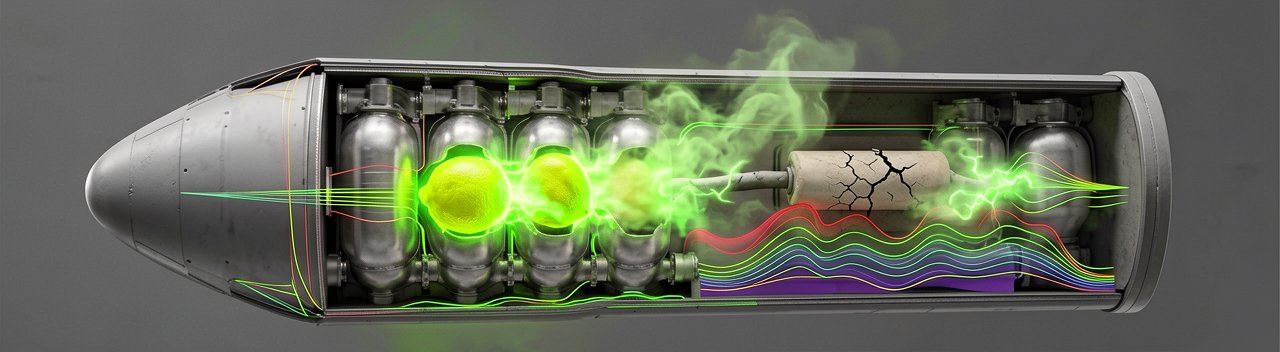
What most surface-level reports miss is the grueling, high-pressure balancing act SpaceX engineers face as they push the limits of reusable rocket architecture. The recurring nature of these upper-stage malfunctions indicates that the issue is likely a subtle systemic vulnerability rather than a series of isolated flukes. While the first-stage boosters get all the glory for their spectacular vertical landings, the expendable second stage relies on a single Merlin Vacuum engine that operates under extreme thermal stress, and any microscopic fracture or pressure loss during its final burns can spell instant disaster for the mission profile.
Industry insiders suggest that the intense push to deploy the heavier, more power-hungry V3 Starlink constellation is testing the structural limits of the Falcon 9's upper stack. This latest iteration of the satellite network requires precise orbital positioning, forcing the second stage to execute multiple complex restarts in harsh thermal environments. For a vehicle that has historically boasted an unmatched safety record, these back-to-back propulsion hiccups are triggering difficult conversations within the engineering teams about whether the rapid cadence of commercial launches is outpacing their rigorous quality control protocols.
The stakes extend far beyond SpaceX’s internal satellite metrics, ripple-effecting across the entire global aerospace sector. Major government and commercial stakeholders, including NASA and commercial crew partners, rely heavily on the Falcon 9 platform to sustain their own orbital operations. A prolonged grounding or a string of unresolved technical red flags could force an unwelcome bottleneck in international space station logistics, leaving astronauts and high-value payloads stranded on the ground while accident investigation boards meticulously pore over telemetry data.
Historically, the aerospace giant has managed to bounce back from technical anomalies with remarkable speed, utilizing its vast data-logging infrastructure to diagnose and patch hardware flaws faster than traditional defense contractors. However, regulatory bodies like the Federal Aviation Administration are adopting a much more conservative stance as low Earth orbit becomes increasingly crowded. The pressure is on for the Hawthorne-based team to implement a definitive hardware fix before these persistent upper-stage failures permanently compromise the reliability reputation of the world's most active launch vehicle.
Reading Between the Lines
The paradox of modern spaceflight is clearly illustrated by a company that can effortlessly deploy a constellation of cutting-edge internet satellites while simultaneously losing control of the very machine that carried them. For years, the aerospace community treated the Falcon 9 as an infallible utility, a cosmic escalator that just worked. Yet, this recent string of upper-stage anomalies exposes a glaring vulnerability in that logic, proving that even a mature rocket system can develop new, unpredictable failure modes when pushed to maintain an unprecedented, near-daily operational tempo.
There is a fascinating contradiction in how these failures are spun to the public versus how they are viewed by industry realists. On paper, the mission is clocked as a success because the payloads made it out of the fairing before the second stage gave up the ghost. But in the unforgiving realm of orbital mechanics, a rocket stage that fails its deorbit burn or suffers an uncontained pressure loss is a ticking time bomb. Labeling a flight a total success when the delivery truck explodes in the driveway after dropping off the packages is a PR luxury that regulatory agencies simply cannot afford to indulge.
The long-term implications of this systemic stutter will inevitably reshape the competitive landscape of the commercial launch market. Rivals who have spent the last decade eating SpaceX’s dust are watching this vulnerability with intense interest, sensing a rare opening to court risk-averse commercial satellite operators. If the Federal Aviation Administration feels compelled to impose stricter, more drawn-out investigations for every upper-stage hiccup, the legendary manifest that once promised dozens of launches a month could quickly face a suffocating backlog.
Ultimately, these stumbles serve as a cold, sobering reminder that scaling up space infrastructure is not merely a software optimization problem. You cannot simply patch a physical propellant line or a cracked engine nozzle with an over-the-air update while the vehicle is screaming through the upper atmosphere. The engineering team must now choose between maintaining their breakneck deployment schedule or stepping back to fundamentally redesign a component that they thought they had mastered a decade ago.
"It turns out that building an interplanetary railroad still requires dealing with the occasional blown gasket, proving that no matter how many times you stick the landing on Earth, physics will always find a way to humble you the second your back is turned in orbit."
Artūras Malašauskas is an AI Systems Integrator with 20+ years of production-grade web engineering experience. He has designed, shipped, and scaled enterprise Python/PHP systems for logistics, SaaS, and public-sector clients. For the past year, he has focused exclusively on AI integrations: deploying open-source LLMs, building generative media pipelines (image, audio, video), and engineering multi-agent workflows for real production environments. His standard: reproducibility, security, cost-efficient inference—no vaporware. He documents and evaluates emerging AI tooling, separating verified capabilities from marketing noise. Technical editor at: muza-ai.eu, ai-verslas.lt, ai-naujinos.lt Connect on LinkedIn
Comments