Nintendo Surprises Fans with a Free Retro Super Mario Drop Alongside Major Hardware and Software Launches
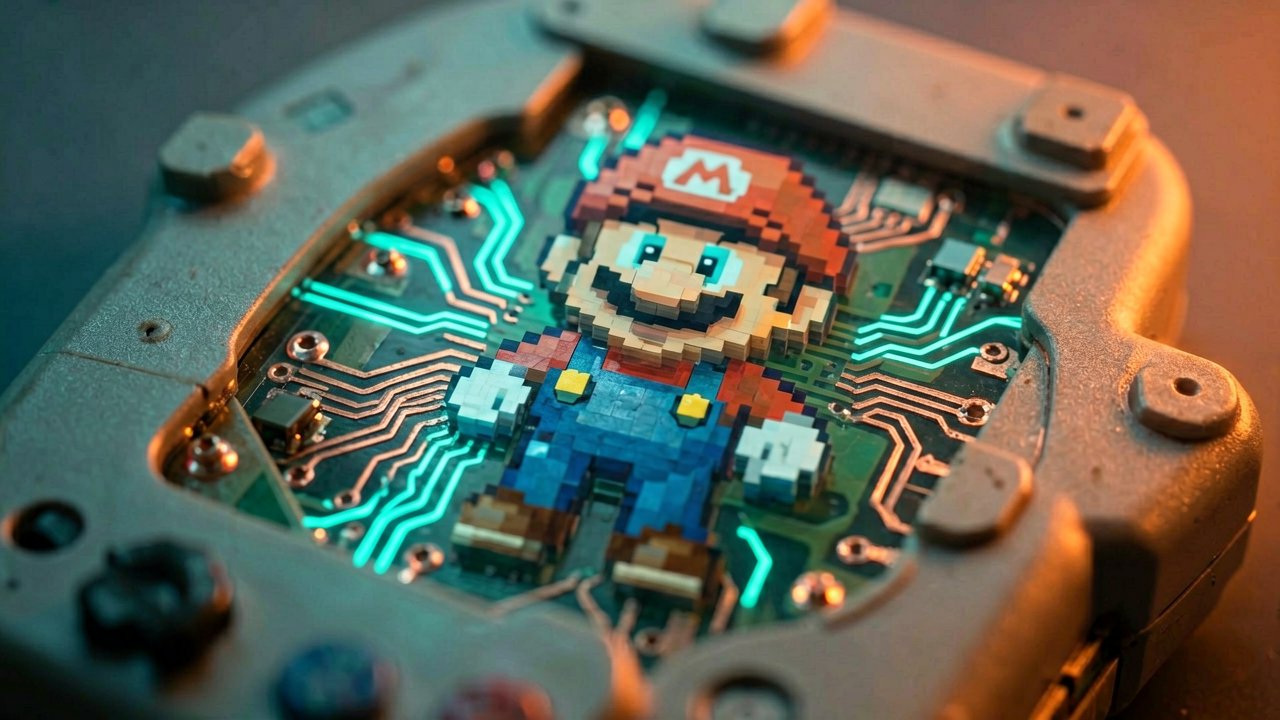
Nintendo has officially executed a classic stealth drop, releasing a beloved retro Super Mario experience completely free of charge to tie into its latest massive product launch wave. In a strategic move clearly engineered to capitalize on generational nostalgia, the Japanese gaming giant is utilizing its most iconic mascot to channel immediate consumer energy toward its newest hardware and software ecosystem. It is an old-school marketing playbook executed with modern digital precision, giving fans a reason to fire up their consoles immediately while eyeing the company's latest premium offerings.
Rather than letting a standard corporate broadcast do all the heavy lifting, the company chose this synchronized rollout to seamlessly bridge its storied past with its ambitious commercial future. The surprise offering serves a dual purpose: it rewards the brand's incredibly loyal community while acting as a high-visibility onboarding ramp for the freshly unveiled hardware lineup. It is exactly the kind of crowd-pleasing stunt that keeps the brand at the center of the gaming conversation, ensuring that every headline discussing their latest premium gear also carries a note of goodwill.
Nostalgia as a Modern Launch Engine
According to an analysis by GAMINGbible, this clever distribution strategy leverages existing membership frameworks to reward players while stoking interest in the broader hardware ecosystem. By leaning heavily into retro appeal, the strategy positions legacy content not just as simple digital archives, but as an active catalyst for modern ecosystem growth. It is a subtle reminder of the unmatched strength of their intellectual property library, which remains an incredibly effective tool for driving hardware adoption and digital subscriptions.
By pairing a zero-cost retro classic with premium hardware announcements, a brilliant consumer narrative is created. It softens the financial sticker shock of new ecosystem upgrades by providing immediate, emotionally resonant value on day one. Historically, the brand has excelled at using these retro incentives to stabilize engagement during transitional hardware cycles, proving that nostalgia is often the most effective tool for maintaining long-term player retention.
Behind the Corporate Playbook: This stealth-drop strategy highlights a sophisticated shift in how legacy gaming giants manage the lifecycle of their intellectual property. Historically, premium retro content was locked tightly behind modern paywalls or sold as standalone physical remakes. By uncoupling a classic Super Mario experience from a direct price tag, decision-makers are treating their foundational history as high-utility marketing capital rather than a simple revenue stream. This approach reflects a deep understanding of modern digital ecosystems, where initial player friction must be reduced to near zero to secure long-term attention in a crowded media landscape.
Industry insiders view this deployment as a calculated move to stabilize user engagement during a critical transitional phase for the platform. When a company rolls out major new hardware configurations and premium software titles simultaneously, consumer attention frequently splinters, or worse, pauses out of financial caution. A free, immediate digital reward acts as a universal bridge, drawing cautious consumers back into the official ecosystem while generating the organic social media momentum that paid advertising campaigns rarely achieve on their own.
From a stakeholder perspective, the tactical value of the Mario brand cannot be overstated. While newer franchises face the constant hurdle of proving their market viability, classic platformers carry decades of built-in trust across multiple generations of players. Utilizing a legacy asset to anchor a high-stakes hardware launch mitigates the inherent risks of introducing expensive new products. It ensures that even if consumers hesitate to purchase the latest premium gear immediately, they remain actively engaged with the brand environment, keeping the corporate ecosystem vibrant and highly visible.
The Evolving Mechanics of the Digital Ecosystem
This rollout also highlights the increasing reliance on subscription frameworks and digital storefront infrastructure to sustain hardware momentum. Delivering a surprise title seamlessly across global networks requires an established, robust digital pipeline that can handle sudden spikes in traffic without faltering. By routing this release through existing digital channels, management effectively tests and demonstrates the agility of its online infrastructure during a period of peak public interest, reinforcing the value proposition of its ongoing digital services.
Ultimately, this launch model sets a compelling precedent for how legacy publishers might navigate the delicate balance between nostalgia and innovation moving forward. It proves that a company's past does not have to compete with its future; instead, the two can coexist in a mutually beneficial loop where old victories actively fund and popularize new ventures. As platform ecosystems become increasingly interconnected, the brands that master this art of generational bridging will likely command the most sustainable consumer loyalty in the years ahead.
Reading Between the Lines: While the public narrative surrounding this surprise drop centers on goodwill and community celebration, a more cynical appraisal reveals a defensive maneuver disguised as corporate generosity. The timing of this free release is far from accidental; it serves as a highly effective distraction from the escalating price points of modern gaming ecosystems. By offering a slice of the past for free, corporate strategists neatly redirect the discourse away from the creeping costs of new hardware and the subscription models required to access the company's full digital catalog. It is a masterclass in using nostalgia as a cultural shield against consumer fatigue.
Furthermore, this tactical deployment exposes a fascinating contradiction in the publisher’s long-term business model. The company frequently zealously guards its historical library, aggressively shutting down fan-made emulation projects and pricing bare-bones ports at premium rates. Yet, when a major product launch demands immediate market attention, those same fiercely protected retro assets are suddenly treated as disposable loss-leaders. This selective devaluation of their own history suggests that legacy content is valued less as enduring art and more as an emergency lever to bolster quarterly engagement metrics when the stakes are high.
Looking ahead, this reliance on decades-old intellectual property to anchor cutting-edge hardware launches raises serious questions about the sustainability of the industry's creative pipeline. Iterative hardware upgrades require groundbreaking software to truly justify their existence to the average consumer. Relying on the familiar charm of a decades-old plumber to smooth over a transition into a new hardware generation may offer a short-term boost, but it ultimately signals a reluctance to let new, unproven concepts lead the charge into the future.
The Real Cost of Free Nostalgia
As the digital landscape becomes increasingly saturated with subscription services and live-service platforms, the definition of a "free game" continues to warp. Players are rarely just consuming content; they are trading their behavioral data, their network bandwidth, and their finite attention span within a proprietary storefront. This specific retro drop ensures that even the most casual fans are forced to navigate the updated digital interface, exposing them to targeted advertisements and pre-order prompts for the new premium lineup. The free entry point is simply the first step in a highly optimized monetization funnel.
Ultimately, this launch structure proves that the gaming industry's future remains deeply shackled to its past. While competitors chase hyper-realistic graphics and complex artificial intelligence, the market leader continues to find its greatest success in the simple, low-resolution mechanics of the 1980s and 1990s. This dynamic creates a comfortable safety net for executives, but it may inadvertently stifle the very innovation that the newly launched hardware promises to deliver, leaving players trapped in a beautifully rendered loop of perpetual childhood memories.
Nothing says 'welcome to the cutting edge of interactive entertainment' quite like realizing the most reliable way to sell a sophisticated piece of 21st-century hardware is to give away a forty-year-old game that ran perfectly well on a microchip weaker than a modern electronic toothbrush.
Artūras Malašauskas is an AI Systems Integrator with 20+ years of production-grade web engineering experience. He has designed, shipped, and scaled enterprise Python/PHP systems for logistics, SaaS, and public-sector clients. For the past year, he has focused exclusively on AI integrations: deploying open-source LLMs, building generative media pipelines (image, audio, video), and engineering multi-agent workflows for real production environments. His standard: reproducibility, security, cost-efficient inference—no vaporware. He documents and evaluates emerging AI tooling, separating verified capabilities from marketing noise. Technical editor at: muza-ai.eu, ai-verslas.lt, ai-naujinos.lt Connect on LinkedIn
Comments