Open Source Overhaul and Orbital Ambitions: Parsing Musk’s Massive Tech Shakeup
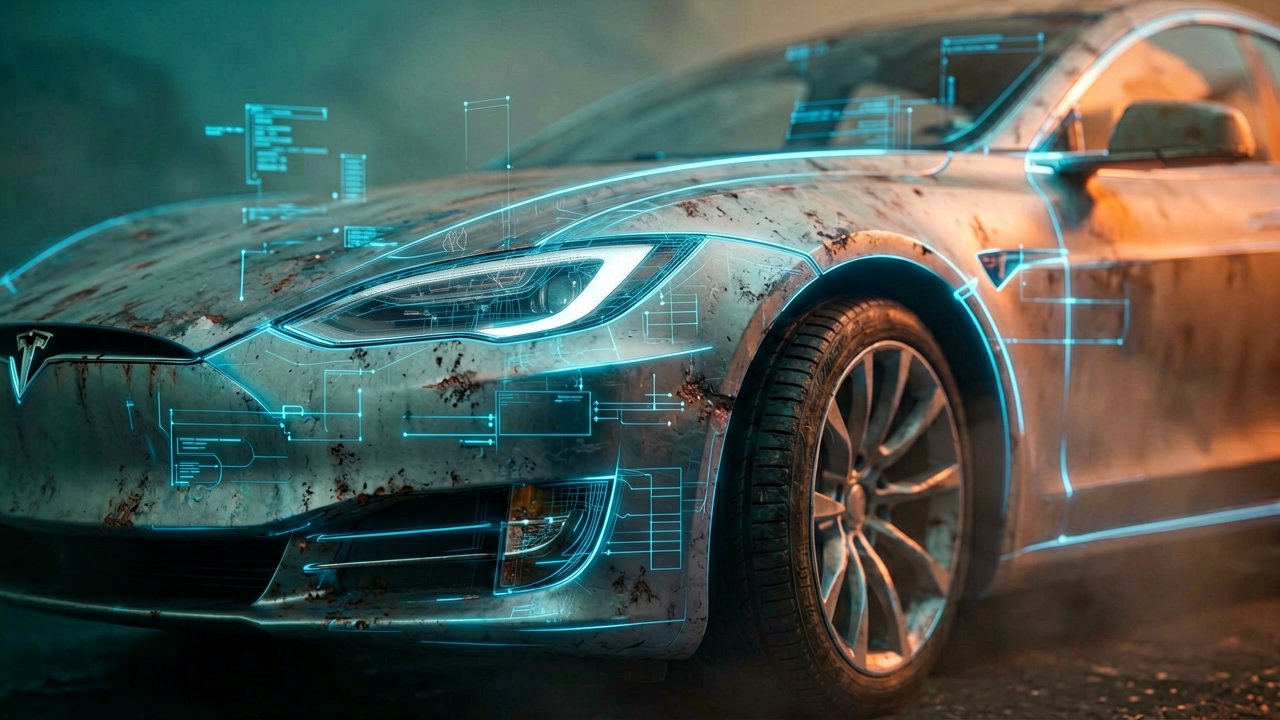
Elon Musk pulled off one of his signature multi-industry news blitzes, delivering a double-whammy announcement that aims to fundamentally alter both automotive legacy maintenance and the immediate timeline for commercial space travel. In a series of public updates, the tech billionaire confirmed that Tesla plans to open-source the underlying software and design blueprints for its flagship Model S and Model X vehicles. Simultaneously, his aerospace venture, SpaceX, kept the momentum at a fever pitch by executing another critical Starship test flight from its Starbase facility in Texas, signaling an aggressive push toward orbital refilling operations and interplanetary timelines.
The decision to open up the Model S and Model X ecosystem mirrors the playbook Tesla utilized for the original Roadster. As production of these foundational luxury electric vehicles approaches its twilight, releasing the CAD drawings, engineering data, and core software stack provides a fascinating lifeline to the aftermarket community. According to community perspectives shared on platforms like X, this maneuver effectively passes the torch to independent developers, enthusiast owners, and non-Tesla service centers, ensuring long-term maintenance and modification capabilities without requiring corporate bottleneck approvals. Cynics might view this as a convenient way for Tesla to sunset legacy software support obligations, but for the broader electric vehicle movement, it democratizes a highly sophisticated automotive architecture that defined the modern EV era.
The Fast Track to Mars
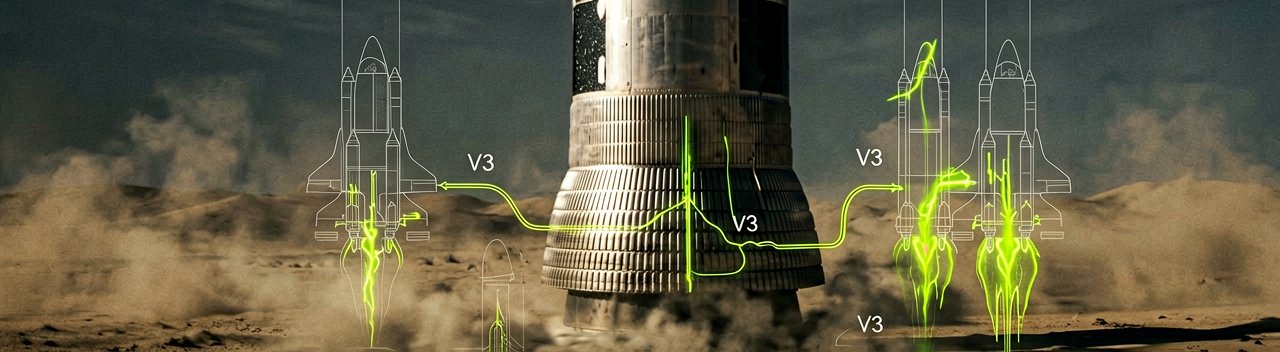
While Tesla is opening its digital vault, SpaceX is busy hammering away at physical milestones in the Texas desert. The recent launch of the mega-rocket, packed with advanced Starlink satellites, acts as a live-fire demonstration of the Version 3 hardware paradigm. By pushing the boundaries of the Raptor V3 engines, the aerospace firm is actively laying the groundwork for uncrewed Mars demonstration windows. It is a high-stakes timeline where every successful booster catch and telemetry log directly influences investor confidence and NASA’s broader lunar ambitions.
This coordinated sweep serves as a reminder of how seamlessly Musk bridges his disparate corporate entities to command the tech narrative. By introducing open-source transparency on the automotive front while accelerating structural launch cadences in aerospace, the overarching strategy targets systemic industry inertia. The technical blueprints are hitting the public domain just as the next generation of megarockets clears the launchpad, forcing competitors across both sectors to react to a rapidly moving baseline.
Decoding the Open-Source Strategy and Orbital Endgame
Beneath the Headline-Grabbing Sweep: The technical underpinnings of this dual announcement reveal a strategic alignment of resource allocation that few industry observers anticipated. By unlatching the intellectual property gates of the Model S and Model X platforms, Tesla is quietly mitigating a massive engineering headache. Maintaining software compatibility, sourcing legacy mechanical components, and providing global servicing for vehicles that utilize architectural standards over a decade old strains corporate resources. Handing the keys over to the open-source community frees up Tesla’s core software teams to focus entirely on Next-Gen platforms and Full Self-Driving computing stacks, turning a potential liability into a public relations victory for right-to-repair advocates.
Independent repair networks and hardware modification communities have long fought a losing war against proprietary automotive software locks. This open-source transition shifts the power dynamic completely. Engineering firms can now dissect the structural choices of the Model X’s falcon-wing doors or the Model S’s battery management systems without fear of litigation. This level of access will likely catalyze a new wave of third-party component manufacturing, extending the operational lifespan of these vehicles long after corporate software support officially terminates. However, legacy automakers viewing this as a template for their own sunsetting strategies may struggle, as few possess a community passionate enough to maintain an ecosystem independently.
Over on the Gulf Coast, the blistering pace of the Starship launch program presents an entirely different set of operational calculations. Reaching orbit and deploying payloads is no longer the primary hurdle; the true bottleneck for Mars colonization remains orbital refueling. A single deep-space transit requires a fleet of tanker Starships launching in rapid succession to fill a single vehicle's tanks in low Earth orbit. The latest flight test represents a deliberate step toward mastering this volatile fluid dynamics challenge under extreme thermal and gravitational stress. Every launch brings SpaceX closer to proving that a fully reusable heavy-lift infrastructure can operate with the cadence of a commercial airline.
The regulatory and environmental chess match occurring behind the scenes adds another layer of complexity to the Texas launches. The Federal Aviation Administration and local conservation groups continue to scrutinize the ecological footprint of Starbase’s massive water-deluge systems and noise profiles. By sustaining a high-frequency launch schedule despite these pressures, SpaceX is betting that technological progress will outpace bureaucratic inertia. The data gathered from the upgraded Starship architecture validates the company's philosophy of iterative design, where hardware failures are treated as necessary stepping stones rather than catastrophic setbacks.
Ultimately, these simultaneous maneuvers reshape how modern tech conglomerates dictate industry standards. Tesla is setting an unprecedented baseline for automotive transparency, while SpaceX is effectively monopolizing the heavy-lift launch sector by making rapid reusability a reality rather than a theoretical goal. The ripple effects of this week's announcements will be felt for years, forcing both the automotive industry and global space agencies to adapt to an era where legacy frameworks are continually dismantled in favor of rapid, unchecked engineering evolution.
The Calculus of Altruism and Atmospheric Friction
Reading Between the Lines: It is highly critical to separate corporate philanthropy from strategic necessity when evaluating Tesla’s shift toward open-source blueprints. While the narrative presents this as a grand gesture to democratize electric vehicle architecture, a colder financial reality sits just beneath the surface. The Model S and Model X, once the undisputed crown jewels of the premium EV market, now represent a shrinking fraction of Tesla’s global delivery volume. By open-sourcing platforms that have largely run their course commercially, the company effectively offloads the mounting costs of legacy hardware support and software maintenance to a decentralized network of enthusiasts. It is an ingenious way to declare a victory for the right-to-repair movement while quietly sunsetting a logistical burden.
This open-source maneuver also introduces a glaring contradiction into Musk's overarching corporate philosophy. While the hardware blueprints and software stacks of these older vehicles are being handed out for free, Tesla continues to guard its Full Self-Driving (FSD) architecture behind an iron curtain of proprietary algorithms and data monopolies. The message is conflicting: the physical chassis and battery configurations are public domain, but the digital brain that defines the vehicle's future value remains strictly locked away. This selective transparency suggests that the open-source initiative is less about universal access and more about cleaning out the corporate attic to make room for automated robo-taxi networks.
Meanwhile, the breakneck velocity of the Starship flight schedule reveals a different kind of calculation, one where regulatory friction and engineering realities threaten to collide. The rapid iteration of Starship hardware is a masterclass in aggressive manufacturing, yet it relies on a high-risk gamble that orbital refueling mechanics will work flawlessly on an unprecedented scale. Pushing a massive rocket to orbital velocities and attempting complex propellant transfers in zero gravity leaves very little margin for error. The commercial viability of the entire Starship program hinges on achieving a launch cadence that the aerospace industry has never seen before, putting immense pressure on supply chains and launchpad turnarounds.
The implications of this dual-front strategy will ripple across both sectors for the next decade. Legacy automakers will be forced to reconsider how they handle their own aging electric vehicle fleets, potentially choosing between expensive long-term component manufacturing or following Tesla’s lead into open-source abandonment. In the aerospace sector, SpaceX’s relentless launch cadence is rapidly turning into an existential threat for traditional defense contractors and international space agencies, who find themselves entirely outpaced by a company that views structural explosions merely as valuable telemetry data.
"We are witnessing a fascinating corporate paradox where the keys to yesterday's electric kingdom are handed out for free, while the ticket to the next planet requires keeping a multi-ton rocket from blowing up on the pad—proving once again that in the modern tech ecosystem, the only thing more expensive than innovation is legacy maintenance."
Artūras Malašauskas is an AI Systems Integrator with 20+ years of production-grade web engineering experience. He has designed, shipped, and scaled enterprise Python/PHP systems for logistics, SaaS, and public-sector clients. For the past year, he has focused exclusively on AI integrations: deploying open-source LLMs, building generative media pipelines (image, audio, video), and engineering multi-agent workflows for real production environments. His standard: reproducibility, security, cost-efficient inference—no vaporware. He documents and evaluates emerging AI tooling, separating verified capabilities from marketing noise. Technical editor at: muza-ai.eu, ai-verslas.lt, ai-naujinos.lt Connect on LinkedIn
Comments