Bridging the Physical Gap: ACE Robotics Unveils Kairos 3.1 Embodied AI Stack at WAIC 2026
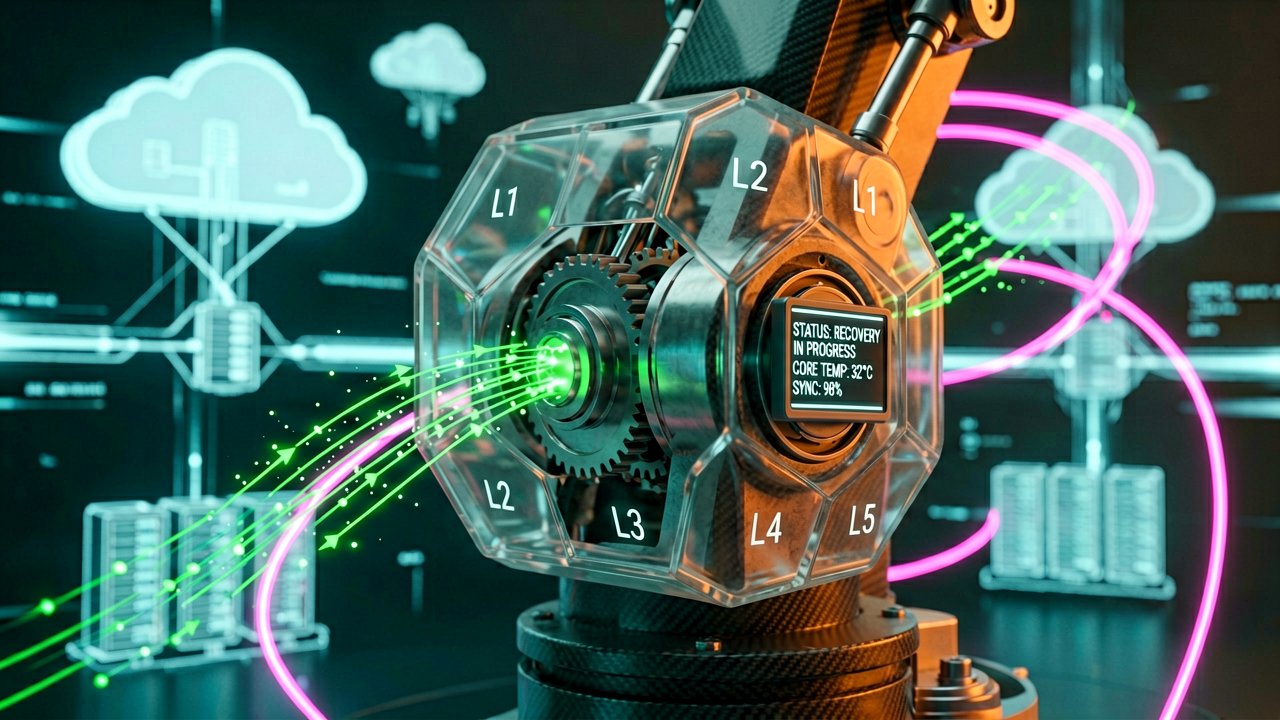
The transition of embodied artificial intelligence from controlled laboratory environments to unpredictable, real-world deployment has long been stymied by the extreme costs of kinetic trial and error. At the 2026 World Artificial Intelligence Conference (WAIC) in Shanghai, Ace Robotics addressed this foundational challenge by unveiling its Enlightenment World Model 3.1, branded as Kairos 3.1. This comprehensive embodied AI stack integrates high-density environmental data collection with real-world execution hardware, aiming to establish a standardized operational foundation for self-evolving physical intelligence.
Historically, robotic automation relied on highly structured environments or narrowly defined task parameters, leaving hardware vulnerable to immediate failure when faced with edge cases. By deploying Kairos 3.1 alongside the Environmental Data Collection Solution 2.0 (Ambient Capture Engine 2.0), the company introduces an architecture designed to systematically collect, catalog, and deploy multimodal physical data. According to details shared via Yahoo Finance , this approach explicitly focuses on action-oriented world modeling to reduce the severe physical and financial consequences of operational mistakes inherent to real-world environments.
Strategically, this launch signals an aggressive pivot by industrial AI vendors away from fragmented hardware platforms toward unified, full-stack ecosystems. By consolidating data collection pipelines, multi-level pre-training models, and localized deployment runtimes into a single commercial platform, developers can bypass the complex task of stitching together disparate hardware and software components. This structural shift is designed to dramatically lower entry barriers for enterprise automation while accelerating commercialization cycles across competitive logistics, hospitality, and retail sectors.
Data Stratification and the Self-Corrective Engineering Loop
The core capability of the Kairos 3.1 architecture rests upon an intricate five-level data stratification framework. While traditional automation systems primarily ingest broad pre-training datasets (L1 and L2) or known task-specific behaviors (L3 and L4), the highest tier utilized by this stack incorporates open-environment variables. As reported by Tech Times, this L5 data integrates three-dimensional force signals, tactile feedback, and explicit failure-recovery trajectories. Training models on comprehensive failure-recovery loops enables autonomous hardware to generalize corrective behaviors, such as dynamically shifting an unstable physical grip mid-execution rather than suffering an outright operational failure.

Commercial Specialization and Vertical Scenarios
To demonstrate immediate market utility, the company introduced three distinct commercial hardware solutions tailored to specific, demanding verticals. The Xiao Man variant is custom-engineered for convenience store and instant retail settings, while the Xiao Xin model is configured for localized guest interactions within the hospitality industry. Additionally, the Xiao Tu system operates as an adaptable, highly decoupled platform designed to integrate seamlessly onto various third-party quadruped robot bodies. This multi-pronged hardware rollout highlights a clear market strategy to monetize specialized, fine-tuned edge models across a diverse array of physical form factors.
Infrastructure Collaboration and the Standardization Push
Recognizing the massive cloud infrastructure required to sustain multi-modal world-model training, the company launched the World Model Cloud Ecosystem initiative. This foundational coalition unites major cloud computing providers, including Baidu AI Cloud, Alibaba Cloud, Huawei Cloud, Tencent Cloud, and SenseCore AI Cloud, to support localized execution loops. Furthermore, to move past isolated vendor telemetry, a broad consortium of academic and industrial partners established a unified evaluation framework called the Physical IQ benchmark. This standard aims to measure real-world performance metrics, addressing critical industry-wide gaps such as the correlation between simulated model planning and actual physical hardware execution.
Behind the Scenes: The Engineering Trade-offs of Physical World Modeling
The race to commercialize embodied AI has forced a critical reckoning regarding data efficiency and computational overhead at the edge. While large language models thrive on internet-scale textual data, physical robots require high-fidelity spatial and tactile telemetry that cannot simply be scraped from the web. By introducing the Ambient Capture Engine 2.0 alongside Kairos 3.1, developers are attempting to solve the "sim-to-real" dilemma by capturing high-density real-world interactions. However, industry insiders note that processing three-dimensional force signals and multi-modal tactile feedback in real time places immense strain on localized edge processors, forcing engineers to balance model parameter size against strict latency constraints.
From a stakeholder perspective, the creation of the World Model Cloud Ecosystem reveals a deeper geopolitical and industrial shift. For cloud giants like Alibaba Cloud, Baidu AI Cloud, and Huawei Cloud, partnering with an embodied AI stack provider is less about supporting robotics hardware and more about securing future dominance over high-throughput industrial cloud pipelines. Training world models that accurately predict physical trajectories requires specialized decentralized infrastructure. This collaborative push indicates that the next major battlefield for cloud infrastructure providers will not be generative text or image rendering, but the continuous, low-latency processing of physical world telemetry.

The decision to split the hardware rollout into highly specialized form factors—such as the Xiao Man for retail and the Xiao Xin for hospitality—reflects a tactical departure from the concept of a single, omnipotent humanoid robot. While general-purpose humanoids capture public imagination and dominate venture capital pitches, seasoned automation engineers argue that vertical specialization is the only viable path to near-term profitability. By decoupling the core AI stack and deploying it onto task-specific hardware, or even third-party quadruped frames via the Xiao Tu configuration, the platform minimizes mechanical complexity and focuses computational resources strictly on solving environmental edge cases unique to each commercial sector.
Ultimately, the long-term viability of the Kairos 3.1 stack relies on the industry-wide adoption of the newly proposed Physical IQ benchmark. Historically, robotics manufacturers have evaluated proprietary systems using internal, non-standardized metrics, making objective comparisons impossible for enterprise buyers. By establishing a unified evaluation framework backed by both academic institutions and industrial cloud partners, the consortium is attempting to build institutional trust. Establishing an open, verifiable standard for physical task execution is a critical step toward shifting embodied AI from an expensive experimental novelty into a predictable, insurable enterprise utility.
Reading Between the Lines: The Friction Point of Unified Frameworks
The strategic promise of a unified data-to-deployment stack invariably clashes with the messy reality of fragmented industrial hardware. While the Kairos 3.1 architecture attempts to position itself as a universal operating layer for physical intelligence, it glosses over the inherent contradictions of standardizing software across wildly diverse mechanical architectures. A software stack can optimize its inference latency to 125 milliseconds, but that programmatic speed matters very little if a third-party actuator lacks the hydraulic responsiveness or torque density to execute the corrective trajectory. By detaching algorithmic evolution from strict mechanical co-design, the platform risks creating an advanced digital brain that remains fundamentally bottlenecked by legacy physical limbs.
Furthermore, the reliance on a five-tier data stratification model introduces a steep economic paradox for early enterprise adopters. Collecting L5 open-environment failure data requires robots to encounter, fail at, and recover from real-world tasks in active commercial spaces. This operational paradigm expects paying customers to tolerate the liabilities, safety risks, and operational downtime associated with an AI "self-evolving" on their retail or warehouse floors. The market is being asked to fund the R&D pipeline of embodied AI providers under the guise of buying a finished automation solution, a dynamic that is bound to alienate risk-averse logistics and hospitality managers.
Even the heavily promoted World Model Cloud Ecosystem reveals a fragile structural compromise rather than a seamless industry alliance. Uniting bitter cloud rivals under a single initiative speaks to the staggering computational demands of training multi-modal physical models, demands so vast that no single provider can comfortably internalize the financial risk. However, history demonstrates that consortia built between fierce infrastructure competitors rarely survive the transition from high-level benchmarking to granular commercial deployment. As proprietary data pipelines begin to cross competing cloud borders, data sovereignty disputes and competing edge-compute standards will likely fragment the unified ecosystem long before the Physical IQ benchmark achieves widespread regulatory status.
"We have spent decades dreaming of the day robots would seamlessly blend into our workplaces, only to discover that the hardest part isn't teaching an artificial intellect how to gracefully handle an unexpected obstacle—it's convincing a corporate legal department to sign off on a machine that learns how to succeed by practicing how to fail in front of the customers."
Artūras Malašauskas is an AI Systems Integrator with 20+ years of production-grade web engineering experience. He has designed, shipped, and scaled enterprise Python/PHP systems for logistics, SaaS, and public-sector clients. For the past year, he has focused exclusively on AI integrations: deploying open-source LLMs, building generative media pipelines (image, audio, video), and engineering multi-agent workflows for real production environments. His standard: reproducibility, security, cost-efficient inference—no vaporware. He documents and evaluates emerging AI tooling, separating verified capabilities from marketing noise. Technical editor at: muza-ai.eu, ai-verslas.lt, ai-naujinos.lt Connect on LinkedIn
Comments