AGIBOT Steals the Spotlight at WAIC 2026 with a Bold Four-Robot Offensive
The conversation around hardware autonomy is shifting rapidly from controlled laboratory proof-of-concepts to brute-force industrial scaling, and there's no better evidence than what just went down in Shanghai. Shanghai-based robotics powerhouse AGIBOT dominated the floor at the World Artificial Intelligence Conference (WAIC) 2026, dropping a massive fleet update that includes a new commercial humanoid alongside three highly specialized machines. Rather than focusing on single-purpose showpieces, the hardware lineup targets the realities of continuous factory deployment and public service automation.
It's a calculated flex from a company that recently announced its 15,000th unit rolling off the production line. By introducing a multi-tiered architecture that spans commercial platforms, heavy industrial labor, and hyper-precise manipulation, the Chinese hardware player isn't just trying to beat western competitors on paper. They're trying to outbuild them on the factory floor, focusing heavily on continuous deployment, modular architectures, and hot-swappable energy systems designed to prevent costly operational downtime.
The A3 Ultra Leads the Charge
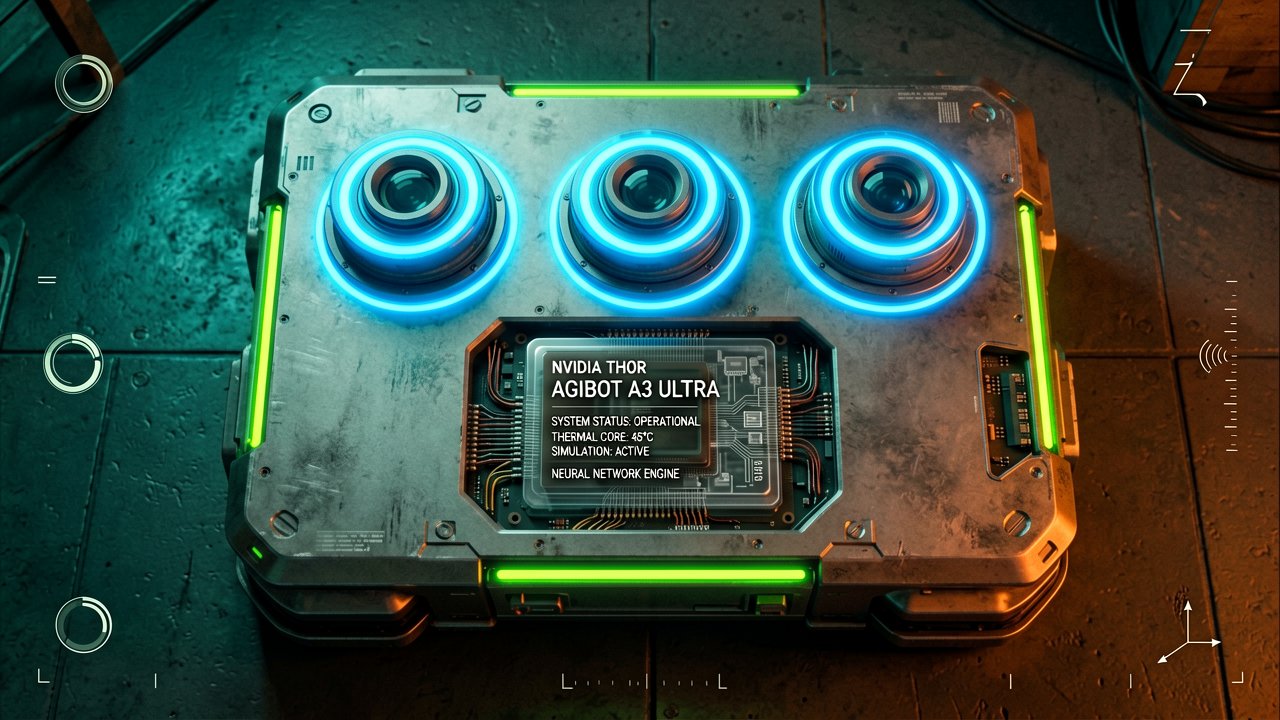
The clear centerpiece of the showcase is the AGIBOT A3 Ultra, a full-size humanoid designed to clock full work shifts in public-facing and commercial environments. Standing 1.74 meters tall and weighing 60 kilograms, the machine boasts 51 active degrees of freedom and an impressive eight-hour operating time supported by battery-swapping capabilities. To survive the unpredictable chaos of commercial spaces, AGIBOT packed the biped with a heavy sensor suite featuring 3D LiDAR, RGB-D vision, and binocular cameras. High-level processing tasks are handled by the Interesting Engineering detailed NVIDIA Thor platform, ensuring the machine can navigate around dense crowds without dropping its payload.
Heavy Payloads and Dexterous Hands
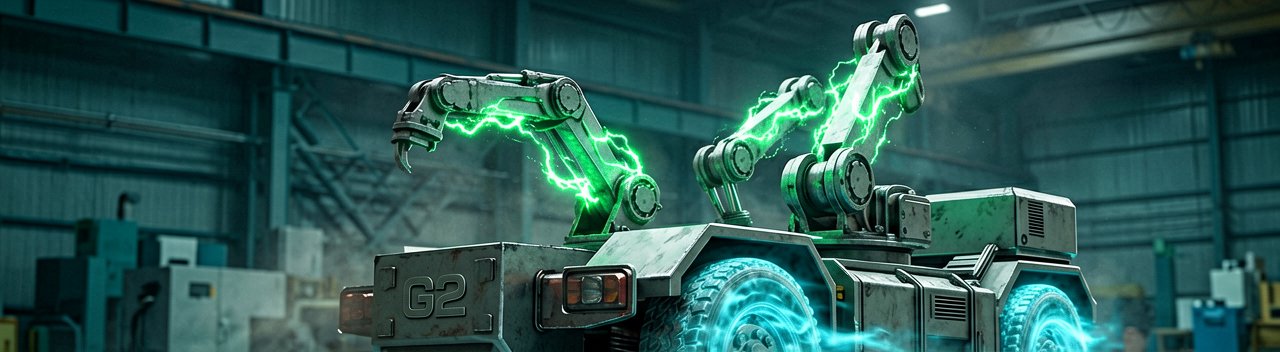
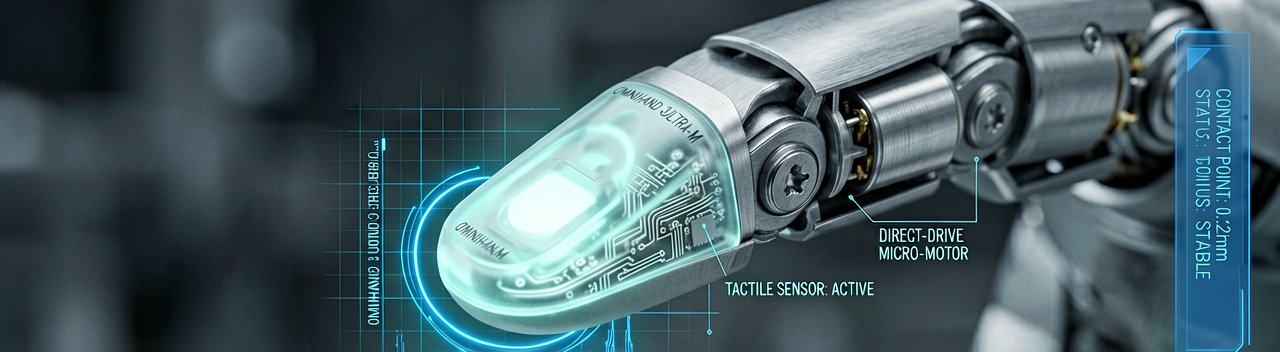
For operations where bipedal balance is more of a liability than an asset, the company unveiled the G2 Max, a heavy-payload, wheel-based industrial robot built for material handling and warehouse palletizing. It features force-controlled arms and an adjustable working height to easily mesh with preexisting factory assembly configurations. On the opposite end of the physical spectrum sits the OmniHand 3 Ultra-M, a 630-gram dexterous robotic hand featuring 20 active degrees of freedom and vision-based tactile arrays embedded into the fingertips. According to a product release detailed by AGIBOT, the direct-drive hand is sensitive enough to manage contact-rich manipulation tasks while maintaining a repeatability precision of plus or minus 0.2 millimeters.
An Open Platform for Research
Rounding out the hardware blitz is the X2 Edu, a 1.3-meter-tall humanoid platform built specifically for academic research and secondary development. With 29 degrees of freedom and a fully modular hardware architecture, the machine can be entirely disassembled and reconfigured by engineers testing custom sensors or novel end-effectors. It's a strategic move to secure the developer pipeline as the company pushes further into physical automation. Rather than waiting for the research community to build its own hardware, AGIBOT is providing a highly flexible sandbox to accelerate the development of future foundation models.
The Hidden Engineering Gamble
Behind the Scenes: The massive four-robot rollout at WAIC 2026 isn't just a routine hardware refresh; it represents a fundamental pivot in how Agibot approaches the physics of embodied AI. For the past three years, the industry has been locked in an algorithmic arms race, with companies assuming that smarter AI foundation models would automatically compensate for fragile physical chassis. Agibot's new lineup flips that script by prioritizing extreme mechanical tolerance and physical redundancy over sheer computing power. Engineers on the floor noted that the A3 Ultra’s internal wiring harnesses and actuator cooling systems were completely overhauled to withstand the thermal stress of continuous eight-hour shifts, a major bottleneck that usually forces research-grade humanoids into the repair bay after less than an hour of sustained movement.
This aggressive push toward industrial readiness is a direct response to growing impatience from manufacturing consortiums in eastern China. Warehouse operators and automotive assembly lines have grown weary of "laboratory tech demo" humanoids that require a dedicated team of software engineers just to keep balanced. By shifting to modular bipedal configurations like the X2 Edu and introducing the wheel-based G2 Max for raw heavy lifting, Agibot is effectively diversifying its risk. They are acknowledging that while humanoids capture headlines and investor dollars, specialized wheeled platforms remain the practical workhorses capable of generating immediate cash flow to fund long-term bipedal research.
The crown jewel of this technical pivot is the OmniHand 3 Ultra-M, which addresses the notorious "last centimeter" problem in robotic manipulation. Historically, building a robotic hand that is both rugged enough to handle heavy industrial components and sensitive enough to pick up fragile objects has been a materials science nightmare. Agibot bypassed traditional tendon-driven designs, which are prone to snapping and require frequent recalibration, in favor of a direct-drive micro-motor system embedded right into the knuckles. Paired with vision-based tactile sensors in the fingertips, the hand can dynamically adjust its grip pressure in real-time, matching the subtle, intuitive adjustments a human worker makes when transitioning from grabbing a steel wrench to picking up an electronic chip.
Industry analysts view this massive multi-product drop as a direct shot across the bow for both domestic rivals and western developers like Figure and Boston Dynamics. By flooding the market simultaneously with an educational platform, an industrial lift-assistant, a commercial humanoid, and an advanced end-effector, Agibot is attempting to establish its proprietary operating ecosystem as the default standard for the next decade of automation. If academic institutions train the next generation of engineers on the X2 Edu, and factory floors deploy the G2 Max, the broader industry becomes locked into Agibot's software architecture, creating a powerful economic moat that will be incredibly difficult for competitors to breach.
The Reality Check for Autonomous Labor
Reading Between the Lines: The dazzling spectacle of four distinct robotic platforms executing flawless routines on a conference floor masks a much harsher economic reality. While Agibot’s aggressive hardware diversification looks impressive on paper, maintaining four separate supply chains for highly complex, low-yield machines is an operational nightmare. The robotics industry is notoriously plagued by the "pilot purgatory" trap, where companies successfully deploy dozens of impressive prototypes but hit a brick wall when attempting to scale production into the thousands. By stretching its engineering talent across humanoids, wheeled industrial carts, and specialized end-effectors all at once, Agibot risks spreading its resource base too thin before any single platform establishes true market dominance.
Furthermore, the heavy reliance on the NVIDIA Thor platform highlights a glaring geopolitical vulnerability that the slick marketing materials conveniently ignore. As trade restrictions and export controls continue to tighten, tethering high-end humanoid autonomy to Western-designed silicon puts Chinese robotics firms on shaky ground. Agibot’s ambitious promise of real-time crowd navigation and dynamic object manipulation depends entirely on continuous access to this cutting-edge compute. Should supply lines constrict, these advanced bipedal machines risk being downgraded overnight into incredibly expensive, over-engineered statues running on underpowered local alternatives.
There is also a profound contradiction between Agibot's marketing of the modular X2 Edu platform and the cutthroat nature of industrial automation. The company pitches the educational biped as an open sandbox for research, hoping to crowdsource software solutions from global engineers. However, the industrial sector does not run on open-source goodwill; it runs on ironclad reliability, proprietary security, and strict liability compliance. Convincing a major automotive manufacturer to deploy a fleet of bipedal robots whose core operational models are being patched together by university research labs is an incredibly tough sell, especially when a standard, predictable robotic arm can already do ninety percent of the job without the risk of falling over.
Ultimately, the true test for Agibot will not be measured by standing ovations in Shanghai, but by the cold, unfeeling metrics of factory uptime and return on investment. Replacing a human worker with a humanoid robot only makes financial sense if the machine requires less maintenance and training than the person it replaces. Until these platforms can operate for months on end without an elite squad of hardware technicians hovering just out of frame, the embodied AI revolution will remain a highly subsidized luxury rather than an industrial inevitability.
"We are repeatedly told that these multi-million-dollar humanoids are poised to liberate humanity from the drudgery of factory work, yet every live demonstration still requires three top-tier software engineers standing by just to make sure the mechanical savior doesn't accidentally pick a fight with a structural pillar."
Artūras Malašauskas is an AI Systems Integrator with 20+ years of production-grade web engineering experience. He has designed, shipped, and scaled enterprise Python/PHP systems for logistics, SaaS, and public-sector clients. For the past year, he has focused exclusively on AI integrations: deploying open-source LLMs, building generative media pipelines (image, audio, video), and engineering multi-agent workflows for real production environments. His standard: reproducibility, security, cost-efficient inference—no vaporware. He documents and evaluates emerging AI tooling, separating verified capabilities from marketing noise. Technical editor at: muza-ai.eu, ai-verslas.lt, ai-naujinos.lt Connect on LinkedIn
Comments