Project44 Restructures Global Operations, Launching AI-Native Standalone Unit LSP44 to Automate Freight Management
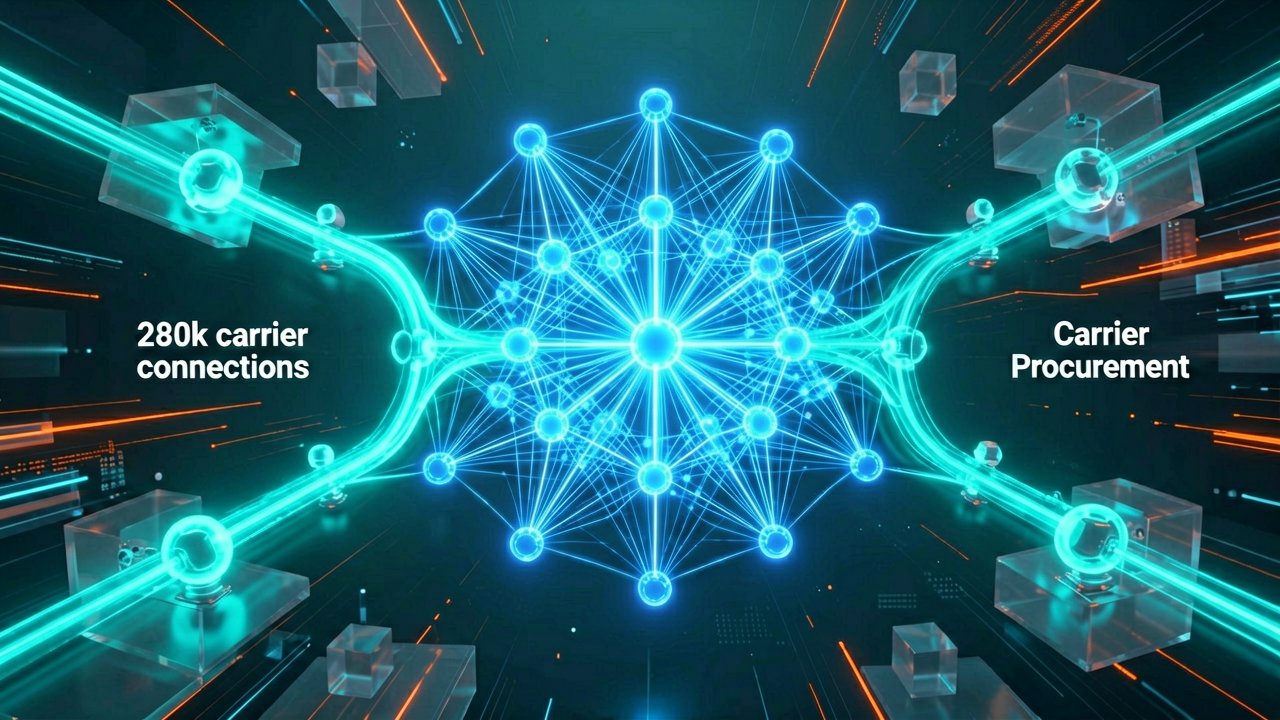
Supply chain visibility titan project44 has announced a major strategic restructuring, splitting its operations into two distinct commercial entities. The original corporate business will continue to focus exclusively on enterprise shippers by operating as a Decision Intelligence Platform. Concurrently, the company is spinning off its third-party logistics and broker-facing technologies into a standalone, AI-native infrastructure entity called LSP44 to capture the rapidly evolving automated freight management market, as reported by FreightWaves.
The operational split targets a fundamental commercial reality: enterprise shippers and logistics service providers (LSPs) operate on entirely different business priorities and transactional frameworks. Shippers traditionally focus on long-term outcomes like improving on-time, in-full (OTIF) metrics, optimizing working capital, and reducing overstock inventory. Conversely, third-party logistics firms, freight forwarders, and brokers require tools that maximize high-volume transaction speeds, such as executing more dispatches with fewer manual touches and sourcing capacity at optimal spot rates, according to an interview in Logistics Management.
By establishing two independent product roadmaps and go-to-market organizations under the continued executive leadership of CEO Jett McCandless, the restructure solves sales friction without fracturing structural data integrity. Both individual businesses will continue to sit on top of a shared, underlying data backbone comprised of over 280,000 carrier connections and billions of historic transit signals. This deep data graph allows the newly independent companies to deliver contextualized workflows tailored to their respective buyer segments, noted by Dealroom.
Market Context and Strategic Imperatives
The creation of LSP44 represents a calculated competitive defense against a crowded field of venture-backed logistics startups seeking to disrupt traditional freight brokerages with generative artificial intelligence. However, unlike newly emerged competitors that frequently burn capital to establish initial product-market fit, LSP44 enters the sector with immediate financial stability. The specialized entity claims day-one profitability, a factor that provides significant assurance to risk-averse logistics enterprises embedding third-party code directly into core execution architectures.
Driving Efficiencies with Agentic Infrastructure
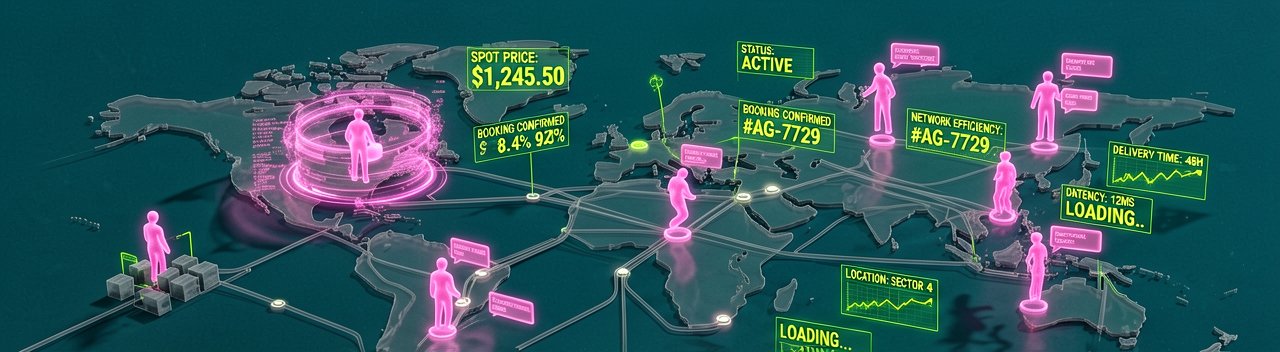
The technology suite under LSP44 transitions standard logistics workflows from passive observation to autonomous execution. Rather than simply alerting tracking teams to shipping delays, the platform leverages specialized AI agents designed to handle immediate operational tasks. These automated workflows manage carrier procurement, spot quoting, booking confirmation, document processing, and freight audit settlements. Early performance data points to substantial efficiency gains, with internal metrics showing an 18% cost reduction in carrier procurement alongside a 60% drop in routine tracking phone calls.
Positioning for Public Markets
This organizational unbundling positions project44's broader ecosystem for potential public market deployment as macroeconomic tailwinds shift. By operating with clean, segment-specific customer acquisition costs and dedicated engineering groups, both businesses optimize their operational margins independently. The corporate division retains full oversight over transport management, yard orchestration, and e-commerce tracking software for enterprise shippers. Meanwhile, LSP44 solidifies its role as a specialized developer-grade infrastructure engine, paving a clear financial path toward a prospective public offering when institutional tech IPO windows fully open.
The Hidden Fault Lines of Logistics Automation
Reading Between the Lines: The celebratory rollout of LSP44 as a day-one profitable, AI-native savior overlooks a glaring contradiction in the broader supply chain tech narrative. For years, the visibility sector claimed that unifying shippers, carriers, and brokers onto a single, monolithic network was the only way to cure global supply chain fragmentation. This sudden operational divorce is an implicit admission that the grand corporate dream of a single, all-encompassing logistics network has failed under its own weight. By physically separating the shipper and provider platforms, the company concedes that cross-network data sharing is not a natural byproduct of a unified database, but an expensive technical friction point that corporate buyers are increasingly unwilling to subsidize.
Furthermore, branding LSP44 as an AI-native entity masks a more pragmatic corporate reality regarding data utility. While autonomous agents that can theoretically handle spot quoting, carrier procurement, and freight auditing sound revolutionary on paper, their real-world efficacy relies entirely on the quality of legacy data inputs. The global shipping industry remains notoriously plagued by manual paperwork, missing tracking signals, and bad data formatting from smaller regional carriers. Throwing advanced machine learning models at a broken data pipeline does not magically fix the underlying pipeline; it simply automates the speed at which errors are propagated across a freight broker's back office.
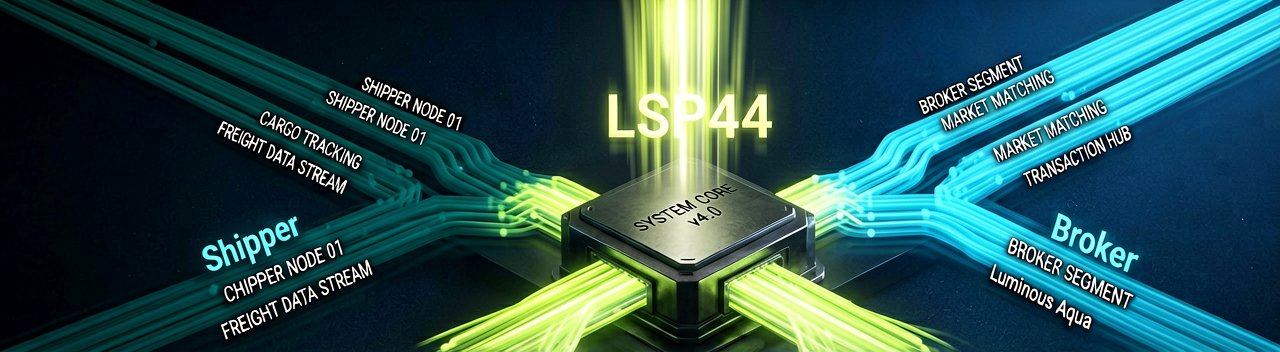
This restructuring also reveals an aggressive pivot toward financial engineering that may ultimately clash with actual software development. Splitting into two distinct corporate entities creates immediate administrative duplicates, separating engineering groups and doubling down on distinct management layers at a time when the market is demanding lean operations. While this clean separation makes the company's financial books look highly attractive to Wall Street underwriters eyeing a prospective public market debut, it risks siloing the very engineering breakthroughs that made the parent company a market leader. If the shipper-facing division and the broker-facing LSP44 stop sharing their core algorithmic advancements, the overall competitive advantage of their shared data backbone will rapidly erode.
Ultimately, the long-term viability of this corporate gamble hinges on whether conservative freight forwarders are truly ready to surrender operational control to autonomous software. Third-party logistics providers operate in a relationship-driven industry built on personal trust, manual negotiation, and human intervention during port strikes or weather crises. Replacing these human touchpoints with an automated infrastructure engine assumes that efficiency is the only metric that matters to a logistics executive. If these AI agents fail to navigate the messy, unpredictable realities of global border crossings and carrier disputes, LSP44 may find that it has built a highly sophisticated software engine for an industry that still secretly prefers a phone call and a spreadsheet.
Moving the entire global supply chain onto autonomous AI agents sounds like an absolute logistical paradise, right up until a rogue algorithm accidentally routes three hundred containers of perishable bananas to a freezing warehouse in North Dakota and politely files the automated insurance claim under the wrong tax identification number.
Artūras Malašauskas is an AI Systems Integrator with 20+ years of production-grade web engineering experience. He has designed, shipped, and scaled enterprise Python/PHP systems for logistics, SaaS, and public-sector clients. For the past year, he has focused exclusively on AI integrations: deploying open-source LLMs, building generative media pipelines (image, audio, video), and engineering multi-agent workflows for real production environments. His standard: reproducibility, security, cost-efficient inference—no vaporware. He documents and evaluates emerging AI tooling, separating verified capabilities from marketing noise. Technical editor at: muza-ai.eu, ai-verslas.lt, ai-naujinos.lt Connect on LinkedIn
Comments