StepFun Leaps Ahead of Apple and OpenAI with the World’s First True ‘Agentic’ AI Smartphone
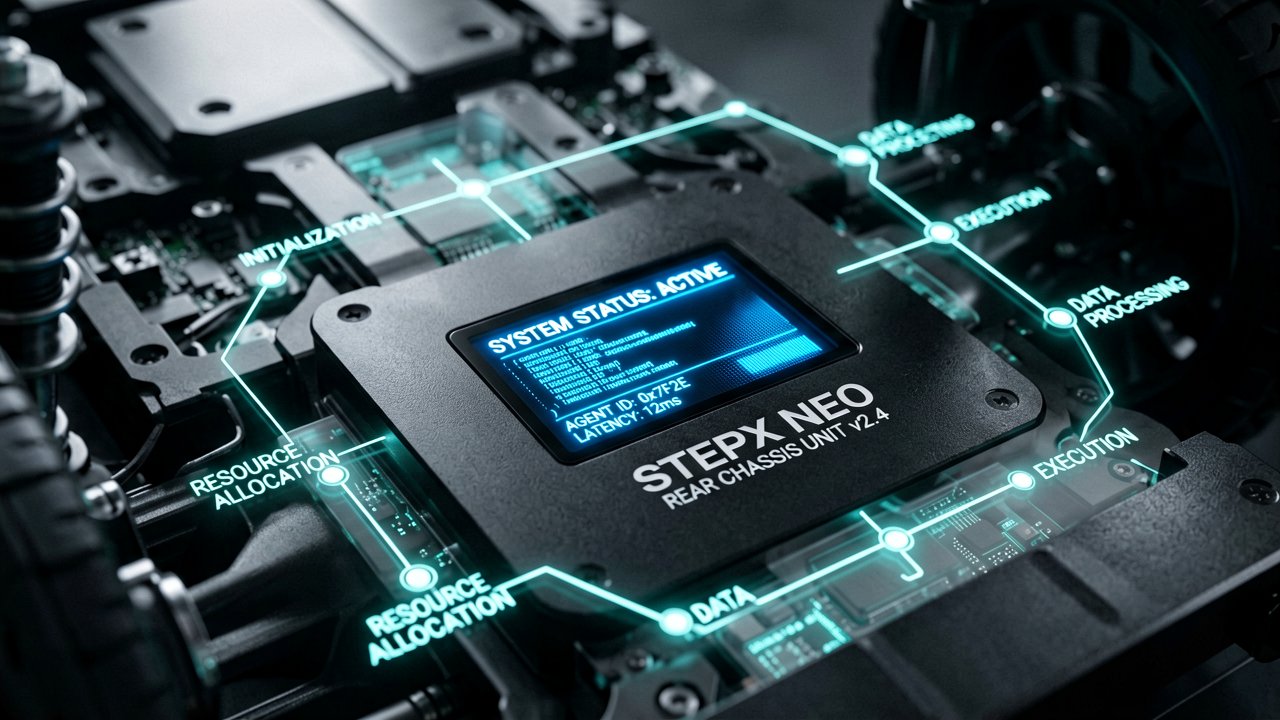
The race to build a smartphone natively powered by artificial intelligence just got completely upended by an unexpected challenger. Chinese AI startup StepFun took the tech world by surprise at a Shanghai launch event by officially unveiling the StepX Neo, proudly heralding it as the world’s first native agentic AI smartphone. By integrating an autonomous AI agent deeply within its underlying architecture rather than slapping on another basic chatbot app, this sleek new terminal has claimed a major hardware milestone right out from under the noses of Silicon Valley heavyweights like Apple and OpenAI.
Founded by former Microsoft executives, the Shanghai-based unicorn is taking a fundamentally different path from the current mobile establishment. While western tech giants are busy trickling out incremental cloud-dependent software updates, the StepX Neo runs on a proprietary ecosystem called Step AOS. According to a product deep-dive by Beebom, the platform reengineers Android, Linux, and real-time operating system (RTOS) layers to give its central intelligence direct, native control over hardware and workflows. The star of the show is an on-device personal AI agent named Amoo, which can autonomously bypass traditional application barriers to execute multi-step tasks—like booking rides via Didi, making digital payments through Alipay, or organizing trips—all from a single spoken command.
A Paradigm Shift From App Grids to Open Conversations
What makes this device particularly fascinating is how it handles the heavy lifting of modern generative workflows. Rather than sending every single interaction to a distant data center, StepFun employs a hybrid architecture that pairs an on-device language model called Step Edge with massive cloud models for complex operations. As reported by Gadgets360, this design allows the smartphone to handle basic automation entirely offline, giving users immediate privacy and significantly faster response times. The phone also leans into its AI-first identity on the hardware side, sporting a secondary dot-matrix display on its rear shell that explicitly flashes interactive animations whenever the AI agent is actively processing a request.
The Reality Check Behind the Hype
Of course, any hardware announcement of this magnitude deserves a healthy dose of editorial skepticism. While StepFun has undeniably stolen the first-mover headline away from OpenAI's heavily rumored consumer hardware project, the StepX Neo is currently more of a bold tech demonstration than a retail reality. Analysts over at GSMArena have pointed out that the company remains tight-lipped regarding hard specifications, pricing data, or a concrete global release schedule. However, by securing early local ecosystem partnerships with massive Chinese web services like Baidu, Meituan, and Ctrip, StepFun has proven that the future of mobile tech is rapidly shifting away from standard icon grids and evolving into unified, ambient conversations.

What Most Reports Miss: The Invisible Blueprint of the Autonomous Mobile
Behind the Tech Curtain: The rush to declare a winner in the AI hardware race often overlooks the profound engineering pivot required to move from cloud-based applications to native, on-device intelligence. StepFun’s sudden leap ahead is not merely a triumph of product design, but a direct result of a tectonic shift in operating system philosophy. For over a decade, modern smartphones have acted as highly polished gatekeepers to isolated, sandboxed applications. By dismantling these digital silos at the operating system layer, the StepX Neo introduces a computational framework where the AI agent does not just interact with apps on behalf of the user, but effectively absorbs their functional capabilities into a singular, cohesive workflow.
Industry insiders note that this structural overhaul addresses a massive, lingering bottleneck currently plaguing Western tech giants. While Apple struggles to slowly roll out its localized intelligence features due to stringent privacy guardrails and fragmented hardware optimization, StepFun has capitalized on a highly unified domestic app ecosystem. In China, super-apps like WeChat and Alipay already handle everything from social networking to banking and municipal services. By securing deep API integrations with these foundational pillars right out of the gate, StepFun circumvented the immense developer-adoption hurdles that typically doom alternative mobile operating systems, allowing their AI agent to achieve immediate, real-world utility.
However, this paradigm shift introduces a complex web of geopolitical and economic stakes that seasoned tech analysts are watching closely. StepFun’s breakthrough highlights a growing divergence in the global AI landscape, where Chinese firms, restricted from accessing the latest cutting-edge Western semiconductor hardware, are forced to innovate aggressively on software efficiency and hybrid model architectures. The reliance on the Step Edge model for offline tasks demonstrates a masterful orchestration of limited local compute. Yet, this model also places StepFun squarely in the crosshairs of global regulatory scrutiny regarding data sovereignty, user privacy, and the ethical boundaries of autonomous agents making financial transactions without explicit, step-by-step human intervention.
Reading Between the Lines: The Hype, the Hardware, and the Mirage of Autonomy
Reading Between the Lines: The breathless proclamation of a new mobile era ignores a glaring, uncomfortable contradiction at the heart of the StepX Neo launch. StepFun has loudly championed its "agentic" smartphone as a liberating departure from the traditional app store monopoly, yet the device remains utterly dependent on the very platforms it claims to transcend. An AI agent is only as capable as the digital infrastructure it can access. If a third-party service updates its interface or restricts its API access, the agent's autonomy instantly breaks down, reducing a revolutionary computational terminal back to an expensive piece of glass and silicon.

This vulnerability exposes the inherent risk of trusting a nascent startup with the foundational layers of daily digital life. Tech history is littered with beautifully designed hardware novelties that promised to kill the app grid, only to be crushed by the realities of developer indifference and consumer habit. While StepFun’s deep ties to the domestic Chinese tech ecosystem provide a temporary shield, scaling this model internationally presents a near-insurmountable wall. Silicon Valley giants like Apple and Google may move with agonizing, bureaucratic slowness, but they hold the ultimate trump card: global distribution networks and the entrenched trust of billions of users who are historically hesitant to hand over their banking credentials to an unproven autonomous assistant.
Furthermore, the industry's rush toward local, on-device AI introduces a sustainability paradox that few hardware manufacturers care to discuss. Operating heavy hybrid language models natively on a smartphone demands an unprecedented amount of thermal dissipation and battery performance. StepFun’s clever use of a secondary dot-matrix display to signal processing activity might look charmingly futuristic, but it is also a stark reminder of the massive energy consumption happening just beneath the chassis. Until battery chemistry undergoes a breakthrough as radical as generative AI itself, the dream of an omnipresent, zero-latency digital butler will continue to run headfirst into the cold reality of a dead phone by lunchtime.
"We were promised a future where artificial intelligence would free us from the tyranny of our screens, but it seems the immediate reality is a phone that merely replaces the exhaustion of endless scrolling with the quiet anxiety of watching a digital agent drain your bank account and your battery at double the speed."
Artūras Malašauskas is an AI Systems Integrator with 20+ years of production-grade web engineering experience. He has designed, shipped, and scaled enterprise Python/PHP systems for logistics, SaaS, and public-sector clients. For the past year, he has focused exclusively on AI integrations: deploying open-source LLMs, building generative media pipelines (image, audio, video), and engineering multi-agent workflows for real production environments. His standard: reproducibility, security, cost-efficient inference—no vaporware. He documents and evaluates emerging AI tooling, separating verified capabilities from marketing noise. Technical editor at: muza-ai.eu, ai-verslas.lt, ai-naujinos.lt Connect on LinkedIn
Comments