Doceree Bridges the Gap Between Mainstream LLMs and Specialized Medical Data with New ChatGPT and Claude Connectors

The enterprise generative AI market is shifting from general knowledge retrieval to hyper-specialized vertical intelligence. In a significant move for healthcare technology, Doceree has launched new generative AI connectors that seamlessly integrate its clinical intelligence network directly into OpenAI's ChatGPT and Anthropic's Claude. Announced alongside its broader pharma commercial operating system, Daily Command, these connectors allow healthcare professionals and life sciences teams to extract real-time clinical insights without abandoning their preferred conversational AI interfaces.
Historically, medical data and pharmaceutical insights have remained siloed within proprietary platforms due to strict compliance requirements and the complex nature of clinical tracking. By introducing native integrations for mainstream large language models (LLMs), Doceree addresses a critical point of friction for medical practitioners who rely on tools like ChatGPT for daily administrative or analytical support. This development surfaces specialized data directly within general-purpose environments, reducing workflow fragmentation and accelerating care-related decision-making.
Strategic Market Implications and Ecosystem Evolution
Doceree's strategic expansion highlights a broader trend where industry-specific identity graphs and real-time signal layers are becoming the vital infrastructure powering general AI models. The connectors run on Doceree's proprietary network, utilizing clinical intent tracking tech to capture behavioral indicators as healthcare decisions happen. Rather than training entirely new foundation models from scratch, B2B platforms are increasingly positioning themselves as intelligent data pipelines that enhance existing market leaders like Anthropic and OpenAI.
Expert Commentary on Verticalized AI Infrastructure
From a market perspective, this architecture represents a victory for workflow consolidation. Enterprise professionals resist adopting fragmented standalone tools; instead, they demand that specialized intelligence come to them. By turning Claude and ChatGPT into compliant conduits for verified clinical insights, Doceree circumvents the traditional hurdle of platform fatigue in healthcare. This infrastructure setup signals a mature phase of corporate AI adoption, where the value lies not in the underlying LLM itself, but in the proprietary, real-time data connections that feed it.
The Technical and Regulatory Blueprint of Clinical AI Connectors
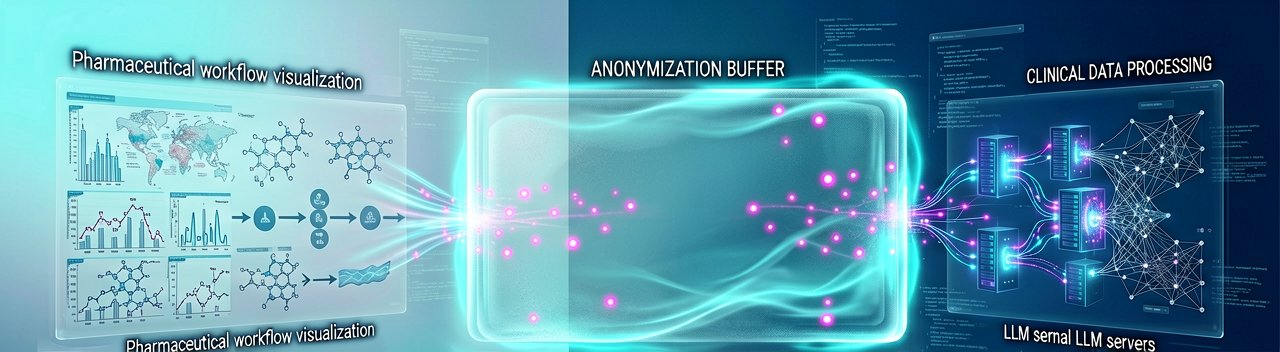
Behind the Tech Layer: The deployment of specialized connectors for ChatGPT and Claude represents a fundamental engineering pivot away from the standard retrieval-augmented generation architectures that dominate current enterprise software. Traditionally, integrating healthcare data into consumer-facing conversational models required custom API layers or isolated, fine-tuned instances that suffered from latency and lacked real-time adaptability. Doceree's approach introduces a dynamic, context-aware routing layer that interprets a medical professional's prompt, queries an encrypted clinical identity graph, and appends compliant, real-time insights to the LLM's context window. This architecture ensures that sensitive data points are handled through secure pipeline mechanisms, minimizing the risk of exposure while maximizing accuracy.
The operational reality of healthcare environments means that accuracy is tied directly to legal and clinical compliance. General-purpose models, while fluent, are notorious for hallucinations—a flaw that is entirely unacceptable when dealing with pharmaceutical prescribing behaviors or patient care pathways. By anchoring mainstream engines to verified datasets, these connectors serve as a real-time validation layer. They filter the LLM's natural language output against strict clinical parameters, ensuring that the actionable intelligence presented to life sciences teams is grounded in factual industry trends rather than algorithmic statistical guesswork.
From an industry stakeholder perspective, this integration addresses a long-standing impasse between pharmaceutical commercial teams and IT security compliance officers. Pharmaceutical marketers and medical science liaisons have historically been blocked from using public generative AI tools due to data privacy laws like HIPAA and global data sovereignty regulations. This pipeline architecture allows enterprise teams to safely leverage advanced reasoning capabilities because it acts as an anonymizing buffer. It strips personally identifiable information before standard prompts reach external LLM servers, effectively opening the floodgates for safe generative AI adoption across the highly restricted life sciences sector.
The broader macroeconomic implication for healthcare technology is a rapid devaluation of raw data in favor of real-time accessibility. For years, tech vendors built competitive moats by hoarding vast repositories of static medical data, but the AI era has proven that data volume is meaningless without seamless workflow integration. Platforms that build the best connective tissue between consumer-grade user interfaces and specialized back-end data networks will capture the majority of market share. This shift forces legacy healthcare networks to modernize their distribution strategies or risk complete obsolescence as practitioners naturally gravitate toward tools that fit invisibly into their existing digital habits.

The Hidden Frictions of Democratizing Clinical AI
Reading Between the Lines: The promise of seamlessly injecting clinical intelligence into general-purpose LLMs obscures a fundamental contradiction in enterprise AI strategy. While bringing specialized data to mainstream chat interfaces solves user adoption friction, it creates an ongoing dependency on foundational infrastructure that Doceree does not control. Relying on external models from OpenAI and Anthropic introduces a volatile variable into highly regulated healthcare environments. Sudden API updates, algorithmic drift, or abrupt changes to data-handling policies by these tech giants can instantly degrade the reliability of custom connectors, forcing healthcare IT teams into a continuous cycle of patch management and compliance re-validation.
Furthermore, this integration model exposes a deep tension regarding data sovereignty and competitive positioning within the healthcare tech ecosystem. Doceree positions its connectors as secure, anonymizing buffers, yet the boundary line between closed enterprise data and public LLM training cycles remains notoriously porous over the long term. Even if immediate prompts are stripped of proprietary data, the contextual usage patterns, aggregate clinical queries, and structural workflows of medical professionals represent highly valuable behavioral signals. Over time, foundation model developers could easily reverse-engineer these vertical workflows, eventually rendering middle-layer enterprise connectors redundant as their own models inherently adapt to medical domain specificities.
There is also an unspoken risk of over-reliance on conversational interfaces for complex, high-stakes medical decision-making. Chat interfaces excel at narrative summary but are fundamentally poor at displaying multi-dimensional statistical data, rigorous scientific variables, and the absolute audit trails required by pharmaceutical compliance officers. Forcing highly nuanced clinical intelligence into the simplified constraints of a chat window creates a dangerous illusion of certainty. If the underlying mainstream LLM confidently misinterprets a deeply complex medical variable routed from the clinical network, the consequences go far beyond a standard software bug—they directly threaten the integrity of data pipelines that guide patient-centric commercial strategies.
The ultimate irony of modern enterprise software is that after spending billions of dollars attempting to build unassailable, proprietary data fortresses, the entire tech sector is now eagerly wiring the keys directly into ChatGPT just to save users from the exhausting task of clicking an extra tab.
Artūras Malašauskas is an AI Systems Integrator with 20+ years of production-grade web engineering experience. He has designed, shipped, and scaled enterprise Python/PHP systems for logistics, SaaS, and public-sector clients. For the past year, he has focused exclusively on AI integrations: deploying open-source LLMs, building generative media pipelines (image, audio, video), and engineering multi-agent workflows for real production environments. His standard: reproducibility, security, cost-efficient inference—no vaporware. He documents and evaluates emerging AI tooling, separating verified capabilities from marketing noise. Technical editor at: muza-ai.eu, ai-verslas.lt, ai-naujinos.lt Connect on LinkedIn
Comments