Regulatory Pressures Force Human Oversight Pivot: Analyzing uRecruits 2.0 and the Future of AI Hiring
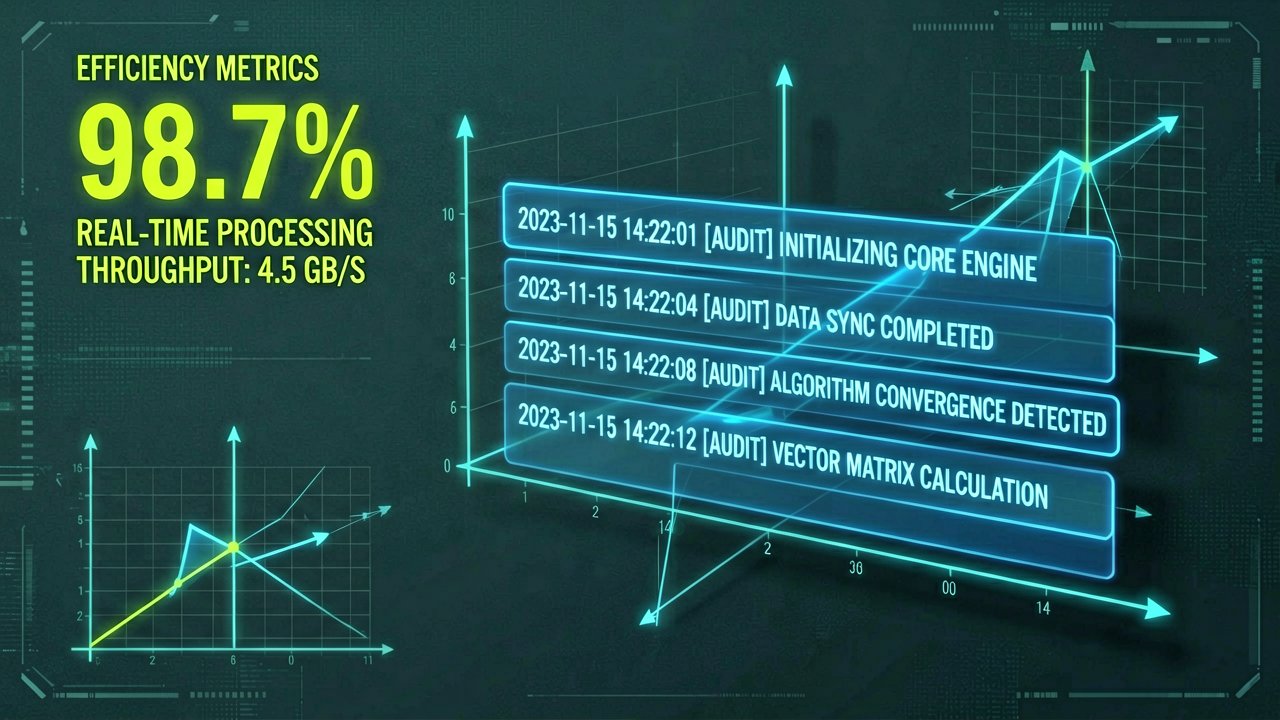
Hiring platforms are undergoing a structural shift as global AI regulations tighten around automated talent acquisition. The mandate for algorithmic accountability has prompted recruitment platform uRecruits to launch its 2.0 version, explicitly embedding a "human in every decision" into its system architecture. This strategic move highlights a growing industry consensus that automated hiring tools cannot operate entirely on autopilot without exposing organizations to severe legal and financial risks.
The regulatory landscape has shifted from abstract guidelines to strict statutory enforcement. In the United States, state-level mandates like the amended Illinois Human Rights Act require immediate disclosure of AI utilization in screening processes, while New York City continues to enforce local bias audit rules, as noted in updates from Yahoo Finance. Concurrently, the European Union's comprehensive AI framework classifies resume screening, candidate scoring, and predictive shortlisting tools as high-risk systems under Annex III, subjecting providers and employers to strict transparency, data governance, and data quality requirements outlined by Ovidio Suciu.
By shifting away from fully automated rejections and pipeline decisions, tech vendors are trying to future-proof their operations against compliance liabilities and ongoing legal challenges. This analysis explores the technical, operational, and regulatory dynamics driving the human-in-the-loop mandate across the human resources technology sector.
The Architecture of Guarded AI: How uRecruits 2.0 Operationalizes Oversight
The core update in uRecruits 2.0 strips automated systems of final decision-making power, ensuring that algorithms function purely to assist rather than decide. Under this framework, AI agents handle administrative duties, score candidate profiles, and coordinate candidate assessments across a single consolidated record. However, the system explicitly omits any automated mechanism capable of rejecting a candidate or moving them to the next phase without human intervention. According to platform updates on TechrSeries, only a designated recruiter can advance an applicant, and interview panels must supply written feedback before any profile progresses through the talent pipeline.
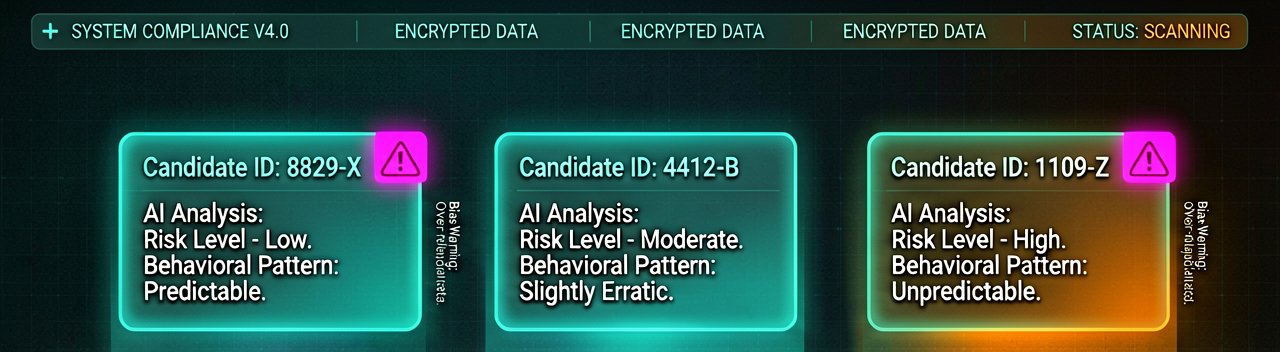
To enforce accountability, the platform employs role-based access controls paired with continuous, timestamped activity logs. These logs provide an immutable audit trail, tracking every automated recommendation alongside the specific human approval action. This setup directly targets compliance with high-risk system obligations, which require organizations to maintain transparent, traceable logs that prove human managers are critically evaluating algorithmic suggestions rather than rubber-stamping them. Furthermore, the company's Responsible AI Program aims to introduce explainable scoring models, providing plain-language text to detail exactly how an algorithm calculated a specific candidate match or evaluation score.
Mitigating Algorithmic Bias and Class-Action Liability
The technical restructuring of hiring platforms addresses the persistent issue of algorithmic bias. AI models trained on historical hiring data often replicate or amplify systemic human prejudices, penalizing employment gaps or filtering out candidates based on demographic indicators. By stripping algorithms of the ability to execute autonomous rejections, platform developers establish a human checkpoint capable of identifying and overriding flawed machine patterns. This structure is essential for navigating high-stakes litigation, such as ongoing class-action lawsuits against major HR technology providers that test employer and vendor liability for discriminatory automated screening software.
From an enterprise risk perspective, human-led verification reduces exposure to catastrophic regulatory penalties. Under frameworks like the EU AI Act, compliance failures involving high-risk deployments can lead to substantial fines, scaling up to 15 million euros or 3 percent of a company's global annual turnover, as detailed by the Artificial Intelligence Act Portal. By positioning human recruiters as the final arbiters, enterprises satisfy the legal definitions of meaningful human oversight, protecting their organizations from claims of completely unmonitored automated decision-making.
Operational Efficiency and the Evolution of HR Workflows
While inserting manual checkpoints might seem like it would slow down hiring workflows, early implementation data suggests that unified, human-governed platforms can actually boost operational efficiency. During its beta testing phase, community care organization The DiaBuddy Experience reported a 40 percent reduction in time spent on hiring activities after migrating from disconnected tools to the unified uRecruits architecture, according to reports from Morningstar. Centralizing talent CRM, screening workflows, and applicant tracking into a single system allows human teams to quickly review, validate, or reject AI recommendations without toggling between multiple uncoordinated applications.
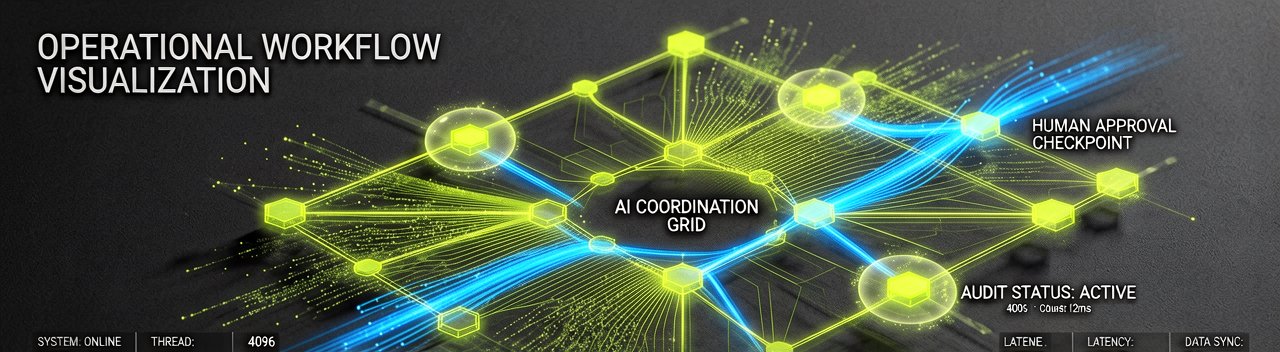
This operational model redefines the relationship between recruiters and enterprise software. Instead of replacing human personnel, AI assumes the burden of high-volume data coordination and initial applicant parsing. Human operators can then dedicate their time to more strategic, nuanced responsibilities, such as evaluating cultural fit, conducting thorough interviews, and addressing complex compliance demands. Ultimately, the successful platforms of this era will not be those that promise total automation, but those that design robust technical boundaries to keep human judgment firmly at the center of the hiring process.
Behind the Scenes of the Oversight Mandate: The Engineering and Legal Friction
The push to reintegrate human judgment into automated talent acquisition reveals a stark contrast between algorithmic engineering and enterprise compliance. For years, software engineers focused on training machine learning models to maximize parsing speed, semantic matching, and predictive efficiency. These systems excelled at processing millions of resumes in seconds, filtering candidates through complex vector embeddings that mapped skills and career trajectories. However, this hyper-focus on optimization inadvertently turned talent pipelines into black boxes, creating models that prioritized pattern replication over contextual equity. Now, engineering teams face the complex task of unwinding autonomous workflows to insert deliberate manual checkpoints without breaking platform performance or frustrating users with clunky, inefficient software.
This technical rewrite is primarily driven by shifting corporate legal strategies. General counsels at major corporations are moving away from full automation because vendor indemnification clauses rarely protect employers from regulatory penalties or discrimination lawsuits. When a hiring tool inadvertently downgrades applicants based on proxy variables, the employer faces direct legal liability under civil rights and labor laws. Corporate risk management teams now demand clear audit trails and manual override features to protect their organizations. This has transformed procurement processes; corporate buyers are no longer looking for the most autonomous, "set-and-forget" software, but are instead prioritizing platforms built around strict human control, transparent scoring models, and clear documentation.
This structural shift is also fundamentally changing the day-to-day role of corporate recruiters. Instead of manually sourcing candidates or, conversely, acting as passive passive observers to an automated pipeline, talent professionals are becoming algorithmic auditors. They must now possess the analytical skills to evaluate why an AI agent flagged a specific candidate profile, spot potential automated bias, and confidently override machine recommendations when necessary. This transformation requires significant upskilling across HR departments, shifting the profession's focus toward data literacy and regulatory compliance. Ultimately, the future of recruitment technology depends on this balance, where software handles the heavy data processing and human professionals retain absolute control over every final employment decision.
Reading Between the Lines: The Performance Paradox of Guarded Automation
The industry-wide pivot toward human-in-the-loop hiring frameworks is frequently framed as a triumph of ethical technology design, yet it introduces a fundamental operational contradiction. Silicon Valley spent a decade convincing enterprise buyers that human recruiters were inherently biased, inconsistent, and painfully slow, offering autonomous algorithms as the objective cure-all. Now, faced with regulatory fines and litigation, vendors are selling the exact opposite narrative: that human judgment is an irreplaceable, infallible safety net. This sudden reversal glosses over a well-documented psychological reality: when human operators are forced to monitor high-volume automated systems, they inevitably fall prey to automation bias, either blindly rubber-stamping machine recommendations or treating algorithmic scores as an absolute truth rather than a suggestive guide.
This reality exposes a structural flaw in platforms that mandate human sign-off while simultaneously boasting about massive efficiency gains. If a platform reduces a recruiting team's administrative workload by forty percent, it usually means human eyes spend far less time evaluating each individual candidate record. A recruiter reviewing hundreds of AI-scored profiles per hour is not providing meaningful, independent oversight; they are acting as a manual button-pusher for the software's pre-determined outcomes. Consequently, the "human checkpoint" risk becoming a legally convenient illusion designed to satisfy regulatory compliance and shield corporations from liability, rather than a genuine defense against systemic algorithmic bias.
Furthermore, this regulatory compliance loop threatens to stifle genuine diversity under the guise of mitigating risk. To avoid multi-million dollar penalties under stringent international frameworks, software developers are inevitably tuning their AI models to be hyper-conservative, filtering out non-traditional resumes and unusual career pivots that might trigger compliance anomalies. When human reviewers then cross-reference these recommendations against highly standardized corporate scoring rubrics, the recruitment pipeline becomes an echo chamber of predictability. The ultimate implication of this heavily guarded hiring ecosystem is a landscape where technology and human compliance officers work in perfect, risk-averse harmony to ensure that only the most formulaic, easily defensible candidates ever make it to an interview panel.
"We have successfully journeyed from humans making biased hiring decisions, to algorithms automating those same biased decisions at scale, to a future where humans are legally mandated to supervise the algorithms while they make them. Efficiency may fluctuate and compliance costs will certainly rise, but at least corporate liability can now be comfortably shared between the engineering department and the HR desk."
Artūras Malašauskas is an AI Systems Integrator with 20+ years of production-grade web engineering experience. He has designed, shipped, and scaled enterprise Python/PHP systems for logistics, SaaS, and public-sector clients. For the past year, he has focused exclusively on AI integrations: deploying open-source LLMs, building generative media pipelines (image, audio, video), and engineering multi-agent workflows for real production environments. His standard: reproducibility, security, cost-efficient inference—no vaporware. He documents and evaluates emerging AI tooling, separating verified capabilities from marketing noise. Technical editor at: muza-ai.eu, ai-verslas.lt, ai-naujinos.lt Connect on LinkedIn
Comments