Agnes AI Launches Agnes-2.5 Flash and Desktop Coding App to Maintain Global AI Accessibility
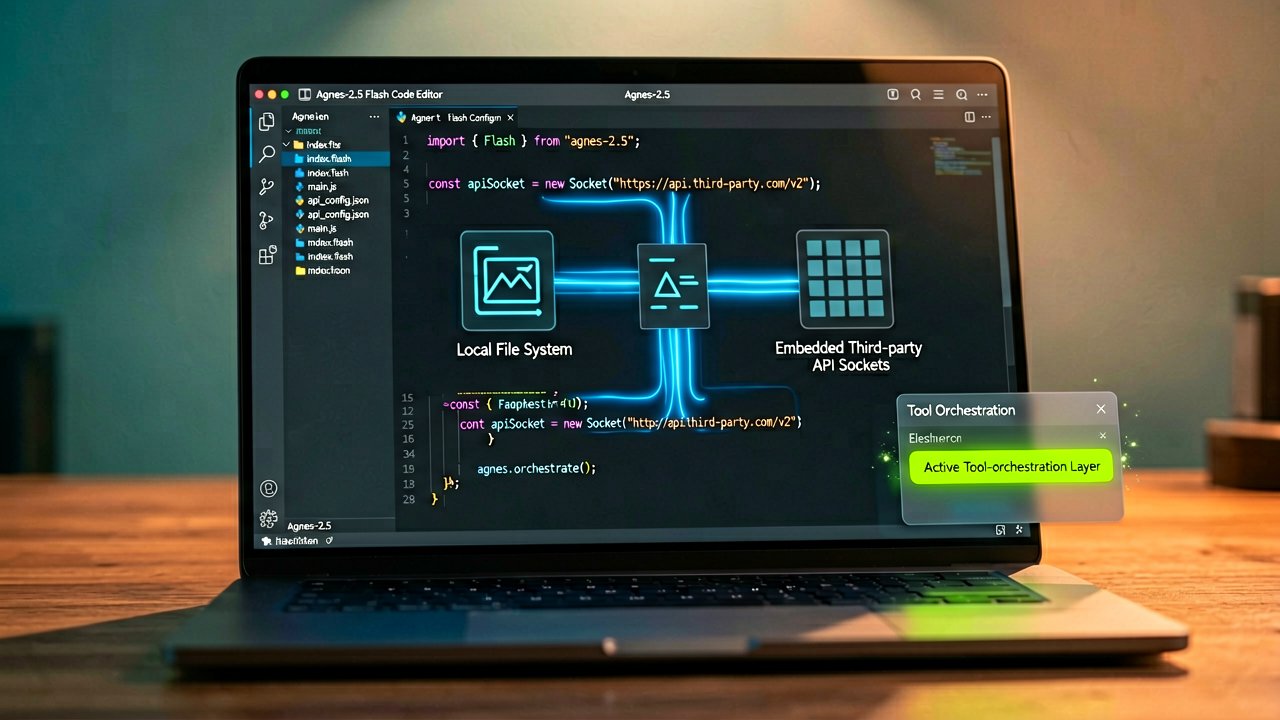
The global artificial intelligence landscape is experiencing a significant tactical pivot as regulatory boundaries harden and cross-border service disruptions become more frequent. In direct response to these friction points, Singapore-based developer Agnes AI has officially launched its updated Agnes-2.5 Flash language model alongside a dedicated desktop workspace named Agnes Code. This coordinated ecosystem rollout addresses recent compliance bottlenecks and account verification restrictions imposed by Western AI ecosystems, providing a structurally uninhibited environment for international developer communities.
By engineering a local desktop application that operates independently of standard browser-based chat restrictions, the firm is directly advancing its core pillars of technological inclusion and strategic neutrality. The twin release transitions the company from an API gateway into a comprehensive, multi-platform ecosystem tailored specifically for end-to-end software development. As international standard-setting bodies restrict access to frontier capabilities, this deployment acts as an infrastructure buffer for engineers requiring consistent uptime and minimal regulatory overhead.
Strategic Shifts in the AI Developer Market
The introduction of the Agnes Code desktop workspace marks a deliberate departure from traditional chat-based engineering interfaces. According to reports detailed by e27, regional developers face mounting friction due to identity verification protocols and localized account suspensions across major Western cloud providers. Agnes AI is capitalizing on this operational vacuum by offering a unified, free-to-use desktop environment that natively integrates local file systems, third-party application connections, and execution outputs directly within a single interface.
Architectural Upgrades and Capability Parity
The underlying engine, Agnes-2.5 Flash, delivers substantial performance optimizations over its iterative predecessors, focusing on continuous multi-file editing, tool-orchestration, and complex agentic workflows. To accommodate teams transitioning away from restricted ecosystems, the company is additionally previewing a high-tier flagship model, Agnes-2.5 Pro. This upcoming system is engineered to directly challenge elite commercial models like Claude Opus on long-running tasks, giving enterprise teams localized recourse against regional compliance lockouts.
Geopolitical Implications of Open-Borders Compute
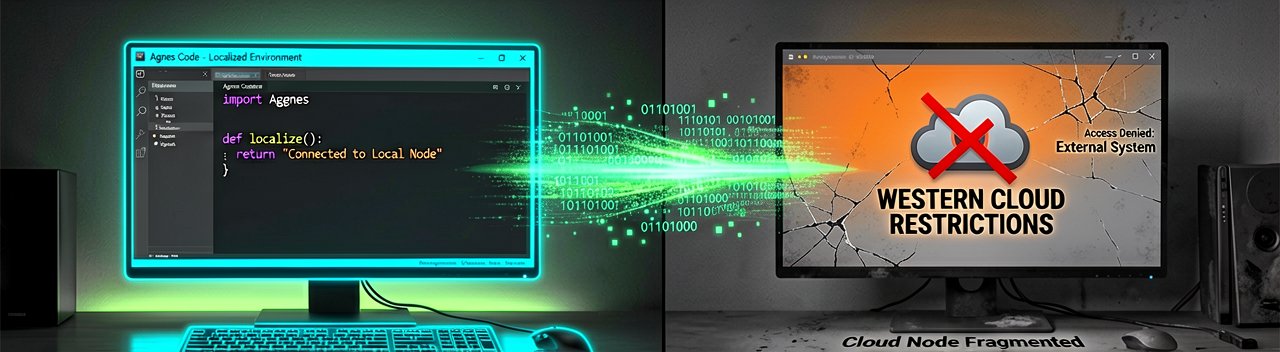
The broader impact of this launch extends beyond a simple tool upgrade, illustrating a decoupling trend within global software supply chains. By establishing an open-access model suite outside traditional geopolitical jurisdictions, developer initiatives in emerging economies can maintain code-generation continuity without the risk of abrupt policy exclusions. This market shift signals a growing demand for decentralized, cross-platform engineering utilities that prioritize raw access over regional regulatory alignment.
An Analysis of Regulatory Decoupling
Beyond the Geopolitical Friction: The rapid rollout of the Agnes-2.5 Flash architecture exposes a critical fracture line in the global technology stack, where regional compliance demands are actively fragmenting open-access developer ecosystems. For years, the artificial intelligence market operated under a semi-borderless paradigm, relying on centralized API endpoints managed by a handful of infrastructure giants. However, as international compliance frameworks tighten and access restrictions become weaponized instruments of economic policy, developers in emerging markets are discovering that their entire software pipelines can be disabled overnight by localized account closures.
Industry stakeholders view this latest desktop deployment as a direct tactical blueprint for achieving operational resilience against regulatory overreach. By decoupling the development workspace from browser-dependent cloud portals, the new architecture allows engineering teams to maintain continuous deployment cycles even during periods of extreme cross-border internet filtering or severe institutional compliance lockouts. This shift represents a broader migration toward localized execution frameworks, where raw processing capability is prioritized over centralized oversight.
Historical precedents in the open-source software movement suggest that attempts to restrict advanced development tools inevitably trigger decentralized workarounds. Much like the early cryptographic export controls of the late twentieth century, current artificial intelligence boundaries are forcing software engineers to seek alternative, politically neutral jurisdictions for hosting and execution. The emergence of specialized desktop environments is the logical conclusion of this cycle, providing a self-contained sanctuary for uninhibited code generation.

Enterprise engineering directors are quietly adjusting their long-term infrastructure roadmaps to incorporate these sovereign, multi-platform utilities. While enterprise compliance teams remain cautious about the long-term legal ramifications of using unaligned models, the immediate necessity of keeping software products functional outweighs abstract regulatory anxieties for many fast-moving firms. Consequently, the market is witnessing a silent but steady migration of production workloads to systems that operate entirely outside standard monitoring networks.
Ultimately, this architectural transition marks the end of the idealized unified global AI market and the beginning of a heavily balkanized ecosystem. As alternative hubs build out competing, unrestricted infrastructure pipelines, the leverage held by traditional technology centers will continue to erode. The success of these independent developer platforms will be measured not by their compliance certificates, but by their ability to provide uninterrupted, high-performance compute to any engineer with an internet connection.
The Mirage of Frictionless AI Freedom
Reading Between the Lines: The celebration surrounding unregulated desktop coding environments often overlooks a fundamental dependency that no standalone application can easily escape. While bypassing browser-based verification protocols provides immediate operational relief for developers in restricted regions, it does not solve the underlying physics of modern machine learning. True frontier-class code generation relies on massive parameter weights and low-latency infrastructure that local, hardware-constrained developer machines simply cannot sustain without relying back on centralized cloud infrastructure.
This architectural bottleneck reveals a glaring contradiction in the narrative of algorithmic sovereignty and total independence. A developer operating a local desktop interface is still fundamentally tethered to remote data centers for model inference, creating an easily identifiable trail of data packets that determined regulatory bodies can intercept or block at the internet service provider level. Consequently, the promise of an unrestrictable coding app functions more as a temporary compliance proxy than a permanent shield against institutional firewall enforcement.
Furthermore, the long-term viability of deploying unaligned models within enterprise environments introduces severe legal and security vulnerabilities that many independent engineers ignore. Large-scale software organizations require strict provenance tracking, intellectual property guarantees, and adherence to emerging safety standards to shield themselves from copyright litigation. By deliberately operating outside these global compliance frameworks, alternative AI ecosystems risk relegating their users to shadow IT roles, where their generated code base cannot be safely integrated into mainstream commercial applications.
The business model sustaining these unrestricted, free-to-use platforms also invites measured skepticism regarding their ultimate longevity. Training competitive, long-context architectures requires an immense amount of capital, an expenditure traditionally recouped through strict enterprise monetization and rigorous regulatory alignment. Without conventional institutional funding pipelines, alternative ecosystems must find alternative ways to subsidize their substantial compute bills, raising quiet concerns about data privacy, telemetry logging, and the monetization of user telemetry.
As the regulatory landscape matures from initial panic into systemic enforcement, the current window for regulatory arbitrage will inevitably narrow. The friction between local developer independence and international legal compliance will force a definitive polarization of the market, where engineers must choose between certified safety and unchecked capability. The survival of alternative platforms depends entirely on their ability to scale their infrastructure faster than global regulatory bodies can draft the network blocks to stop them.
"We are rapidly approaching an era where software engineers spend half their morning using unrestricted artificial intelligence to bypass global compliance firewalls, and the entire afternoon writing manual patches to fix the hallucinatory syntax errors generated by the very tools that saved them."
Artūras Malašauskas is an AI Systems Integrator with 20+ years of production-grade web engineering experience. He has designed, shipped, and scaled enterprise Python/PHP systems for logistics, SaaS, and public-sector clients. For the past year, he has focused exclusively on AI integrations: deploying open-source LLMs, building generative media pipelines (image, audio, video), and engineering multi-agent workflows for real production environments. His standard: reproducibility, security, cost-efficient inference—no vaporware. He documents and evaluates emerging AI tooling, separating verified capabilities from marketing noise. Technical editor at: muza-ai.eu, ai-verslas.lt, ai-naujinos.lt Connect on LinkedIn
Comments