Breaking CUDA’s Grip: AMD Bets on Developer Education to Reshape the AI Landscape
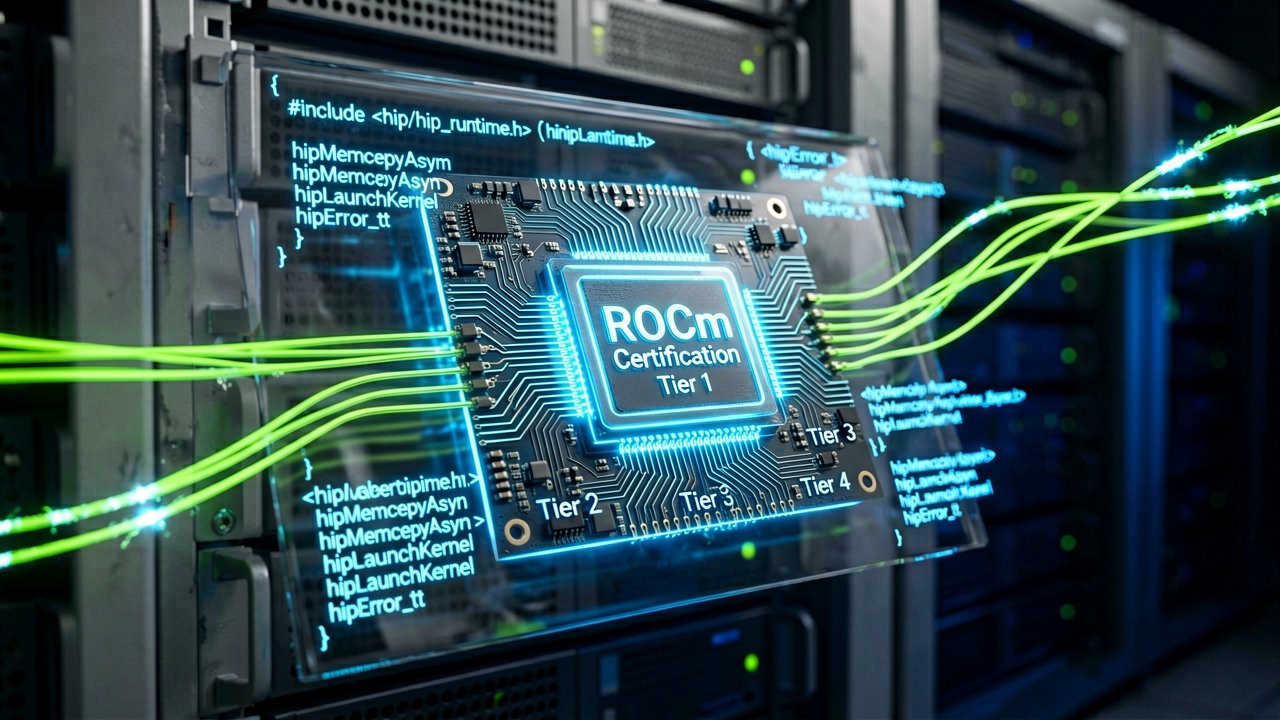
AMD is mounting a direct offensive against NVIDIA’s longstanding AI supremacy by targeting the developer ecosystem, the true moat protecting its rival's market dominance. Recognizing that hardware performance alone cannot dismantle NVIDIA's CUDA monopoly, AMD has launched the official AMD ROCm Certification Program. This structured educational framework aims to validate engineering talent across the AMD ROCm Software Stack, creating a pipeline of verified professionals who can build, optimize, and deploy heavy artificial intelligence and high-performance computing (HPC) workloads on AMD hardware.
For nearly two decades, NVIDIA's proprietary CUDA platform has acted as the default operating system for accelerated computing, intertwining software familiarity with enterprise hardware purchasing decisions. AMD’s strategic pivot toward formalized developer education signals a mature understanding of market dynamics. By providing a clear, credentialed pathway for engineering talent, AMD intends to reduce the switching costs associated with moving away from NVIDIA, thereby accelerating the industry's transition toward open-source, multi-vendor AI data centers.
A Tiered Structure to Build Production-Ready Expertise
The newly unveiled certification program operates under a progressive, three-tiered matrix designed to support developers throughout different stages of their professional growth. According to official guidelines detailed on the AMD Developer Portal, the curriculum focuses extensively on real-world implementation rather than abstract theory. The training pathway is segmented into the following milestones:
- Level 1: Associate – Launching in mid-2026, this tier validates foundational expertise in accelerated computing. It equips engineers with hands-on skills in HIP programming, ROCm fundamentals, and basic GPU memory configurations.
- Level 2: Professional – Arriving later in the year, this tier advances the developer's skill set to multi-GPU environments, focusing on distributed AI training via RCCL and large-scale live inference orchestration using open frameworks like vLLM and SGLang.
- Level 3: Expert – Scheduled for early 2027, the final tier evaluates an engineer's capability to architect end-to-end production environments, mandating capstone projects based on Kubernetes containerization and automated MLOps pipelines.
Strengthening the Open-Source Ecosystem as a Viable Alternative
AMD’s educational push is deeply intertwined with its broader software evolution, particularly following the launch of its updated infrastructure frameworks showcased via the AMD AI Developer Program. By standardizing training around HIP—which allows developers to compile CUDA code to run natively on AMD Instinct GPUs—the company is systematically stripping away the software friction that historically isolated its hardware. This strategy directly strengthens open-source initiatives supported by organizations like PyTorch and Hugging Face, positioning ROCm as a democratic, flexible alternative to locked-in proprietary ecosystems.

Journalist Commentary: Cultivating Loyalty to Drive Hardware Sales
This initiative represents a critical paradigm shift in the AI silicon war. While enterprise hardware buyers desperately crave pricing relief and secondary supply chains to mitigate NVIDIA’s constrained allocations, the ultimate bottleneck has always been human capital. Modern data science teams are overwhelmingly trained on CUDA-centric environments, making alternative hardware adoptions an expensive, uphill battle in software retraining.
By offering free, highly rigorous certification paths through the AMD AI Academy, AMD is playing a calculated long game. Validating a developer’s proficiency on AMD hardware creates an organic grassroots push within tech companies. When engineers can confidently scale distributed training and optimize complex transformers on an alternative ecosystem, enterprise decision-makers can finally justify shifting massive capital expenditures toward AMD's Instinct accelerators without risking development delays.
The Hidden Bottleneck: Why Hardware Benchmarks Fail to Tell the Whole Story
What Most Reports Miss: While tech enthusiasts frequently obsess over raw FLOPS, memory bandwidth, and the generational leaps of accelerators like the AMD Instinct MI300X versus NVIDIA’s H100, the true battlefield of AI dominance has never been purely physical. For nearly twenty years, NVIDIA has masterfully leveraged its proprietary CUDA ecosystem, transforming it from a simple programming tool into the industry standard for scientific and accelerated computing. This massive head start has created a deep-seated cultural dependency within engineering circles, where coding for a GPU is essentially synonymous with writing CUDA code.
Enterprise engineering teams face immense pressure to ship AI features rapidly, meaning that time-to-market routinely triumphs over theoretical hardware cost savings. In a typical production environment, choosing an alternative hardware vendor has historically meant bracing for a barrage of compilation errors, missing kernel optimizations, and broken library dependencies. By targeting developer education directly, AMD acknowledges that breaking NVIDIA’s monopoly requires dismantling this psychological and operational friction at the grassroots level, transforming the engineering workforce before trying to win over the procurement department.
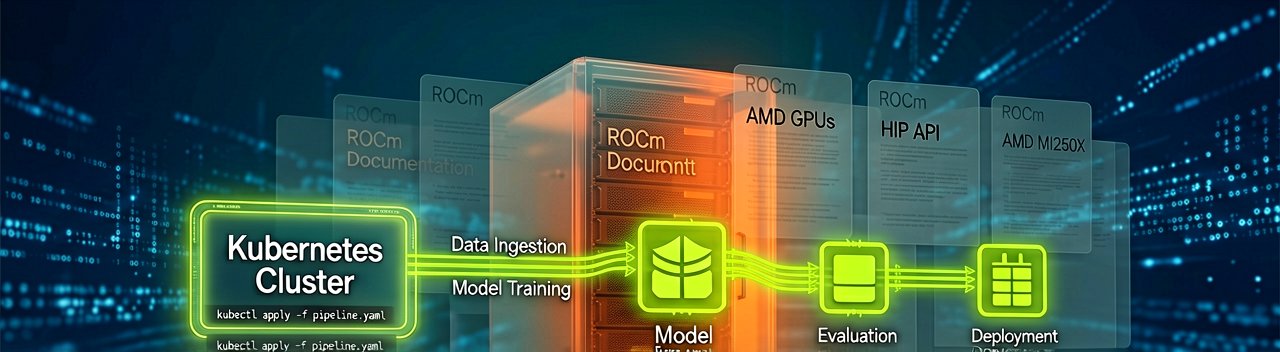
This educational initiative also signals a profound evolution in how AMD views its open-source software stack, ROCm. In its early iterations, ROCm was often criticized by the developer community for its fragmented documentation, limited hardware support, and sporadic update cycles. However, by establishing a formal certification program, AMD is holding its own software ecosystem to enterprise-grade standards. The structured curriculum forces a continuous refinement of ROCm’s documentation and stability, ensuring that as engineers learn the platform, they encounter a predictable and robust development environment rather than the experimental toolset of years past.
From a stakeholder perspective, this strategic shift is being met with quiet optimism across cloud service providers and venture-backed AI startups. Hyperscalers are desperate to diversify their supply chains to gain leverage over NVIDIA’s premium pricing and allocation bottlenecks, yet they cannot risk a drop in developer velocity. By subsidizing high-quality technical education, AMD is effectively absorbing the retraining costs that have long deterred major enterprises from migrating their large language model pipelines away from proprietary architectures.
Ultimately, AMD’s long-term success hinges on whether it can turn these certified developers into active evangelists within the broader open-source community. Software moats are not drained overnight, but they do erode when mainstream frameworks like PyTorch, Triton, and Hugging Face offer seamless, native optimization for alternative runtimes. As a growing cohort of engineers finishes these certification paths and brings native ROCm expertise into production environments, the market will naturally shift from a forced single-vendor ecosystem to a mature, multi-architecture landscape where hardware merit, rather than software locked-in compliance, dictates infrastructure investments.
The Reality Check: Educational Initiatives vs. Legacy Enterprise Inertia
Reading Between the Lines: AMD’s educational roadmap presents a neatly structured, highly logical solution to a complex market problem, but it relies on an overly optimistic assumption: that developers actually want to spend their limited time learning a secondary software stack. In the fast-moving AI sector, engineering talent is evaluated on speed of deployment and model performance, not on ideological dedication to open-source ideals. While a certification program creates a structured pathway, it faces a classic chicken-and-egg dilemma, as developers will only invest their hours into mastering ROCm if there is an immediate, high-paying corporate demand for it, while enterprises will only mandate AMD proficiency once they have already committed to buying the hardware.
Furthermore, AMD’s strategy highlights an inherent contradiction in its current positioning. The company is heavily promoting its HIP (Heterogeneous-computing Interface for Portability) toolset, which allows developers to convert existing CUDA code into code that runs on AMD accelerators. By celebrating the ease of this automated conversion process, AMD inadvertently diminishes the perceived necessity of its own deep developer education. If the migration tools are truly as seamless and "one-click" as marketing materials claim, engineering teams have little reason to undergo multi-tiered certification programs to learn lower-level optimizations.
There is also the inescapable reality of NVIDIA’s defensive maneuvering. NVIDIA is not a static target; its developer relations and education arms are the gold standard of the tech industry, backed by billions in capital and thousands of dedicated university partnerships. As AMD rolls out its training pathways through 2026 and 2027, NVIDIA will undoubtedly iterate on its own software stack, embedding CUDA even deeper into foundational model architectures and proprietary hardware-software co-designs like Blackwell and its successors. This leaves AMD in a perpetual position of playing catch-up, certifying engineers on a software paradigm that NVIDIA is actively trying to render obsolete with next-generation developer abstractions.
The true measure of this initiative's success will not be found in the number of badges issued on the AMD Developer Portal, but in the corporate procurement orders placed over the next three to five years. For AMD to truly break the monopoly, its certified engineers must do more than just understand the ROCm software stack; they must successfully architect systems that match NVIDIA's turnkey ease of use. If AMD’s certified professionals continue to spend more time troubleshooting hardware-specific edge cases than training models, enterprise decision-makers will gladly pay NVIDIA’s premium pricing just to keep their developers happy and focused on core product development.
"Building a competitive AI chip is a monumental feat of engineering, but training an entire generation of developers to stop default-routing their code to NVIDIA might actually require a minor miracle—or at the very least, a massive subsidy on enterprise espresso."
Artūras Malašauskas is an AI Systems Integrator with 20+ years of production-grade web engineering experience. He has designed, shipped, and scaled enterprise Python/PHP systems for logistics, SaaS, and public-sector clients. For the past year, he has focused exclusively on AI integrations: deploying open-source LLMs, building generative media pipelines (image, audio, video), and engineering multi-agent workflows for real production environments. His standard: reproducibility, security, cost-efficient inference—no vaporware. He documents and evaluates emerging AI tooling, separating verified capabilities from marketing noise. Technical editor at: muza-ai.eu, ai-verslas.lt, ai-naujinos.lt Connect on LinkedIn
Comments