DeployPros DPROMPT Reshapes Field Service Staffing Landscape via Advanced Automation
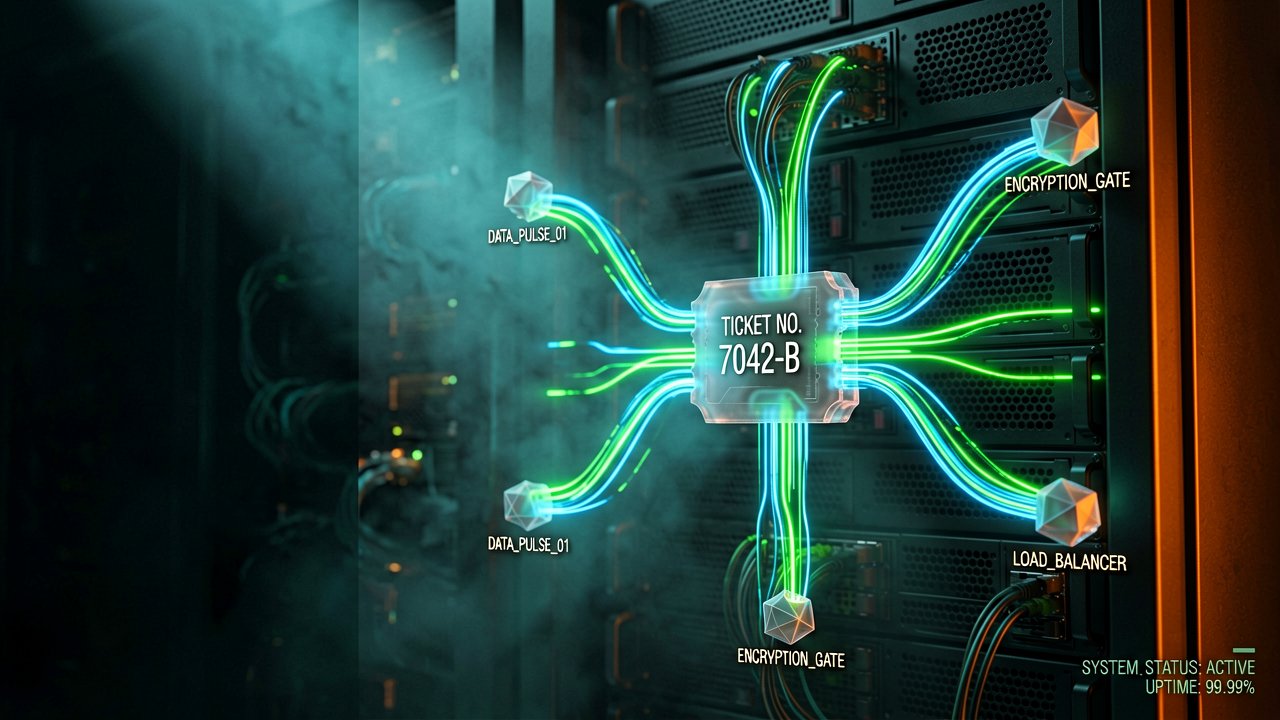
The field service and on-site labor sectors are facing severe operational bottlenecks due to administrative friction, scheduling volatility, and fragmented communication channels. In response to these persistent industry headwinds, DeployPros has launched DPROMPT, an artificial intelligence platform explicitly designed to automate workforce management for field service companies and staffing organizations. By converging workforce coordination, ticket tracking, and multi-channel communication into a unified architecture, the software addresses the systemic vulnerabilities that typically disrupt manual dispatching pipelines.
Operational complexity in localized logistics and external staffing frequently stems from the heavy reliance on human micro-management for routing updates and shifts. According to details tracked via Dealroom, DPROMPT mitigates these inefficiencies by establishing direct automation layers across critical tasks, including automated appointment confirmations, proactive reminder calls, site notifications, and late-arrival detection. This shift transforms dispatchers from reactive problem-solvers into proactive managers, allowing distributed workforces to achieve higher first-time completion rates.
A Unified Framework for Private Worker Networks
Unlike general-purpose enterprise tools, DPROMPT isolates critical data and matches it to workflows tailored to heavy logistical demands. The system lets staffing firms import and secure proprietary databases while natively leveraging AI voice and SMS agents to clean worker data, request profile completions, and check equipment readiness at client sites. By embedding autonomous agents directly inside individual digital work orders, dispatch teams maintain complete, automated audibility for all logistical interactions without expanding headcounts.
Strategic Imperative of Voice and Automated Logistics
The launch represents a broader strategic turn within field service management toward agentic AI ecosystems capable of handling live, outward-facing communications. Industrial logistics platforms are increasingly deploying voice-capable AI layer solutions to absorb the high call volumes associated with shifting field conditions. Software architectures that actively write execution outcomes back to the core ticket layer in real time effectively limit structural communication gaps, allowing distributed organizations to control operational volatility and minimize costly truck rolls.

The Frictionless Workforce Evolution
Beneath the Operational Hood: The true friction in field service staffing has rarely been about finding raw labor; it is a systemic vulnerability hidden in the latency of communication. Historically, when an on-site technician was delayed by a delayed inventory shipment or traffic congestion, a cascading failure triggered down the entire dispatch pipeline. Human operators spent critical hours playing phone tag with clients, updating manual databases, and manually recalculating subsequent route schedules. By the time a resolution was reached, client satisfaction dipped and unbillable overhead hours spiked significantly across the balance sheet.
Early automated solutions tried to solve this problem with passive notifications, but they often ended up overloading field workers with too many app alerts. Staffing executives point out that field personnel frequently muted these notifications, which completely ruined the purpose of real-time scheduling tools. The DPROMPT architecture shifts the burden of communication away from the technician by deploying autonomous AI voice and text agents that handle the heavy lifting. Instead of forcing workers to manually check in, the system uses automated late-arrival detection to independently manage scheduling updates and notify clients before a delay turns into a formal complaint.
From a stakeholder perspective, this technological shift directly impacts bottom-line profit margins by maximizing asset utilization and shrinking the time it takes to fill open shifts. Regional operations managers often struggle with low database accuracy, where a significant portion of their available worker pool has outdated certifications or wrong contact details. By utilizing specialized AI agents to continuously scrub, verify, and update private worker profiles, staffing companies can instantly match specialized tasks with properly certified personnel. This level of precision eliminates the costly compliance risks that usually come with rapid, manual dispatching environments.
Looking ahead, the widespread adoption of agentic automation points to a major structural shift in how industrial service networks scale their business operations. Companies are no longer forced to hire more administrative staff just to handle a growing footprint of field technicians. As autonomous software takes over the chaotic, day-to-day variables of field logistics, the core human workforce can focus on high-value client relationships and complex problem-solving. This evolution turns workforce management from a chaotic cost center into a highly optimized, predictable competitive advantage.
The Hidden Paradoxes of Algorithmic Dispatch
Reading Between the Lines: The enterprise narrative surrounding autonomous workforce coordination almost universally promises friction-free scaling and immediate cost savings, yet it frequently glosses over the friction inherent in human-machine friction points. While platforms like DPROMPT successfully eliminate the administrative delays of manual phone tag, they introduce an algorithmic rigidity that can clash with the messy reality of physical labor. Field service environments are governed by unpredictable real-world variables—ranging from sudden equipment failures to unmapped structural anomalies—that do not always fit neatly into pre-programmed data pipelines. When an AI system assumes an appointment is delayed based purely on geolocation data, it risks triggering automated customer updates that misread the nuances of a complex, live site situation.
Furthermore, reliance on autonomous data-scrubbing and automated profile verification introduces a subtle compliance paradox. Companies trust these autonomous systems to clean worker records and verify certifications, but this outsourcing of oversight can create a false sense of security among operations managers. If an automated system misinterprets an obscure state licensing update or accepts an incorrectly formatted certification, the liability remains firmly with the human operators, not the software provider. This reality forces businesses to maintain expensive human-led audit procedures, which directly challenges the marketing promise of total overhead reduction.
The long-term economic implications of widespread agentic dispatch also warrant measured skepticism regarding worker retention. While staffing firms benefit from instantly filling shifts via optimized algorithms, the gig-ification of specialized field labor can alienate seasoned technicians who value personal relationships with dispatchers. When human intuition is entirely replaced by automated efficiency metrics, the service industry risks driving away its most experienced talent, leaving behind a transient workforce that requires constant, resource-heavy onboarding. Ultimately, true operational resilience will belong not to those who automate everything blindly, but to organizations that use AI to assist human logistics teams rather than entirely replace them.
"The ultimate irony of fully automated field service is that while your AI agents can flawlessly orchestrate three hundred simultaneous truck rolls without breaking a sweat, you are still entirely at the mercy of a broken wrench, an unmapped traffic jam, and a technician who simply decided to turn off his phone."
Artūras Malašauskas is an AI Systems Integrator with 20+ years of production-grade web engineering experience. He has designed, shipped, and scaled enterprise Python/PHP systems for logistics, SaaS, and public-sector clients. For the past year, he has focused exclusively on AI integrations: deploying open-source LLMs, building generative media pipelines (image, audio, video), and engineering multi-agent workflows for real production environments. His standard: reproducibility, security, cost-efficient inference—no vaporware. He documents and evaluates emerging AI tooling, separating verified capabilities from marketing noise. Technical editor at: muza-ai.eu, ai-verslas.lt, ai-naujinos.lt Connect on LinkedIn
Comments