UBS Mandates Weekly AI Power Hour to Drive Global Banking Productivity
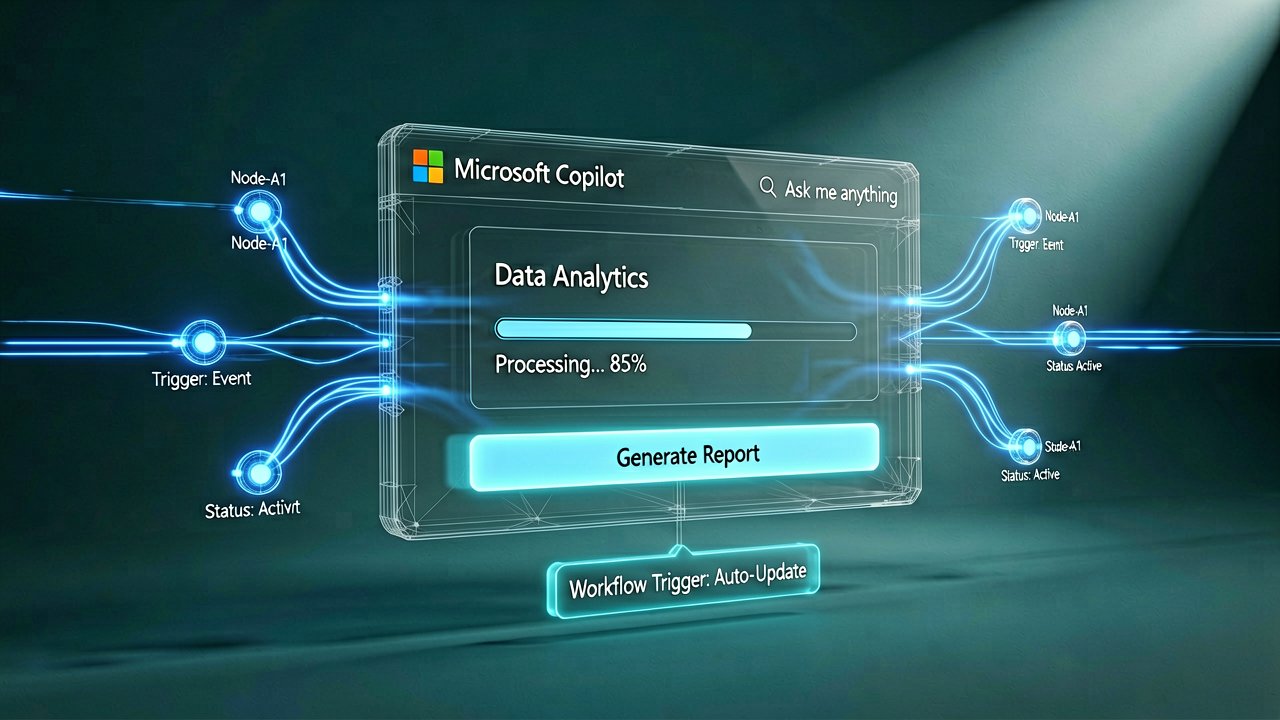
The Swiss banking giant UBS has launched an internal mandate establishing a weekly "AI power hour" for its entire global workforce of roughly 103,000 employees. According to an internal memo originally detailed by Financial News, Chief Executive Sergio Ermotti instructed staff members to dedicate specific time each week to learn and systematically implement artificial intelligence directly within their daily workflows. The primary directive prioritizes the active building and deployment of personal AI digital assistants via Microsoft Copilot, shifting generative technology from a theoretical training exercise into an automated core utility.
This initiative represents an aggressive strategic push by the world’s largest wealth manager to achieve measurable margin protection and operational efficiency following major integration cycles. Rather than relying on isolated tech divisions, the mandate seeks to institutionalize optimization by crowdsourcing micro-efficiencies across administrative, compliance, and asset management teams. This broad deployment strategy follows structural governance upgrades at UBS, including naming markets head Jason Barron to lead the investment bank's AI strategy and appointing Daniele Magazzeni as the group's first Chief AI Officer.
The Race for Agentic Architecture on Wall Street
The operational framework mandated by UBS highlights a broader structural evolution across the global financial sector. Investment firms are rapidly moving past standard chatbot tools and accelerating the deployment of agentic AI. As reported by Reuters, major Wall Street banks are currently competing to establish how autonomous digital assistants collaborate with human employees and clients. By allocating structured, non-negotiable hours to individual tool development, legacy financial institutions hope to flatten the digital learning curve and mitigate the high infrastructure costs of large language model adoption via immediately realized workplace efficiencies.
Market Alignment and Operational Scaling
From an industry-wide perspective, forcing universal employee engagement with generative workflows addresses the monetization lag that has historically plagued large corporate software rollouts. Instead of allowing employee participation to stall at basic text summarization, reserving fixed institutional time pushes workers to build tailored automated workflows. This tactical shift underpins a larger trend where banking margins are increasingly dependent on data processing speed and labor costs reduction, cementing proprietary workforce AI implementation as a core metric for corporate performance.

Bridging the Gap Between Enterprise Adoption and Daily Workflow Integration
What Most Reports Miss: The shift to a mandatory weekly "AI power hour" at UBS is less about abstract technological capability and more about fixing the persistent utilization gap that limits expensive corporate software licensing agreements. While major financial institutions routinely purchase thousands of Microsoft Copilot enterprise licenses, historical user analytics reveal that average employees rarely move past surface-level activities like editing standard emails or summarizing long meeting transcripts. By requiring a structured hour each week, Chief Executive Sergio Ermotti is forcing a massive global workforce of roughly 103,000 employees to actively build tailored digital workflows that address localized back-office friction.
This systematic push fundamentally alters how legacy institutions handle corporate upskilling. Rather than mandating rigid, top-down educational videos or theoretical training modules, the banking giant is forcing employees to experiment in real time within their specific roles. Financial institutions have found that real productivity growth happens when middle-office and compliance personnel build their own micro-automations, changing how the bank handles complex data extraction, cross-border regulatory filing preparation, and internal auditing pipelines.
The timing of this broad rollout aligns directly with recent leadership changes meant to enforce operational discipline. In late June, UBS named its global markets head, Jason Barron, to an expanded role as AI transformation officer for the investment bank. Working closely alongside Group Chief AI Officer Daniele Magazzeni, Barron’s appointment shows that the Swiss firm wants trading and market execution veterans—not just software developers—to guide software adoption across its investment banking portfolio.
This dual focus on custom local development and specialized executive oversight addresses a major problem facing the wider financial ecosystem. As Wall Street banks aggressively roll out digital assistants, companies risk spending massive amounts of capital on infrastructure without seeing clear improvements in profit margins or processing speeds. The strategy deployed by UBS shows that maximizing the value of generative technology requires treating compute power like any other strictly managed corporate asset, forcing employees to turn raw AI into a predictable, everyday utility.

The Hidden Cost of Automated Productivity
Reading Between the Lines: The institutional mandate for a weekly "AI power hour" relies on the fragile assumption that productivity is a linear metric easily accelerated by corporate decree. While UBS positions this initiative as a forward-thinking deployment strategy, it highlights a deep anxiety regarding the massive capital investments poured into enterprise software licensing. Forcing an entire global workforce to dedicate an hour to building digital assistants runs the risk of generating performative compliance, where employees invent superficial automation tasks simply to fulfill internal quotas and satisfy tracking metrics.
This forced democratization of software development introduces a severe operational contradiction for a highly regulated global wealth manager. By encouraging 103,000 workers to independently build custom workflows using Microsoft Copilot, UBS effectively creates a massive ecosystem of decentralized, user-generated code. This shift complicates traditional risk management frameworks, as internal compliance teams must now monitor thousands of bespoke, employee-authored scripts for data leakage, algorithmic bias, and hallucinations within client-facing investment pipelines.
Furthermore, the long-term impact on junior talent acquisition and industry upskilling remains highly volatile. Historically, the grueling administrative tasks assigned to entry-level analysts served as the foundational training ground for mastering complex financial modeling and market valuation. If generative software completely automates these foundational responsibilities under the guise of workflow optimization, the banking sector faces a strategic talent bottleneck, leaving future leaders without the deep, tactile experience required to navigate complex market crises.
"Mandating that thousands of bankers spent an hour a week attempting to automate their own jobs away is the ultimate corporate paradox, proving that while AI can easily summarize a lengthy brief, it still cannot explain why anyone thought a mandatory hour of forced innovation would feel like anything other than an administrative chore."
Artūras Malašauskas is an AI Systems Integrator with 20+ years of production-grade web engineering experience. He has designed, shipped, and scaled enterprise Python/PHP systems for logistics, SaaS, and public-sector clients. For the past year, he has focused exclusively on AI integrations: deploying open-source LLMs, building generative media pipelines (image, audio, video), and engineering multi-agent workflows for real production environments. His standard: reproducibility, security, cost-efficient inference—no vaporware. He documents and evaluates emerging AI tooling, separating verified capabilities from marketing noise. Technical editor at: muza-ai.eu, ai-verslas.lt, ai-naujinos.lt Connect on LinkedIn
Comments